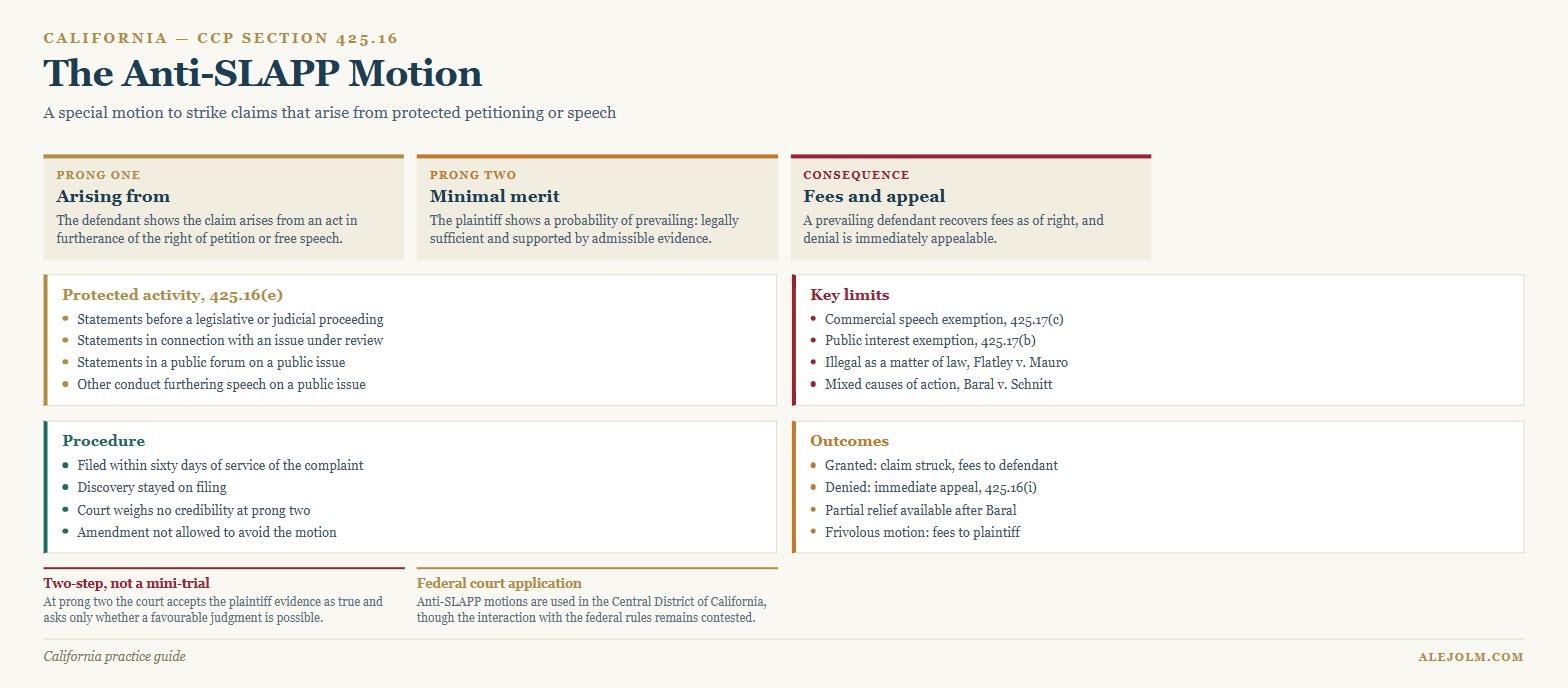
A SLAPP is a strategic lawsuit against public participation — litigation filed not to win but to impose cost and silence a critic. California’s answer is Code of Civil Procedure…
The California Anti-SLAPP Motion: Strike and Appeal

Lawyer — real estate law, transactions and doctoral research.
A SLAPP is a strategic lawsuit against public participation — litigation filed not to win but to impose cost and silence a critic. California’s answer is Code of Civil Procedure…
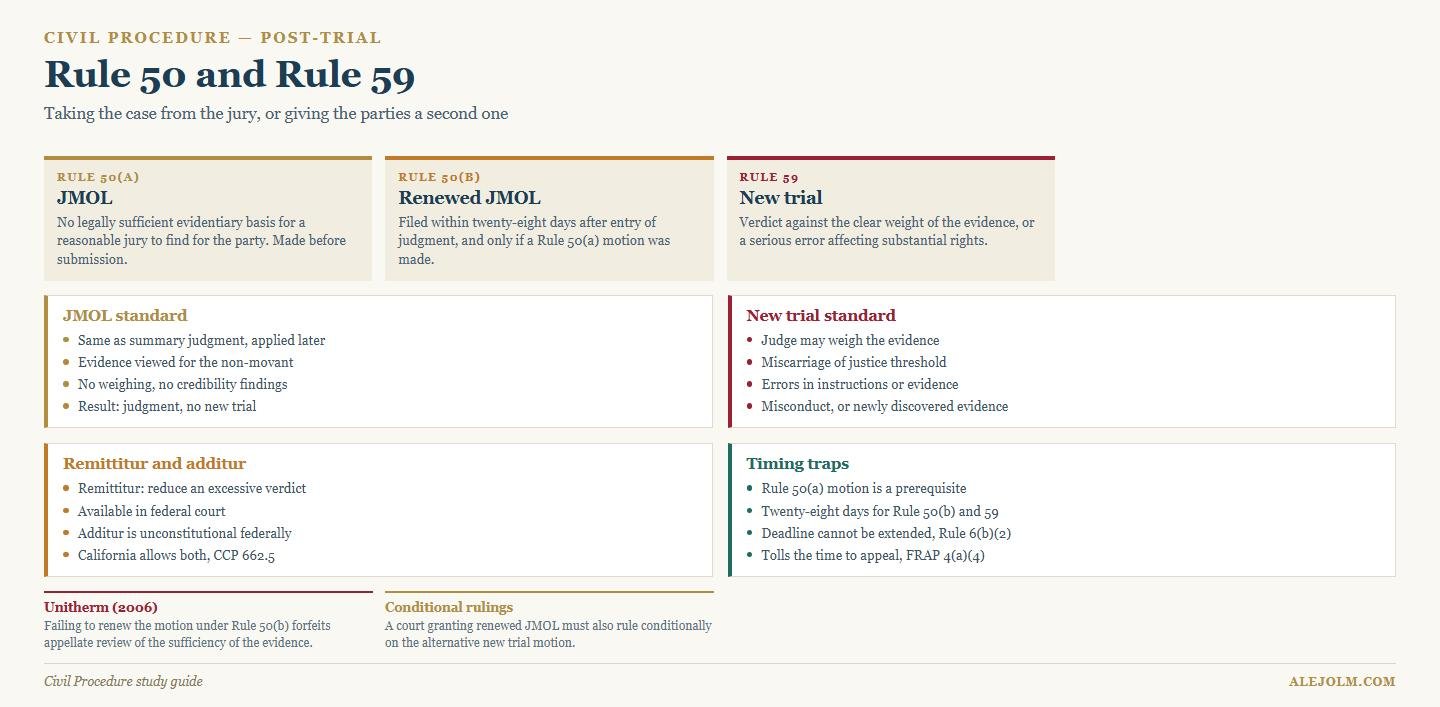
After a jury returns a verdict, two very different motions are available. Judgment as a matter of law under Rule 50 asks the court to say that no reasonable jury…
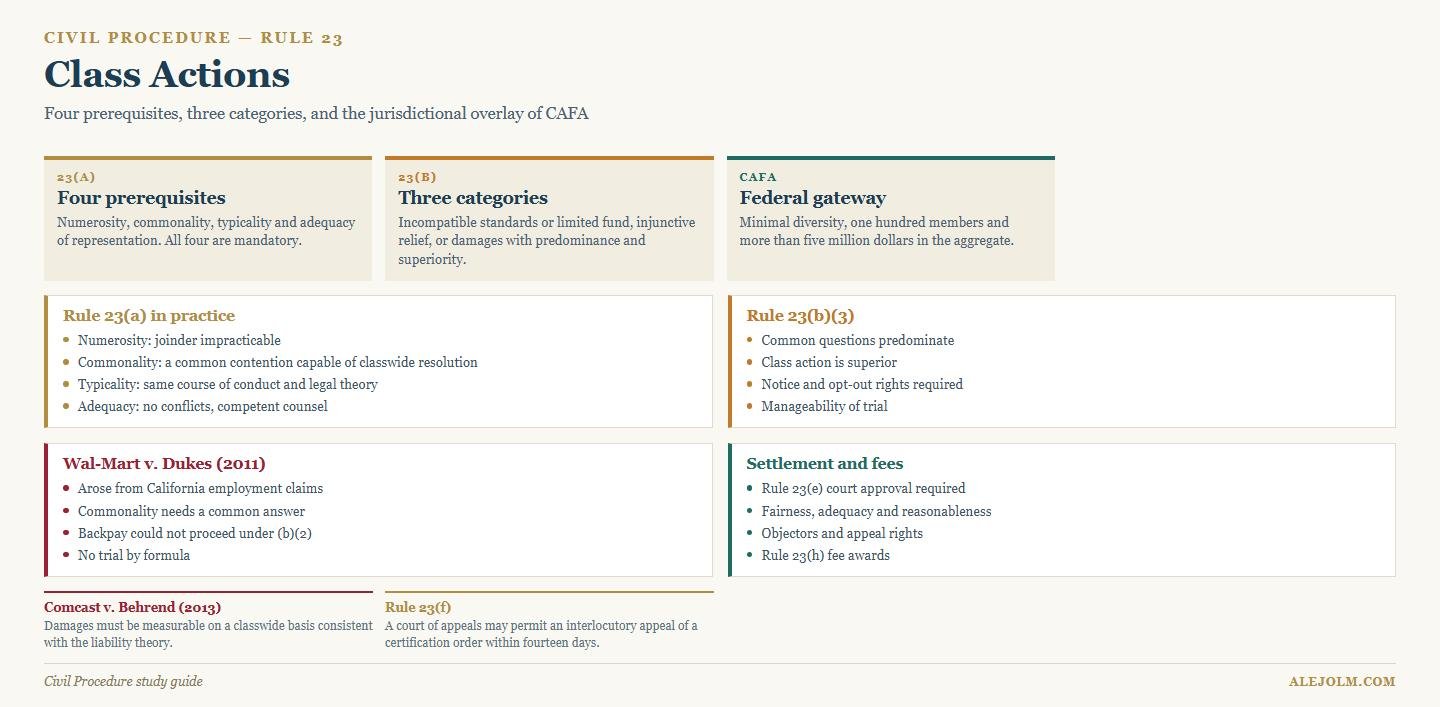
Class actions let one plaintiff litigate on behalf of many. That power is exceptional, because absent members are bound by a judgment they took no part in obtaining. Rule 23…
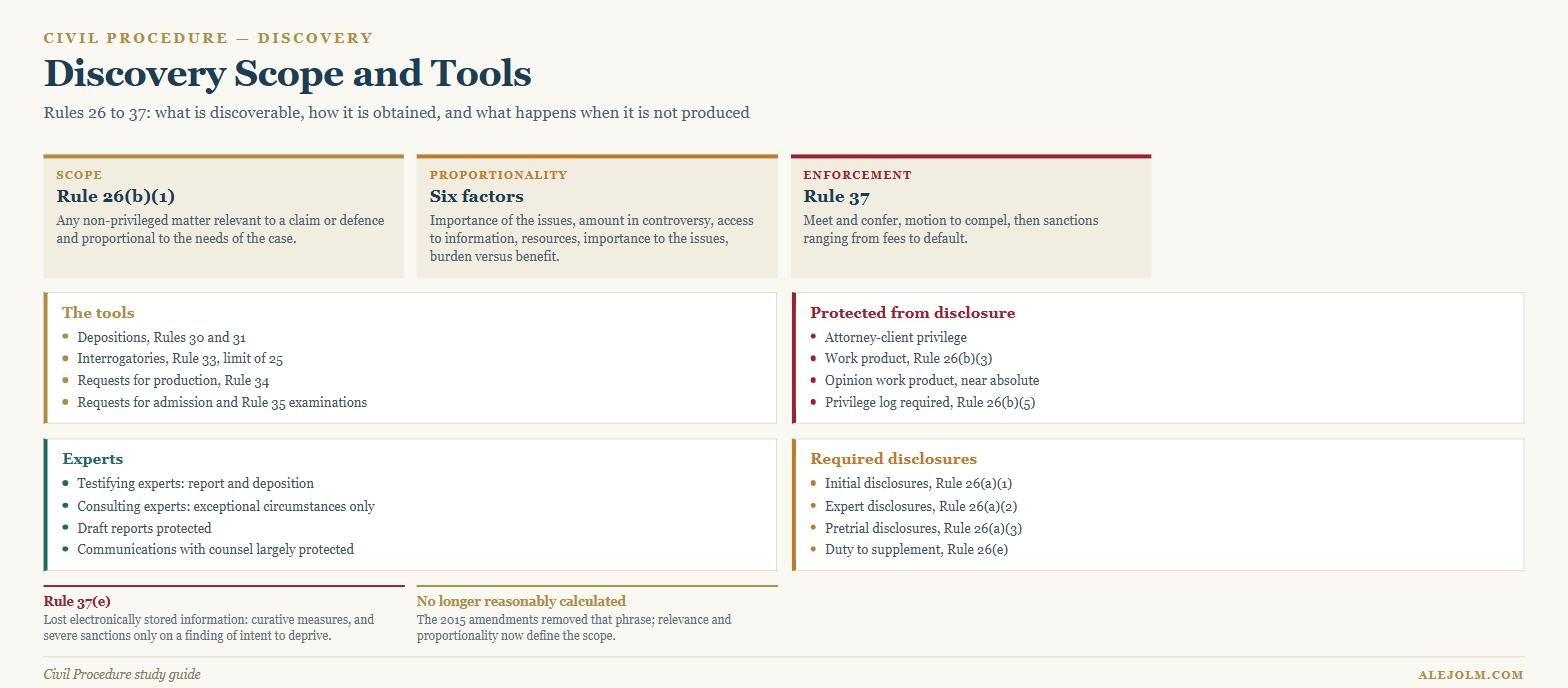
Discovery is where most civil cases are actually decided. The federal discovery rules in Rules 26 through 37 give each side access to the other’s evidence before trial, on the…
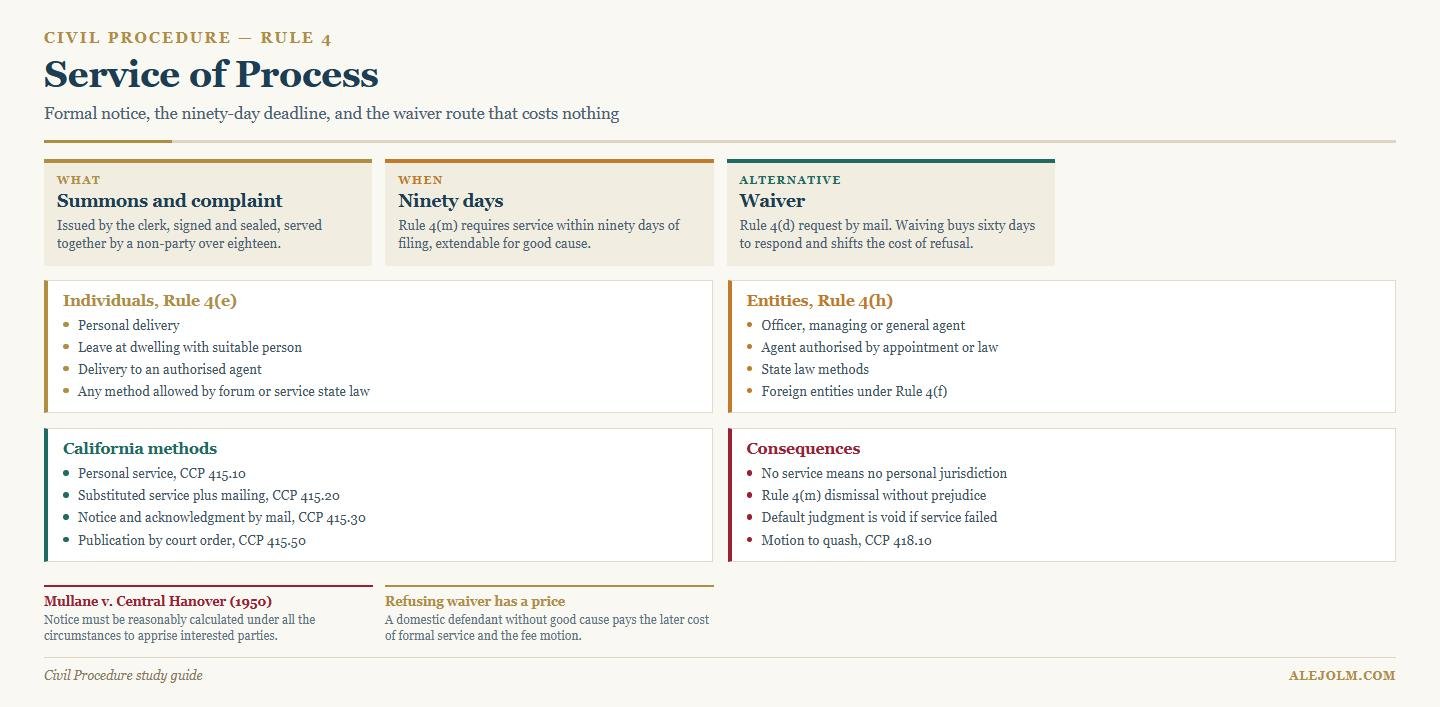
Service of process is the formal act that brings a defendant under a court’s authority. Without it, personal jurisdiction does not attach, a default judgment is void, and years of…
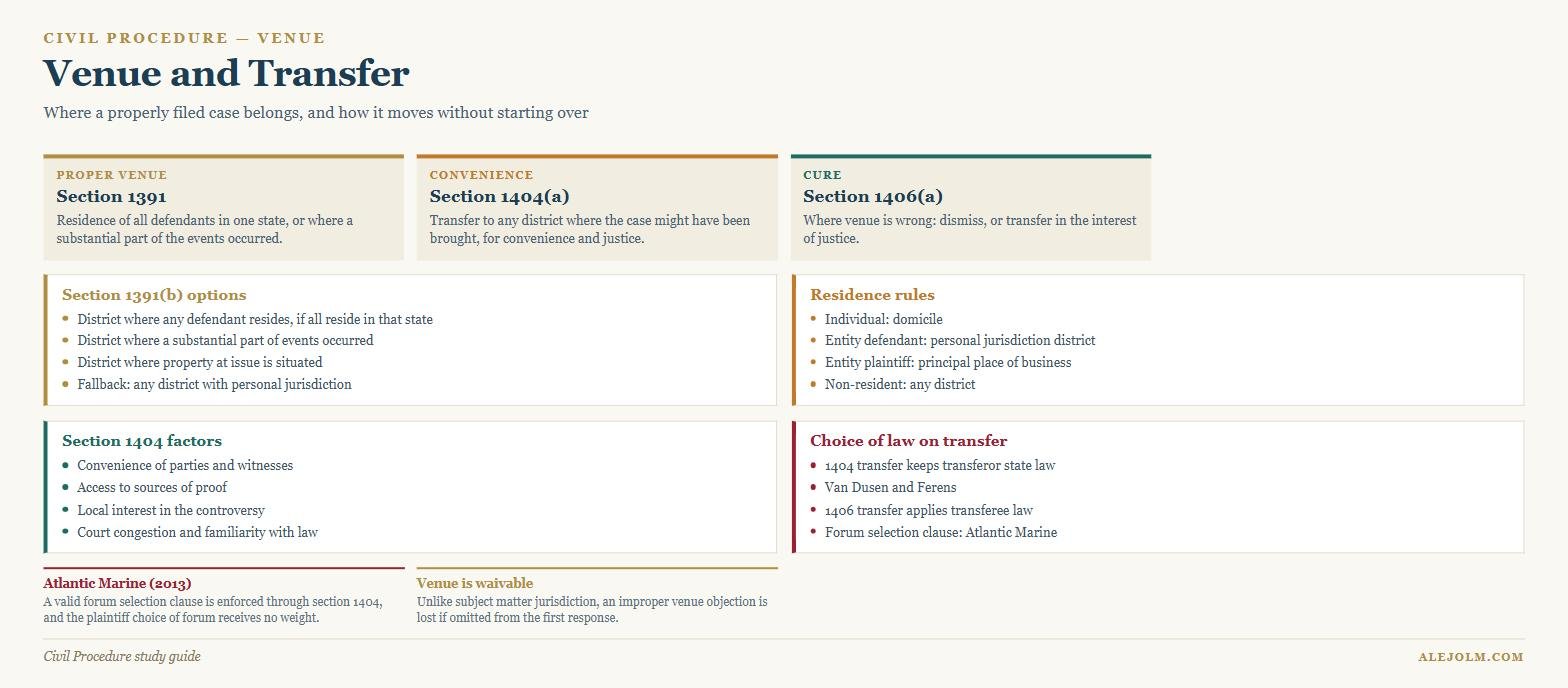
Jurisdiction asks whether a court system may hear a case. Venue asks something narrower and more practical: which courthouse inside that system is the right one. A case can satisfy…
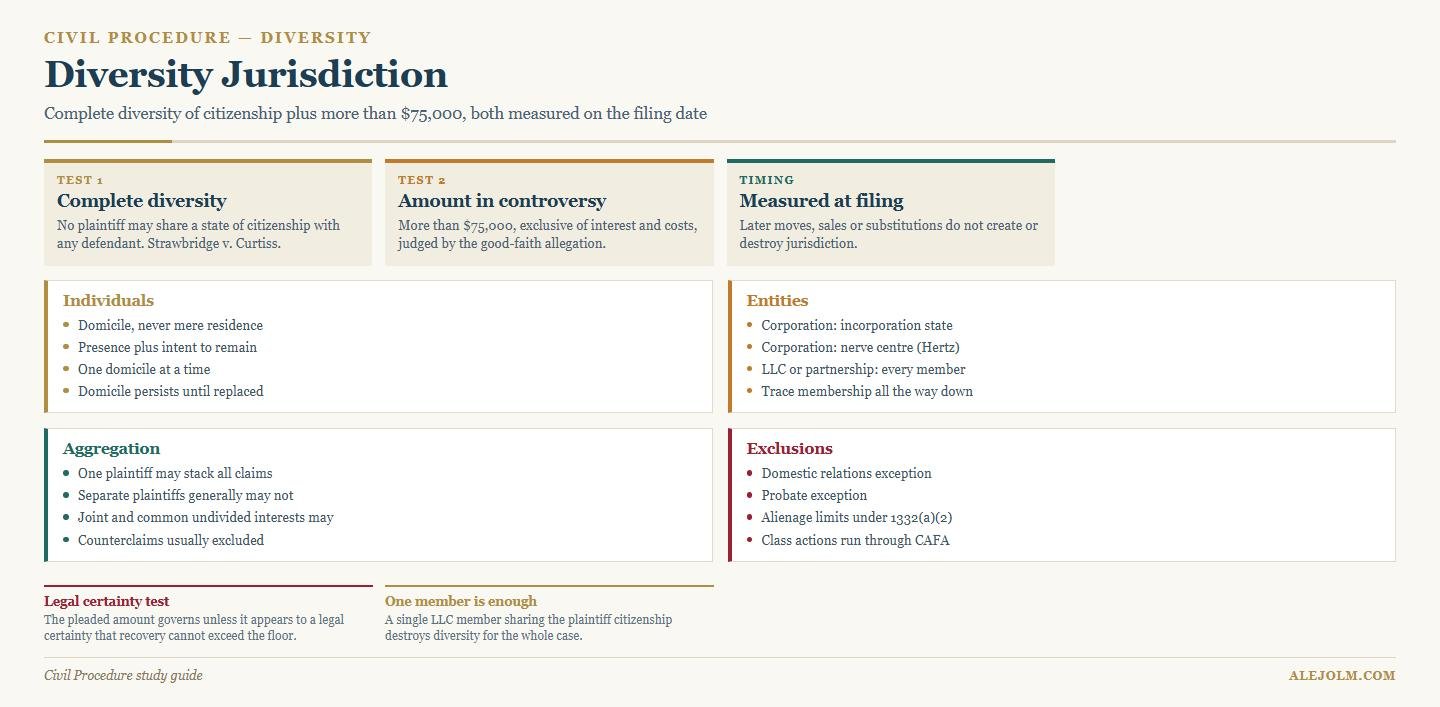
Diversity jurisdiction exists so that an out-of-state litigant is not tried in a courthouse where the other side has a home-field advantage. Two conditions must be satisfied at the moment…
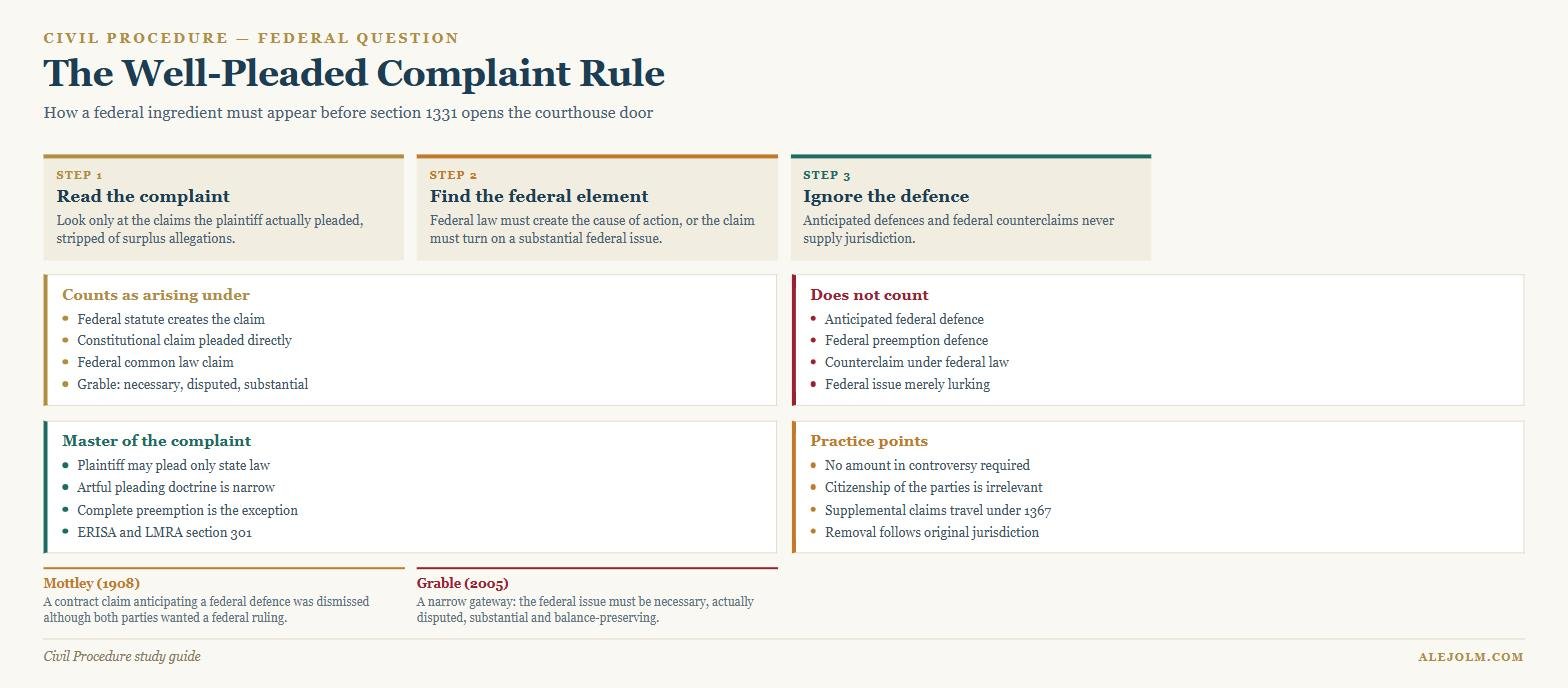
Federal question jurisdiction is the gateway most litigants assume is wide open and most often find closed. Section 1331 of title 28 lets district courts hear civil actions "arising under"…
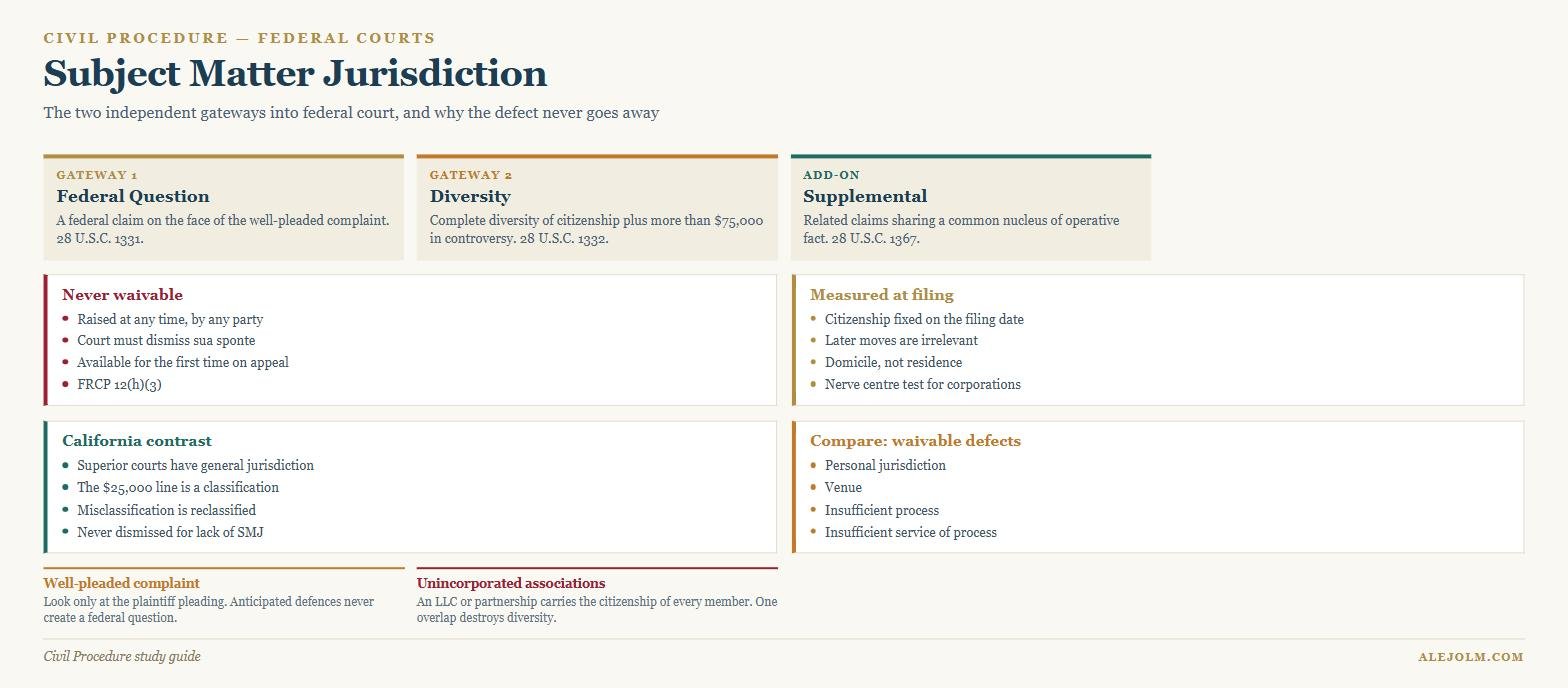
Subject matter jurisdiction is the single question a federal court must answer before it does anything else: does this court have the power to decide this kind of dispute at…
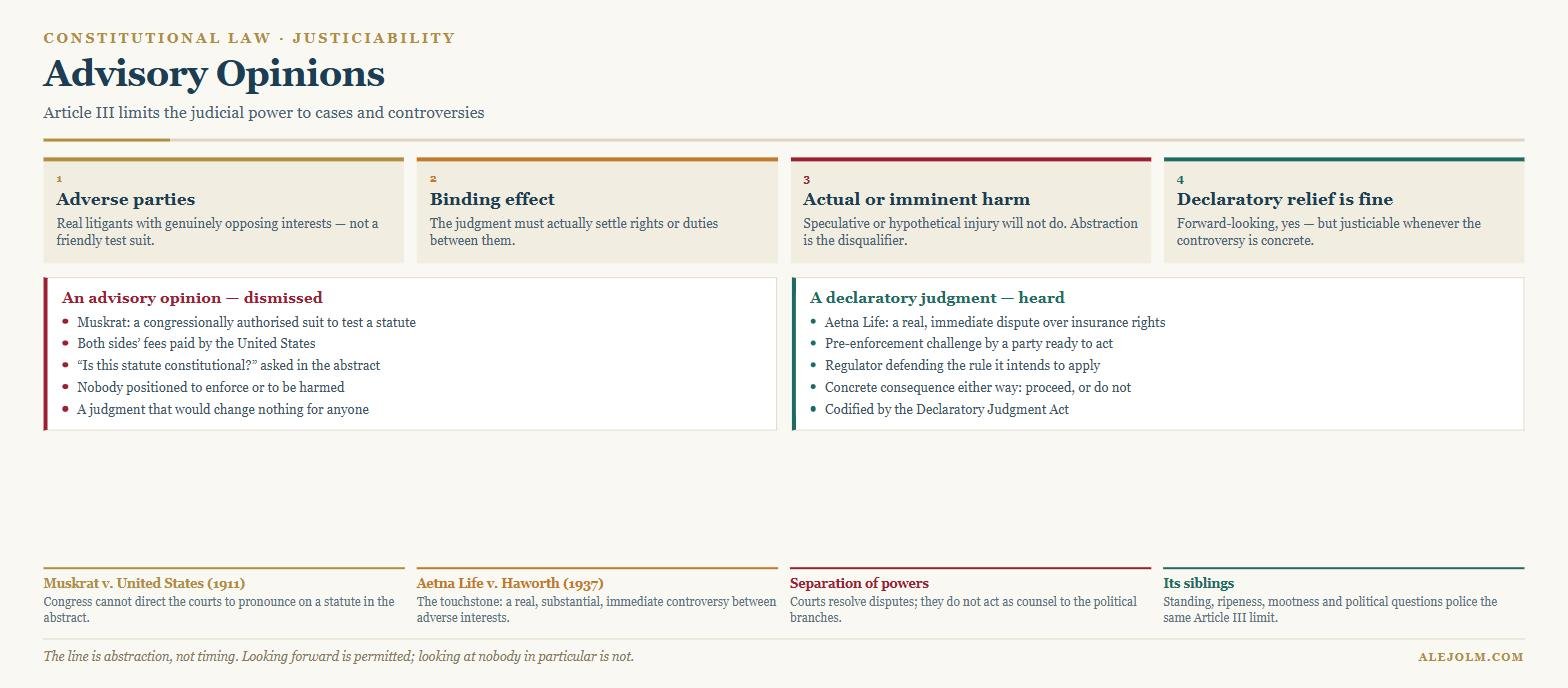
Article III extends the judicial power to “Cases” and “Controversies”, and those two words do a great deal of work. They mean that a federal court may resolve disputes between…