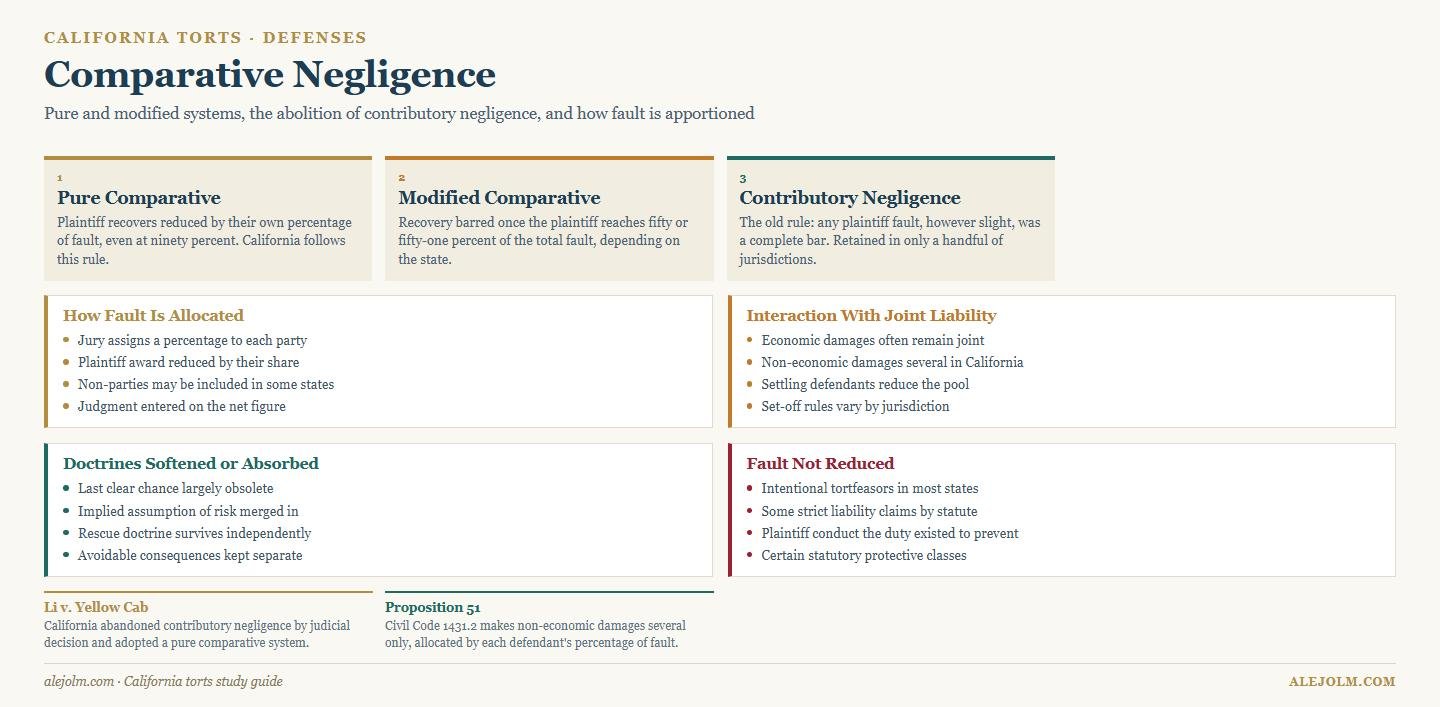
Comparative negligence reduces a plaintiff's recovery in proportion to the plaintiff's own share of responsibility for the injury. It replaced a rule of startling harshness: at common law, a plaintiff…
Conversion in Tort Law: California Elements and Remedies
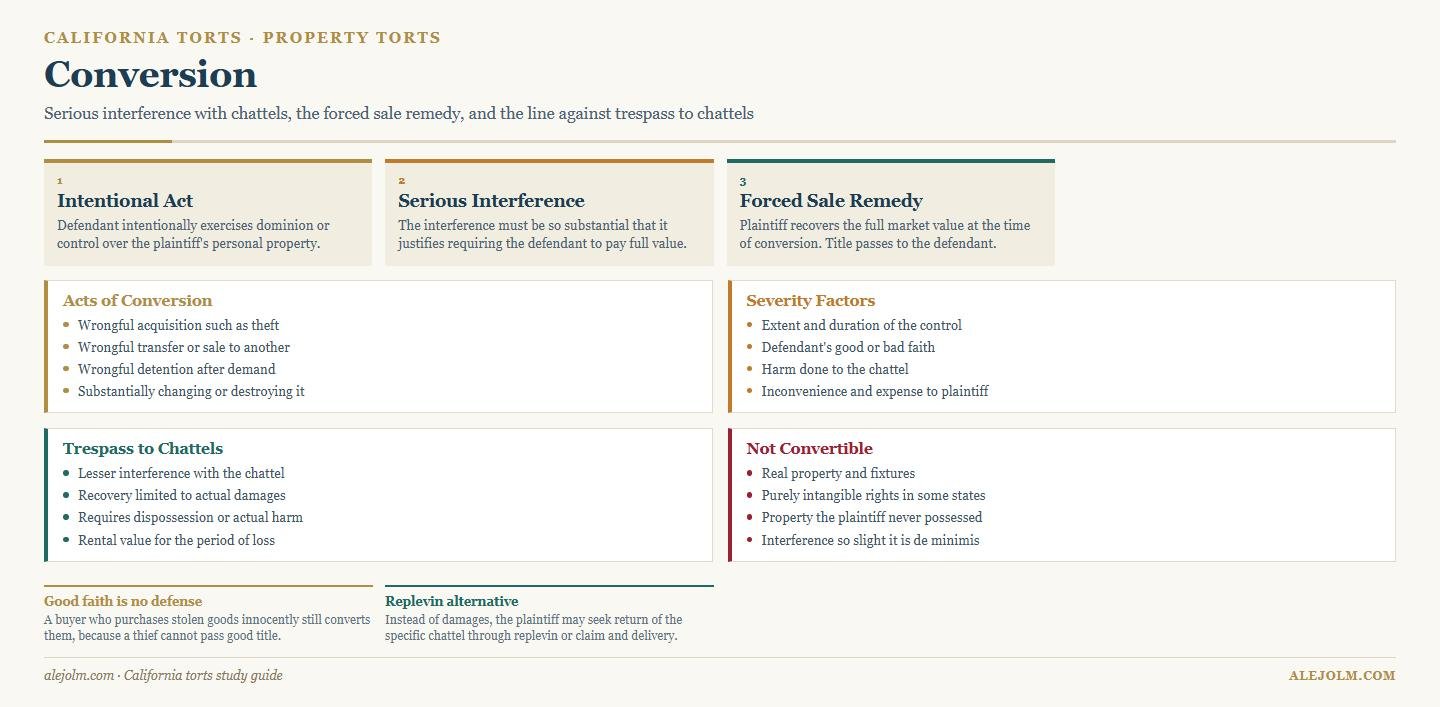
Conversion is an intentional exercise of dominion or control over another person's personal property that so seriously interferes with the owner's rights that the law requires the defendant to pay…
Intentional Infliction of Emotional Distress in California
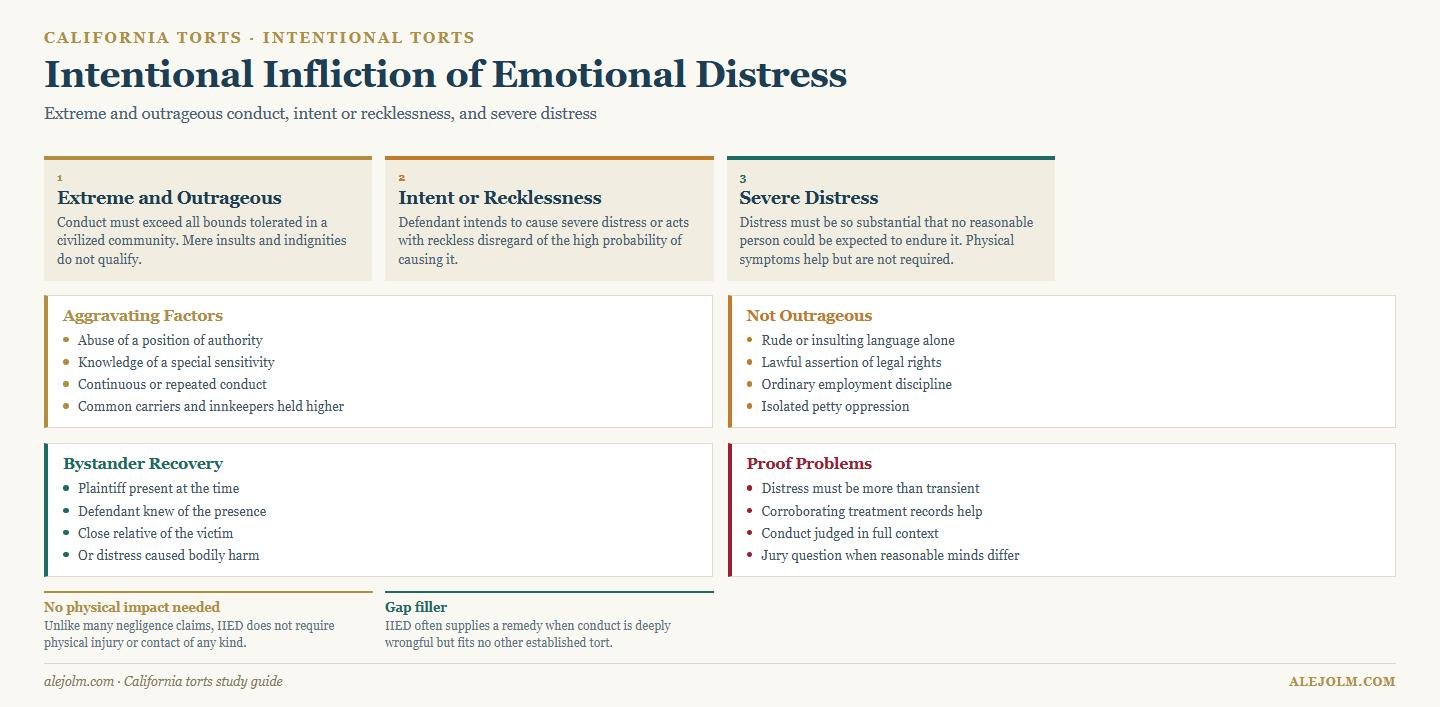
Intentional infliction of emotional distress is the tort that catches conduct so far beyond the bounds of decency that the law will impose liability even though no one was touched,…
Provisional Remedies in California Civil Litigation
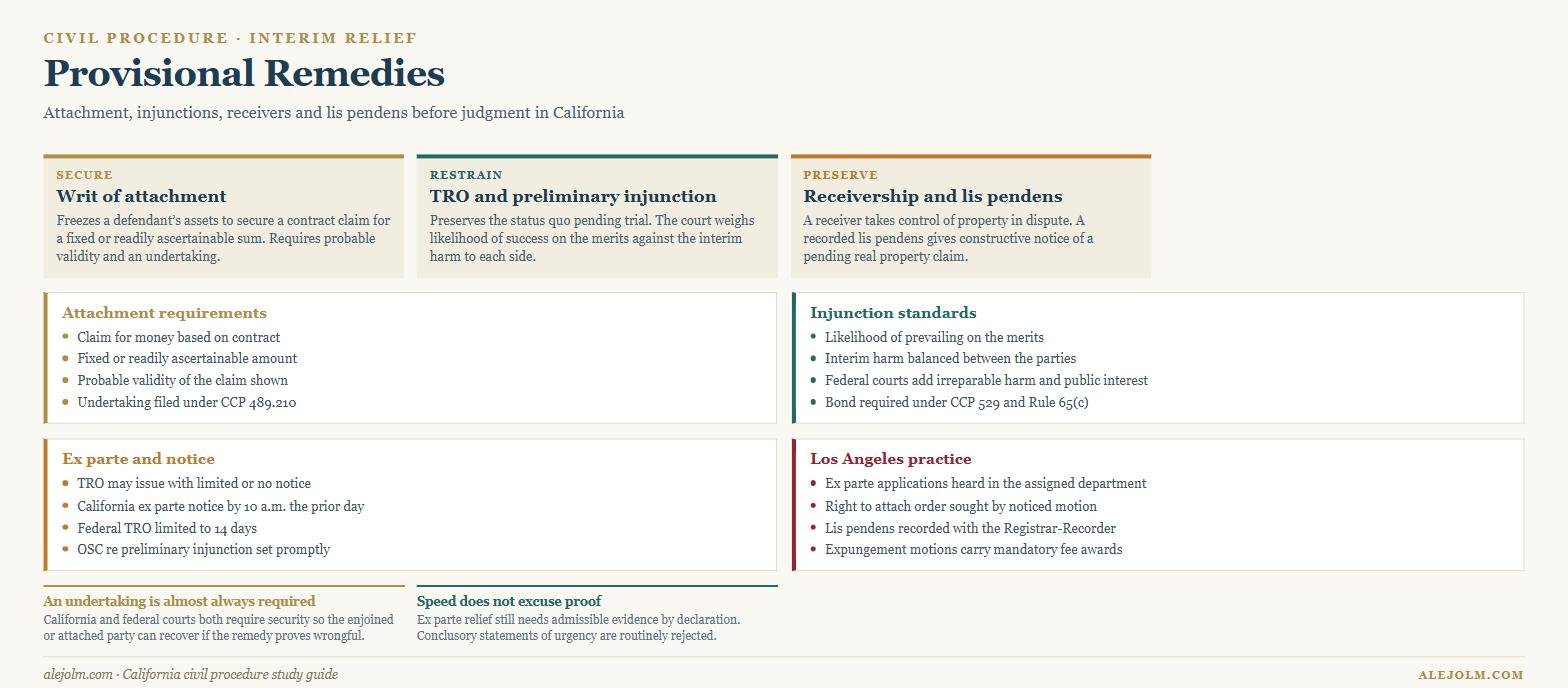
Provisional remedies are the tools that keep a lawsuit from becoming worthless before it is decided. Litigation takes years. Assets can be moved, buildings can be demolished, trade secrets can…
Counterclaims and Cross-Claims in California Practice
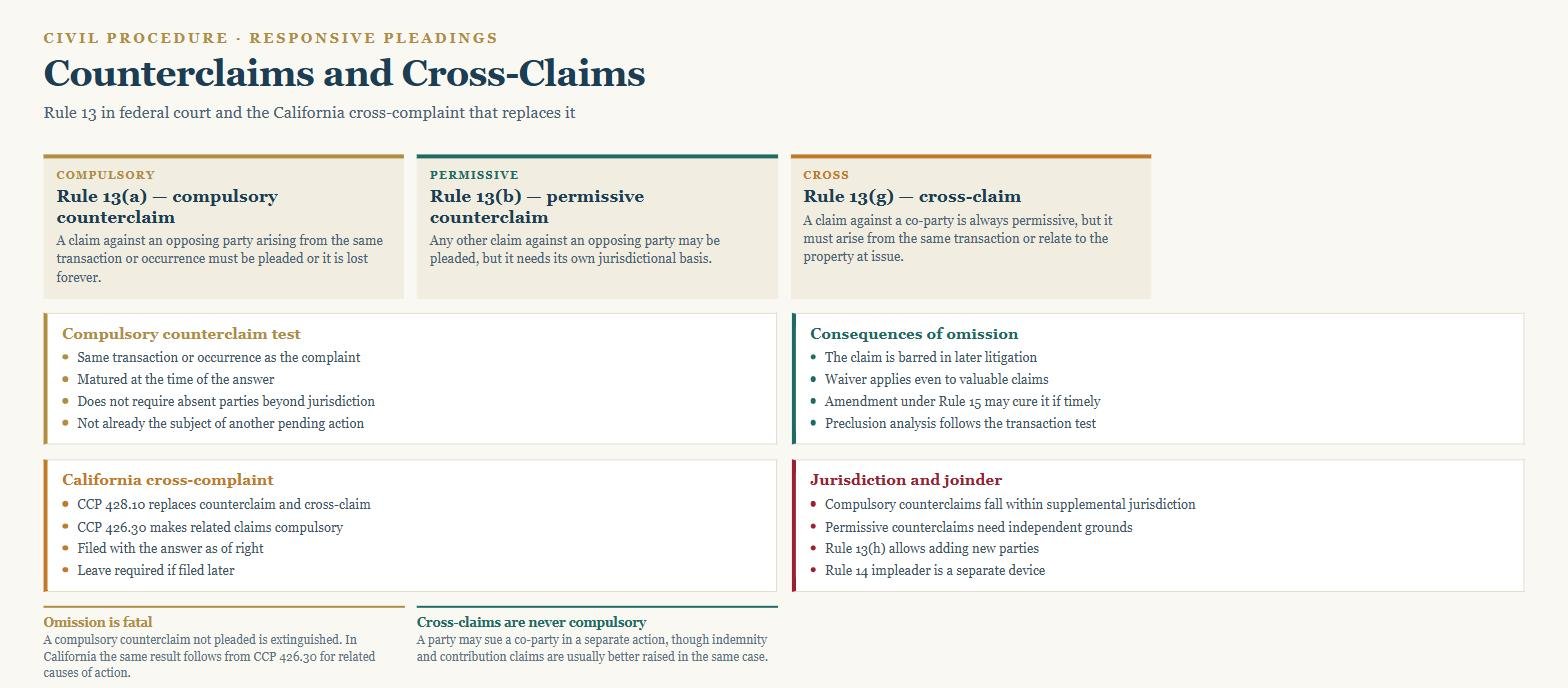
Counterclaims and cross-claims are how a defendant stops being purely defensive. A counterclaim goes back against the plaintiff; a cross-claim goes sideways against a co-defendant. One of them can be…
In Rem and Quasi In Rem Jurisdiction in California
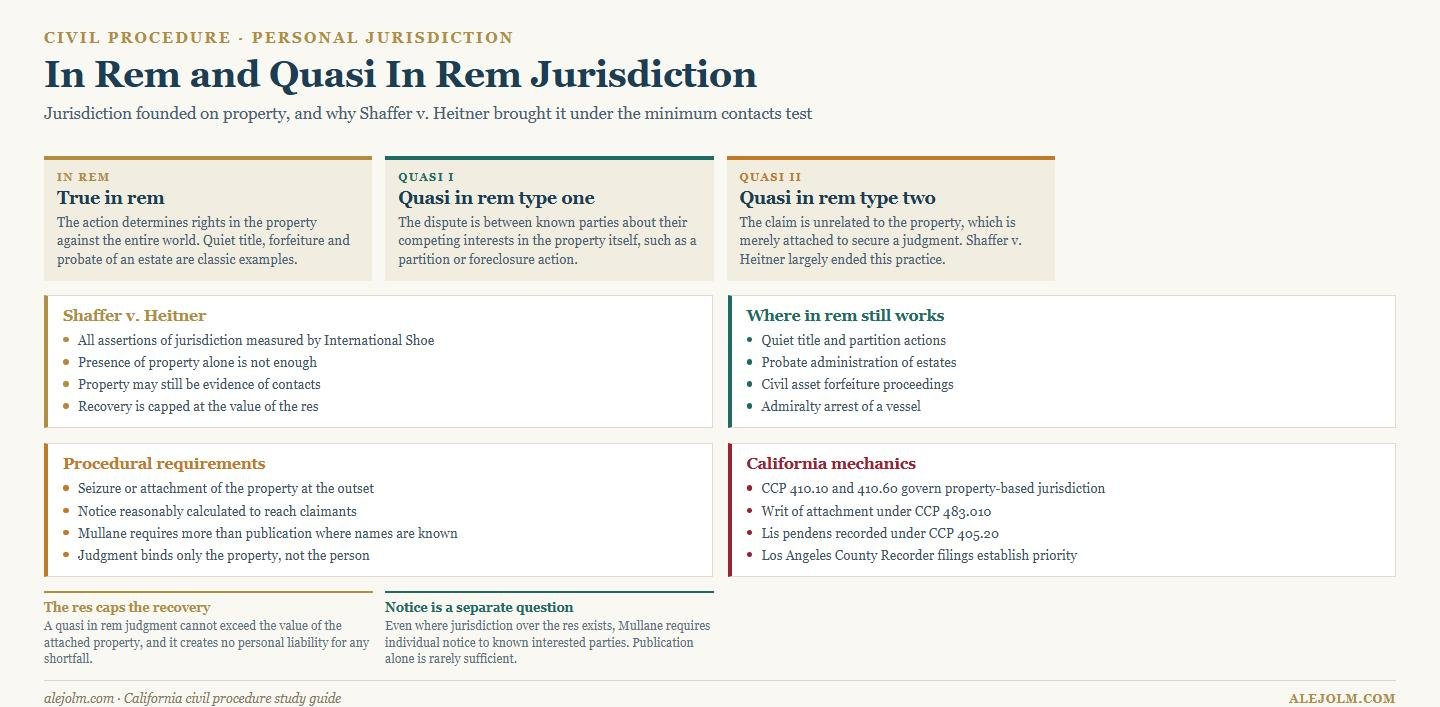
In rem jurisdiction is judicial power founded on property rather than on the person. Instead of asking whether the court can bind a defendant, it asks whether the court can…
Joinder of Claims and Parties in California Lawsuits
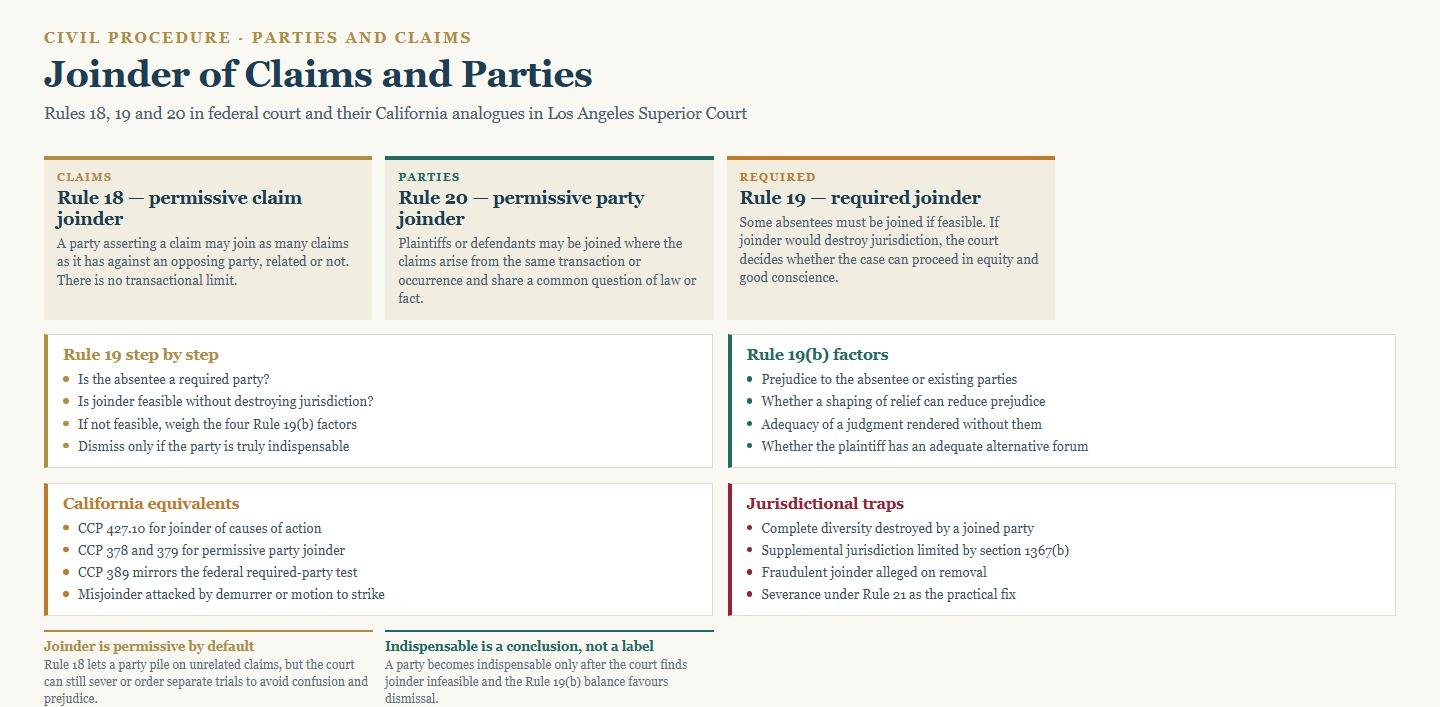
Joinder of claims and parties determines how much of a dispute fits inside a single lawsuit. Get it right and one action resolves everything. Get it wrong and you face…
Stream of Commerce Jurisdiction in California Courts
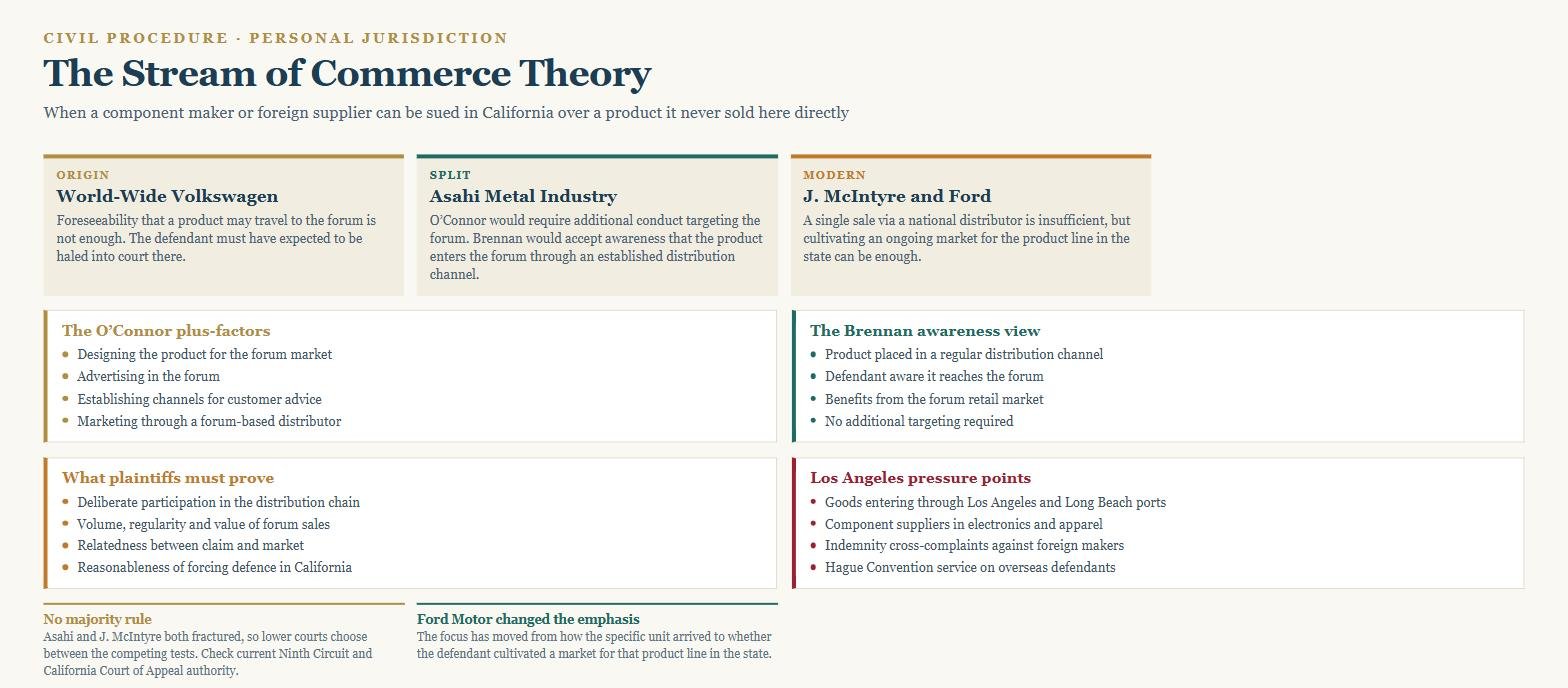
The stream of commerce theory asks whether a manufacturer that never sold anything in California can still be sued here because its product travelled into the state through someone else’s…
Minimum Contacts and Due Process in California Courts
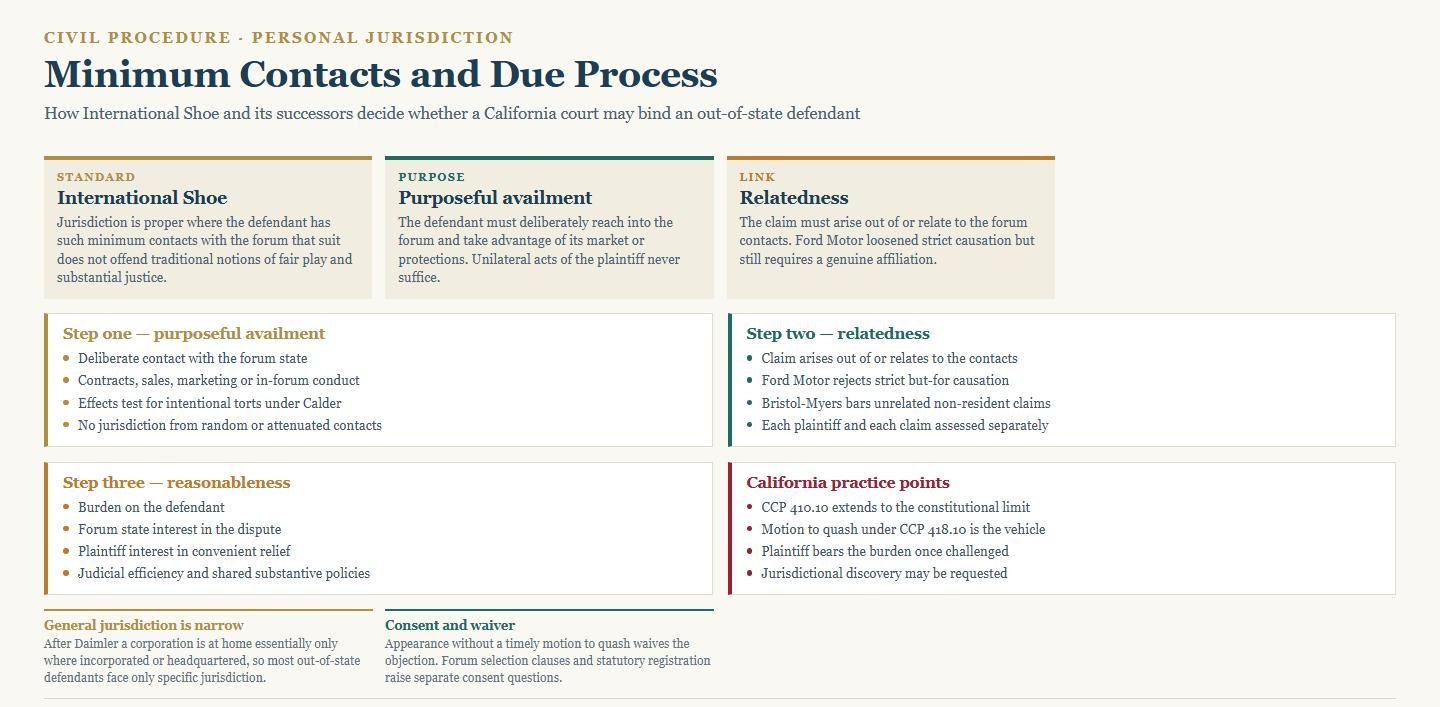
The minimum contacts test is the constitutional gatekeeper for personal jurisdiction. Before a court in Los Angeles can enter a binding judgment against a company in Texas or a supplier…
The Final Judgment Rule and Interlocutory Appeal Routes
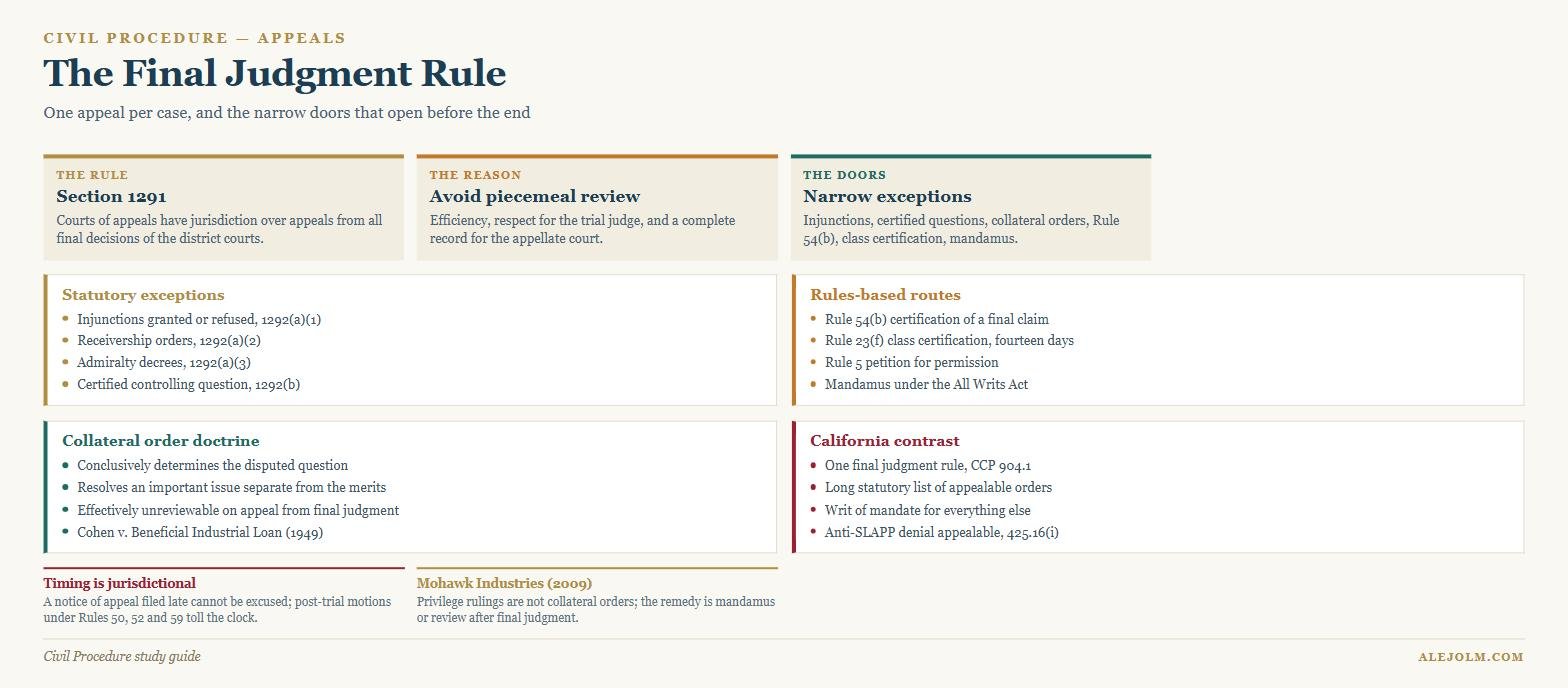
American appellate practice rests on a simple premise: one appeal per case, taken at the end. The final judgment rule in 28 U.S.C. § 1291 gives the courts of appeals…