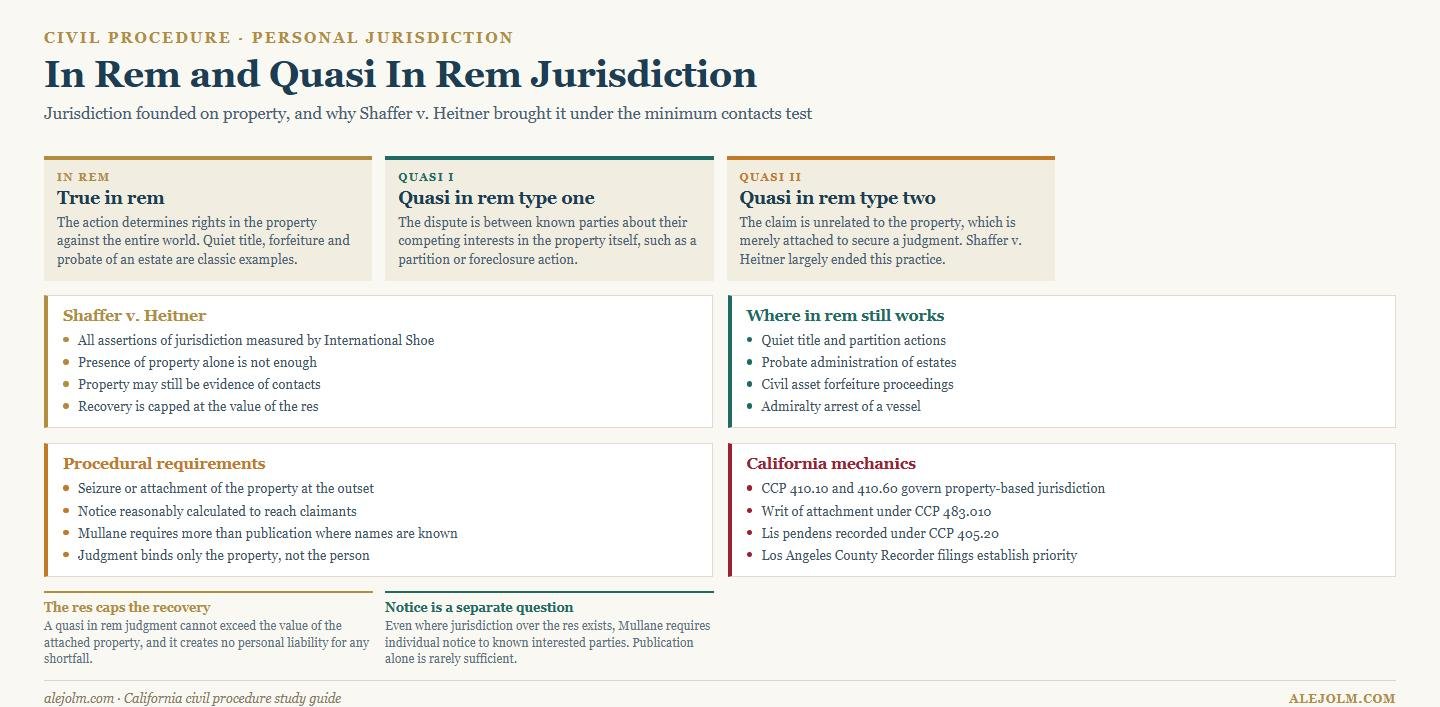
In rem jurisdiction is judicial power founded on property rather than on the person. Instead of asking whether the court can bind a defendant, it asks whether the court can…
In Rem and Quasi In Rem Jurisdiction in California

Lawyer — real estate law, transactions and doctoral research.
In rem jurisdiction is judicial power founded on property rather than on the person. Instead of asking whether the court can bind a defendant, it asks whether the court can…
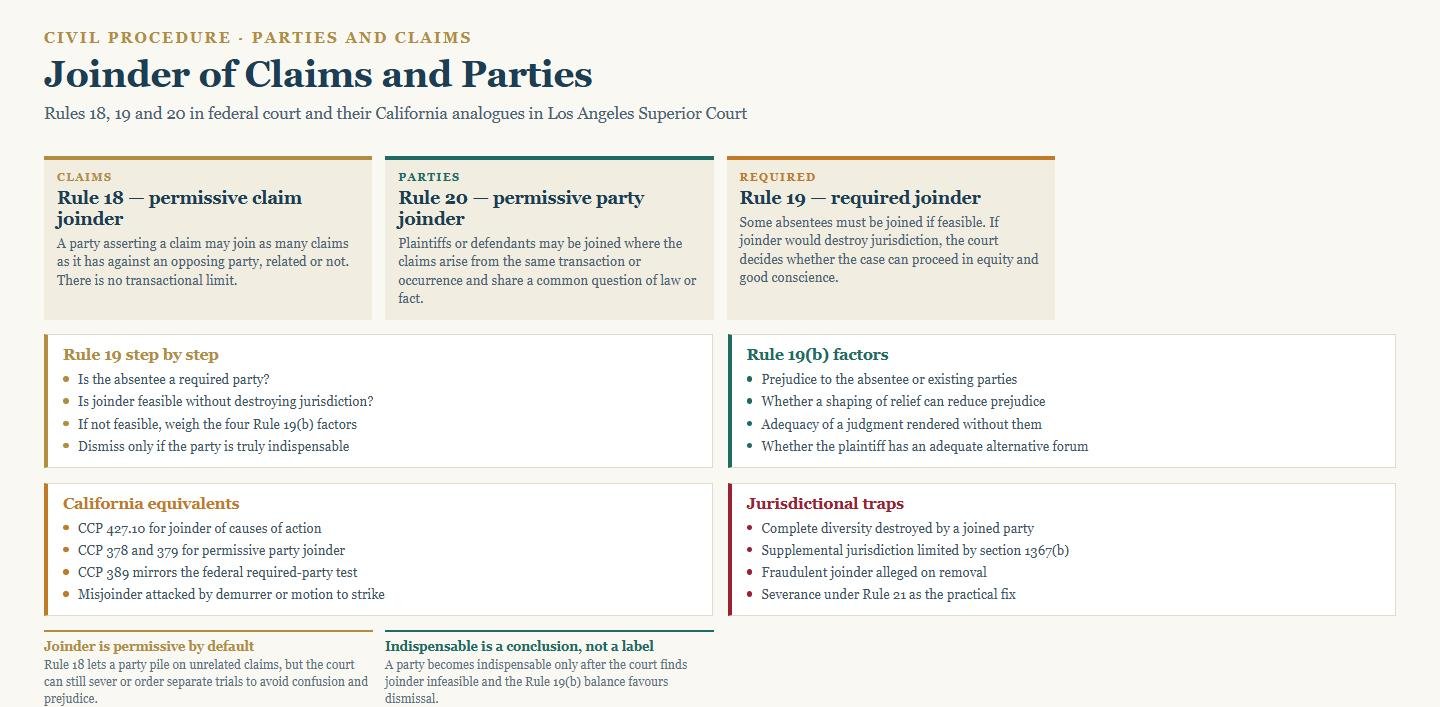
Joinder of claims and parties determines how much of a dispute fits inside a single lawsuit. Get it right and one action resolves everything. Get it wrong and you face…
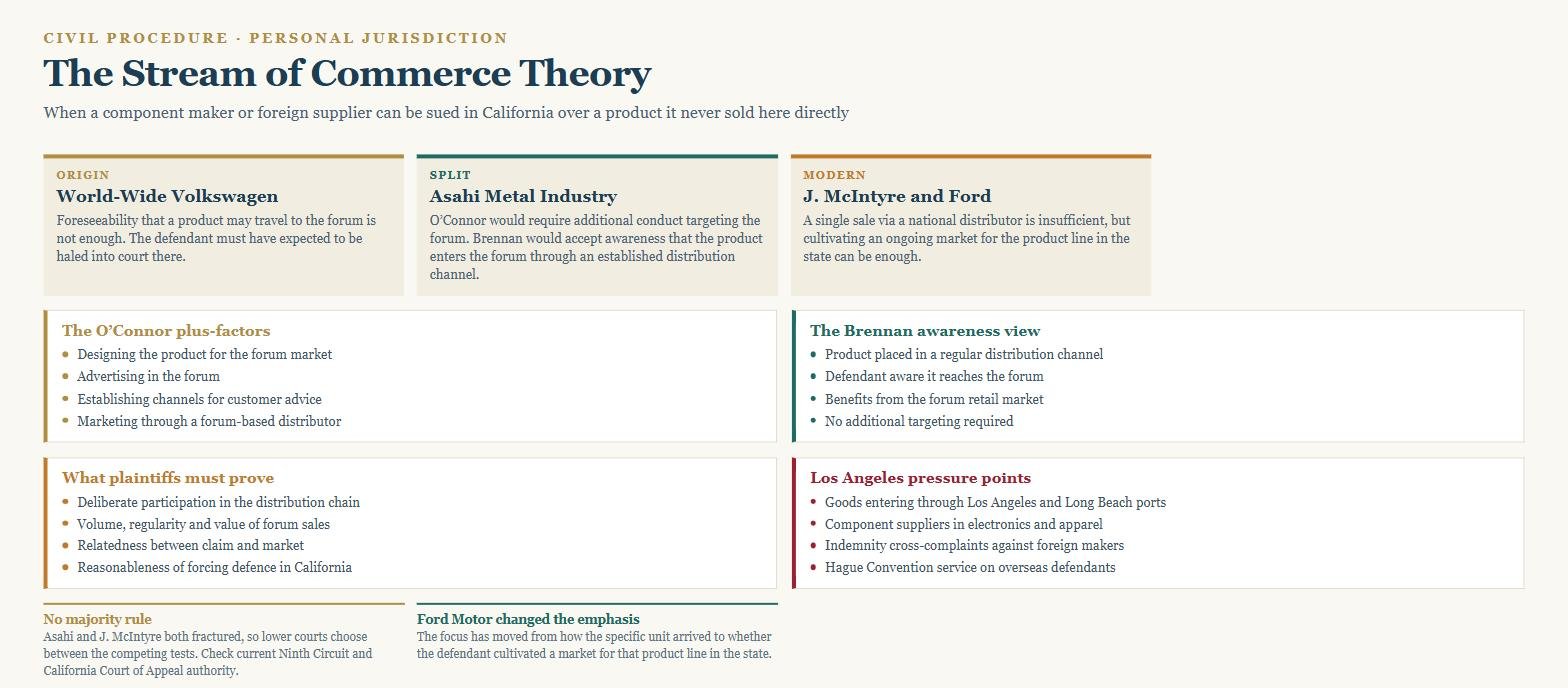
The stream of commerce theory asks whether a manufacturer that never sold anything in California can still be sued here because its product travelled into the state through someone else’s…
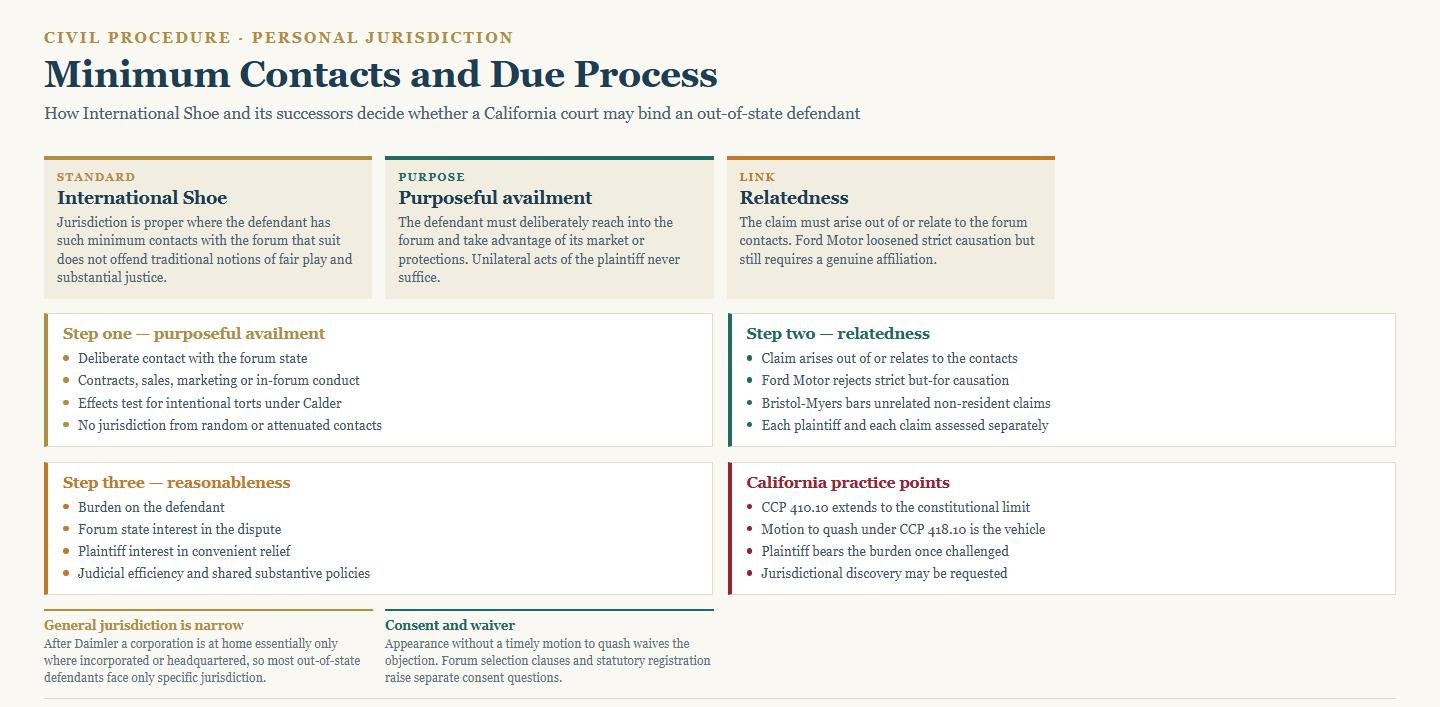
The minimum contacts test is the constitutional gatekeeper for personal jurisdiction. Before a court in Los Angeles can enter a binding judgment against a company in Texas or a supplier…
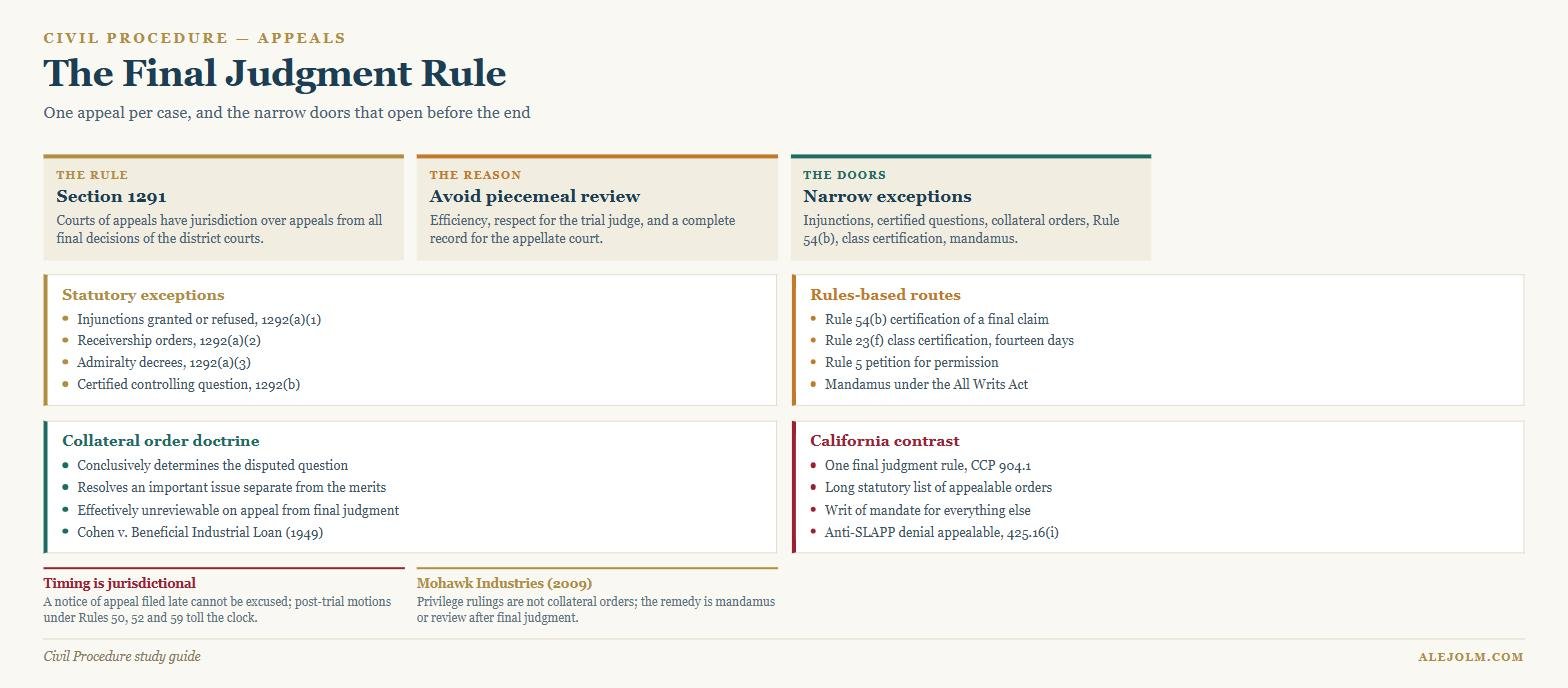
American appellate practice rests on a simple premise: one appeal per case, taken at the end. The final judgment rule in 28 U.S.C. § 1291 gives the courts of appeals…
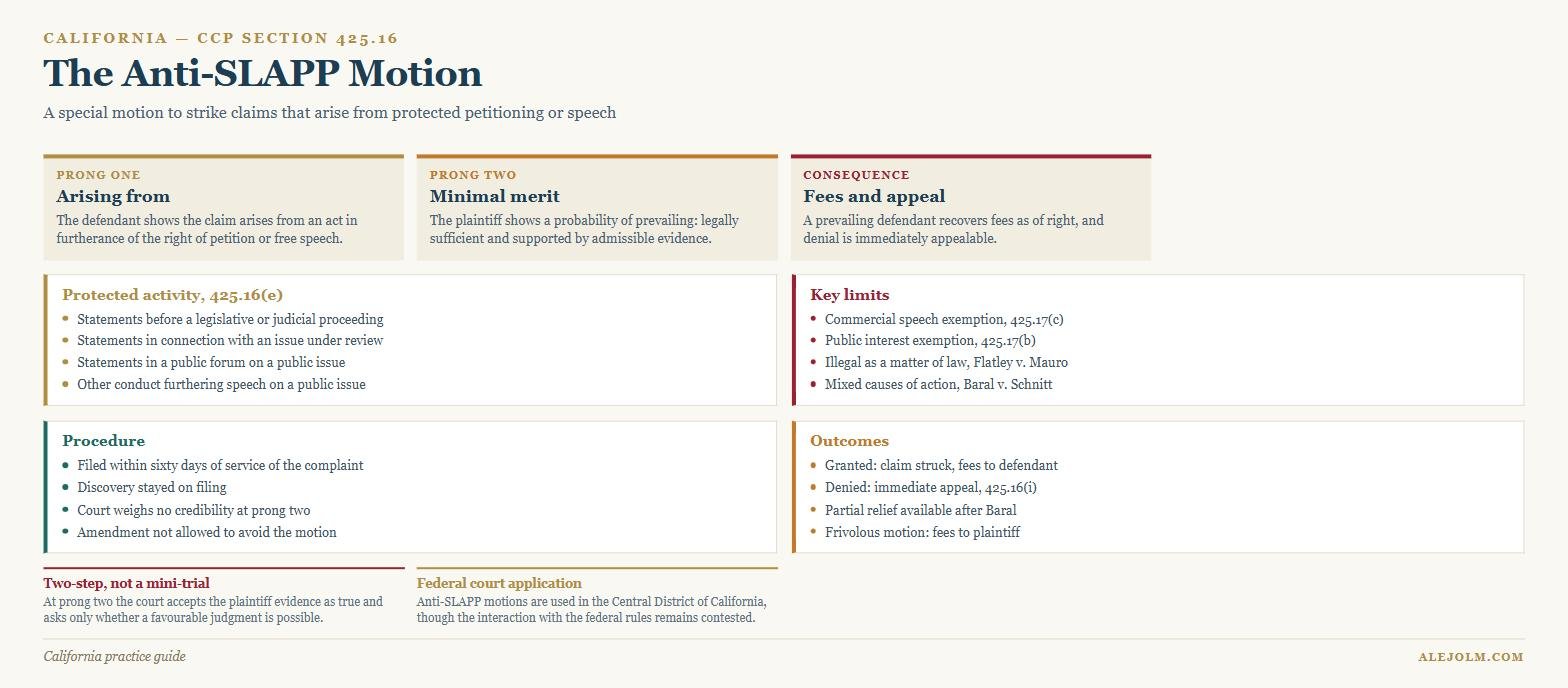
A SLAPP is a strategic lawsuit against public participation — litigation filed not to win but to impose cost and silence a critic. California’s answer is Code of Civil Procedure…
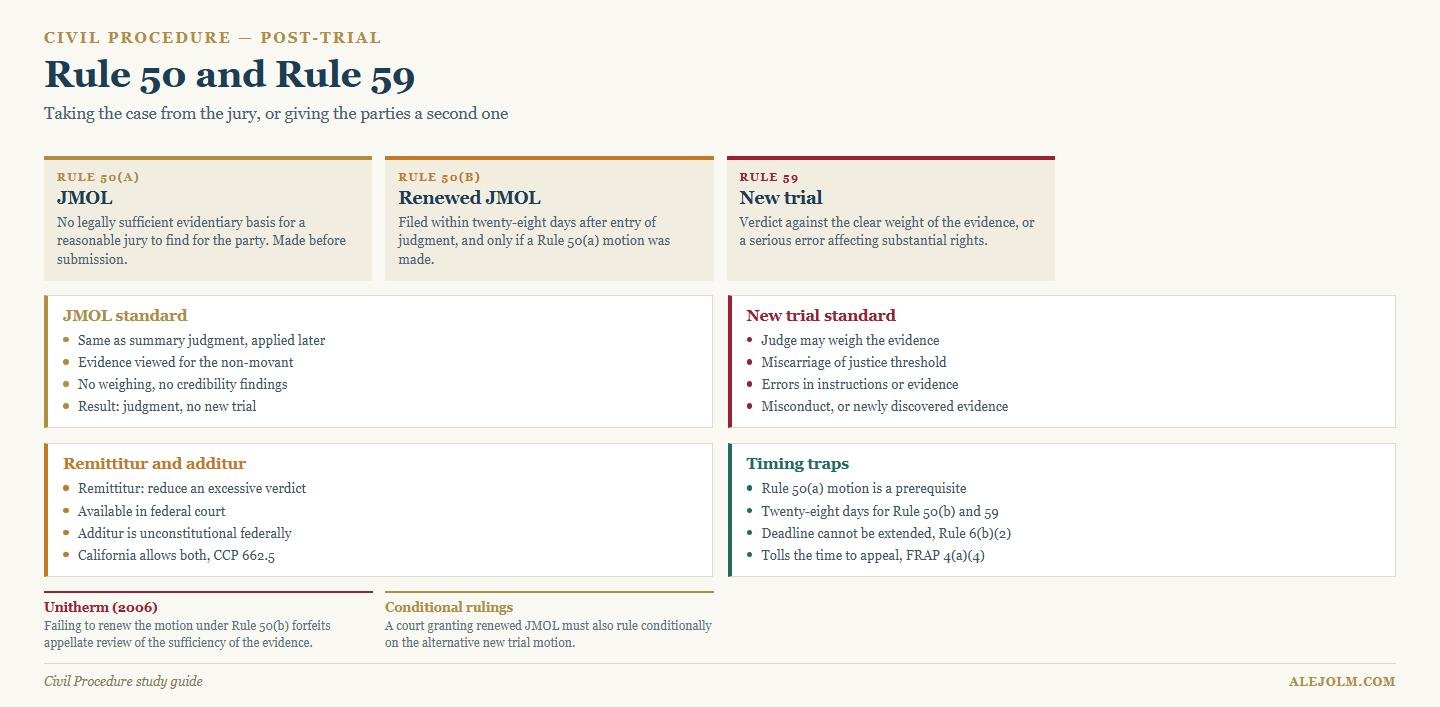
After a jury returns a verdict, two very different motions are available. Judgment as a matter of law under Rule 50 asks the court to say that no reasonable jury…
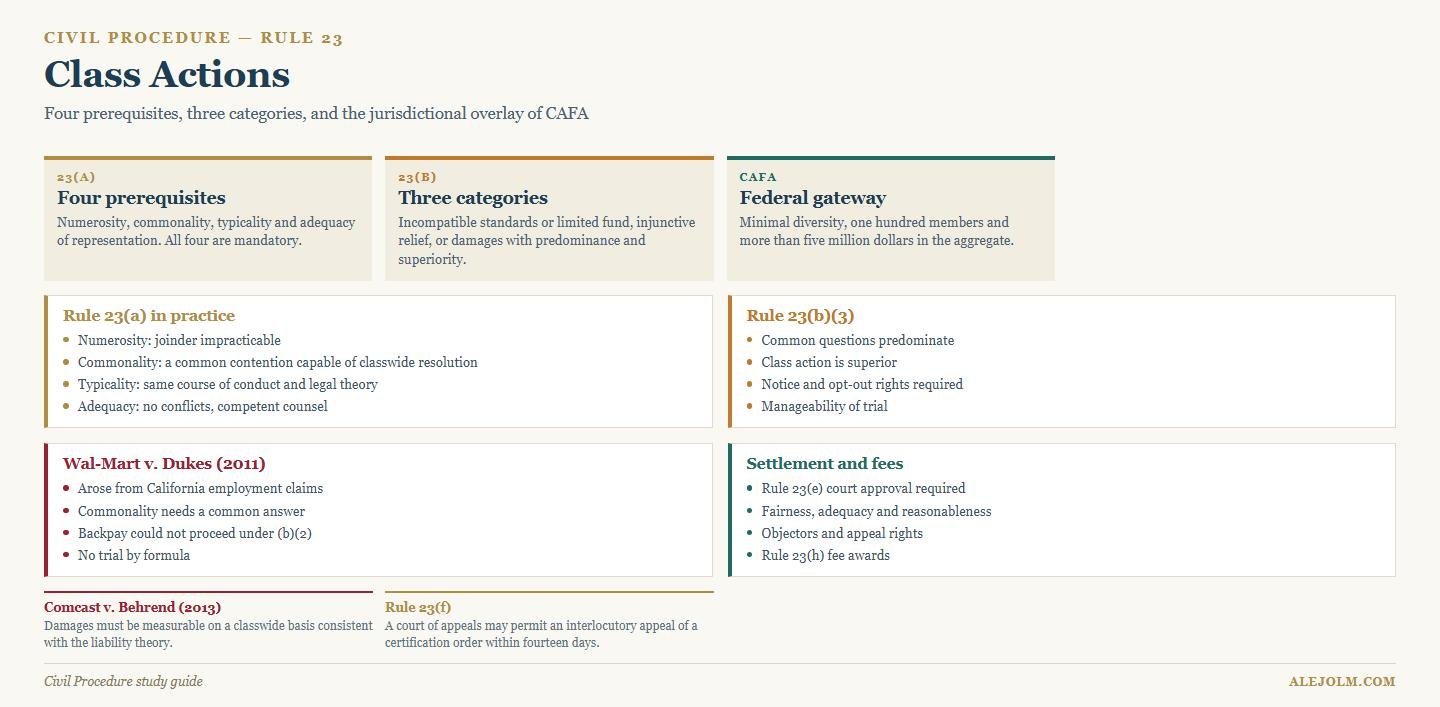
Class actions let one plaintiff litigate on behalf of many. That power is exceptional, because absent members are bound by a judgment they took no part in obtaining. Rule 23…
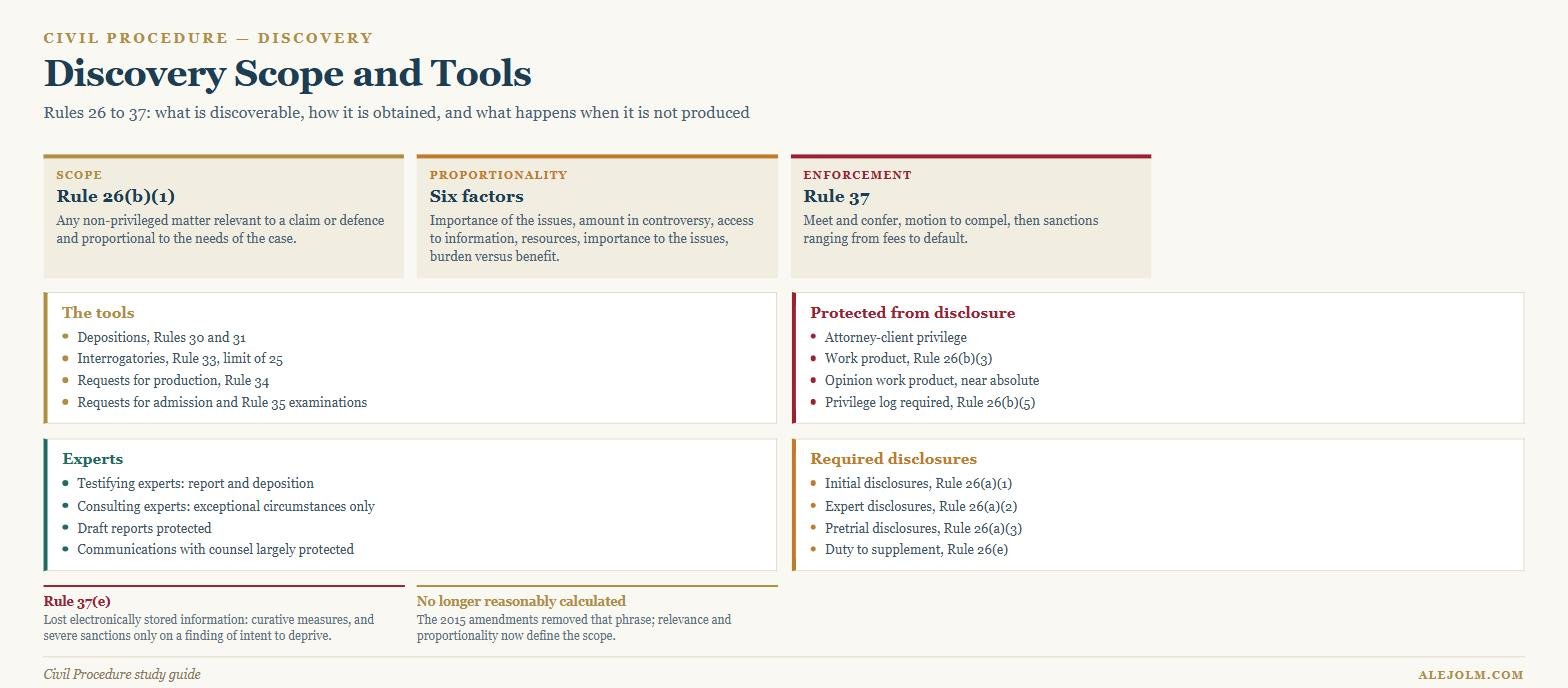
Discovery is where most civil cases are actually decided. The federal discovery rules in Rules 26 through 37 give each side access to the other’s evidence before trial, on the…
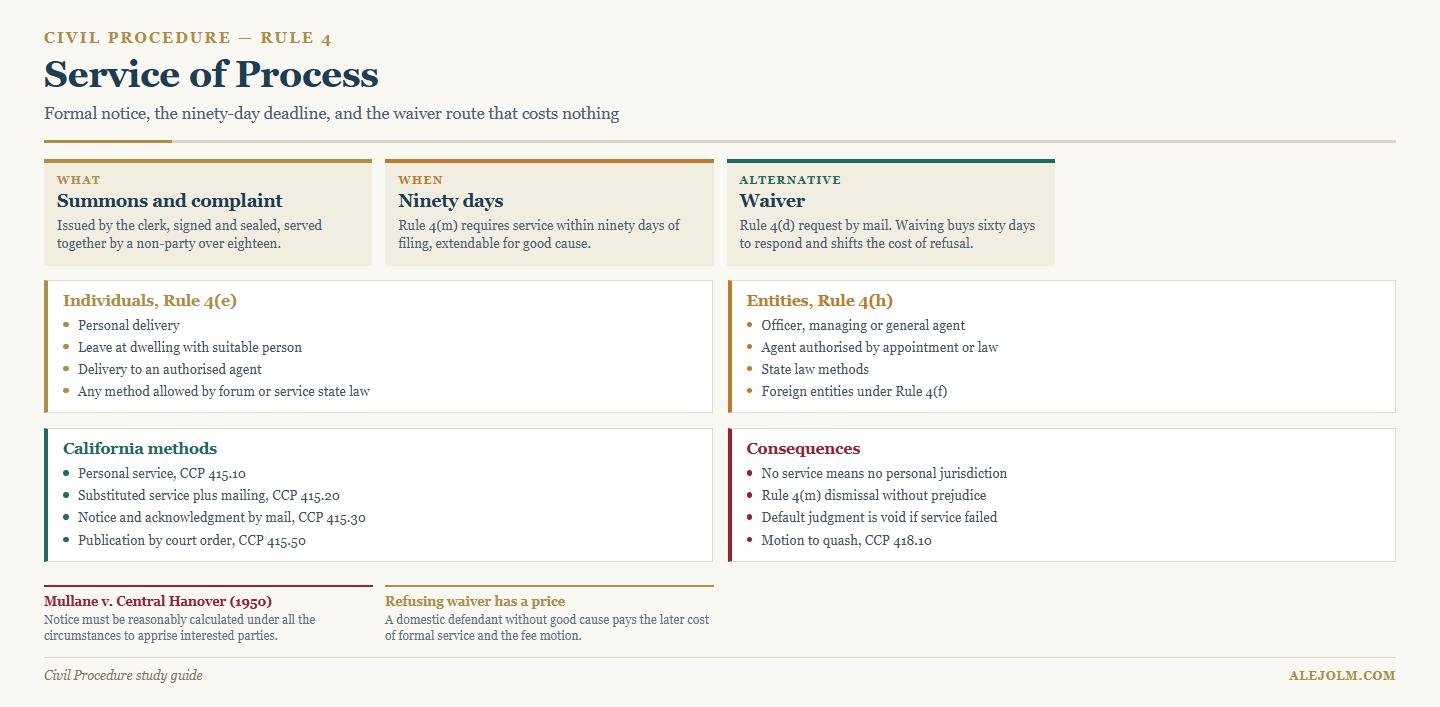
Service of process is the formal act that brings a defendant under a court’s authority. Without it, personal jurisdiction does not attach, a default judgment is void, and years of…