
The treaty power is divided between two actors. Under Article II, section 2, clause 2 the President negotiates, and the Senate must give its advice and consent by a vote of two-thirds of the senators present. Once that has happened, the treaty is federal law under the Supremacy Clause.
This guide explains each step, how a treaty ranks against state law, federal statutes and the Constitution, what Missouri v. Holland actually decided about the reach of the power, and how to distinguish a treaty from an executive agreement.
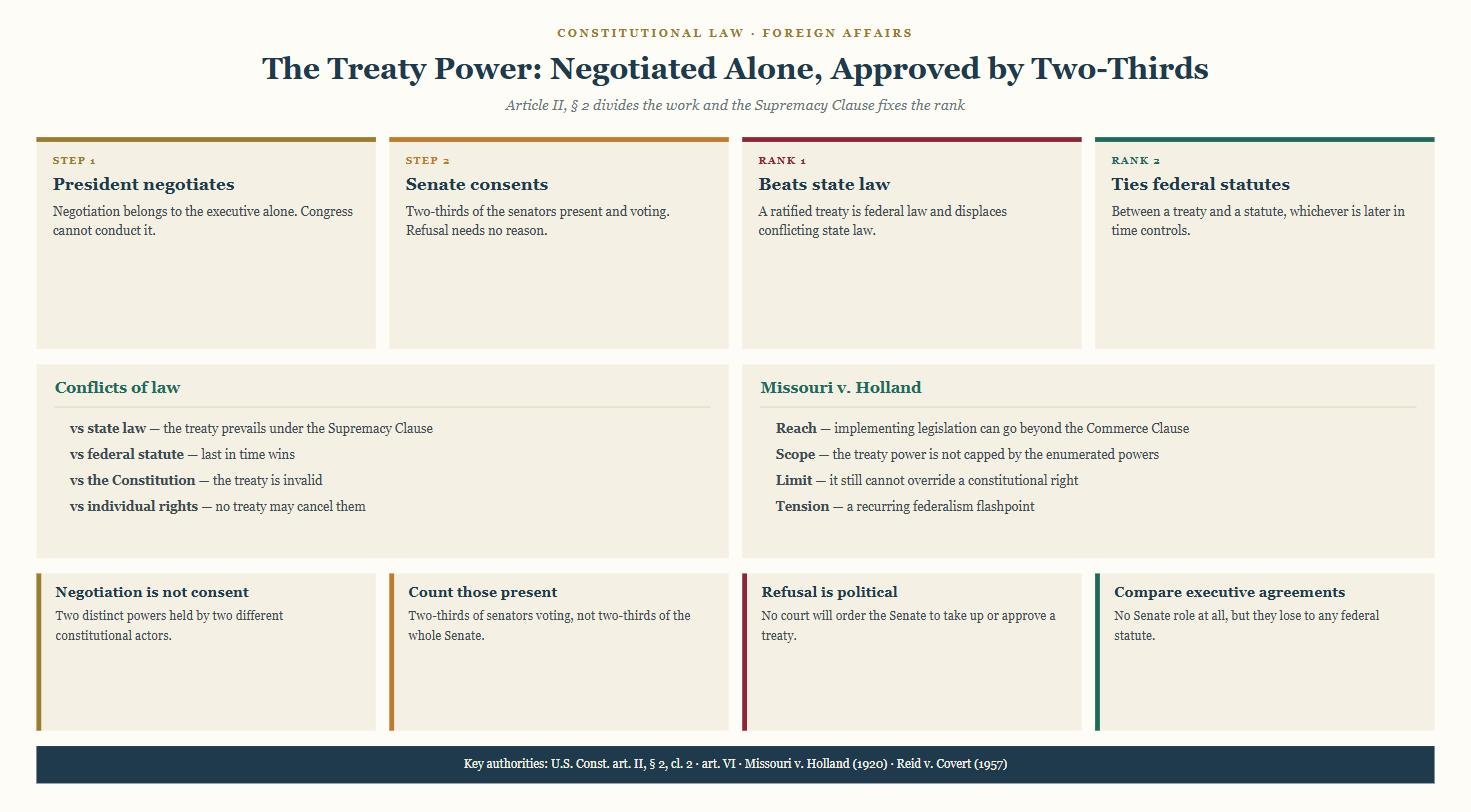
The two steps
Negotiation belongs to the President and the executive branch, and it belongs there exclusively. Congress cannot conduct negotiations itself, and a statute that tried to confine the President to a pre-approved list of terms would intrude on that executive function.
Consent belongs to the Senate, and it belongs there just as exclusively. The threshold is two-thirds of the senators present and voting, which is higher than for ordinary legislation and higher than for confirming an appointment. The Senate may decline to act at all, and it need give no reason, because the decision is political rather than legal.
Exam tip: a treaty that failed in the Senate does not become an executive agreement by relabelling. That is the trap.
Where a treaty ranks
The hierarchy is worth memorising because it converts most questions into a one-line answer.
- Against state law, the treaty wins. A treaty is federal law, so the Supremacy Clause displaces conflicting state provisions.
- Against a federal statute, the later in time wins. Treaties and statutes occupy the same tier, so a subsequent statute can supersede a treaty domestically, and a subsequent treaty can supersede a statute.
- Against the Constitution, the treaty loses. A treaty provision that conflicts with the Constitution is simply invalid, and no treaty can extinguish a constitutional right such as free speech or free exercise.
Note that the last-in-time rule operates only in domestic law. Superseding a treaty by statute does not release the United States from the international obligation, which is why the point is often examined as a conflict-of-laws question rather than a foreign-policy one.
Missouri v. Holland and the reach of the power
Missouri v. Holland upheld legislation implementing a migratory bird treaty even though the same regulation had been held beyond Congress’s power when enacted on its own. The lesson is that the treaty power is not capped by the enumerated powers, so treaty-implementing legislation can reach subjects that would otherwise lie outside the Commerce Clause.
That expansion has limits. The treaty power cannot be used to escape the Bill of Rights, and it does not license the federal government to do to individuals what the Constitution forbids. Reid v. Covert makes the point directly: an international agreement cannot deprive a citizen of a constitutional trial right.
| Situation | Result | Reason |
|---|---|---|
| Treaty conflicts with a state inheritance statute | Treaty prevails | Supremacy Clause |
| Statute enacted after the treaty conflicts with it | Statute prevails domestically | Last in time wins |
| Treaty purports to authorise trials without a jury | Invalid | No treaty overrides a constitutional right |
| Treaty receives 62 Senate votes with all senators present | Not in force | Two-thirds not reached |
| Implementing statute regulates a purely local subject | Valid | Missouri v. Holland |
| Senate never votes on a submitted treaty | Nothing happens | Inaction is political and unreviewable |
Worked example: the failed treaty
The President negotiates a comprehensive agreement covering trade, military cooperation and environmental standards, signs it, and submits it to the Senate, where it receives 62 of 100 votes. He then declares that the instrument takes effect as an executive agreement. The issue is whether it binds. The rule is that a treaty requires the consent of two-thirds of the senators present and voting. Applying it, 62 falls short of the required 67, so there is no treaty, and the President cannot convert a rejected treaty into an executive agreement in order to reach the same result. The instrument is not binding as a treaty.
Change the facts so that the agreement is a narrow settlement of claims, negotiated without any Senate submission. That is much more plausibly a genuine executive agreement, since scope, permanence and effect on domestic law are the factors that separate the two categories.
Treaties compared with executive agreements
An executive agreement is made by the President alone and requires no Senate participation. The trade-off is rank: an executive agreement displaces conflicting state law but yields to any federal statute, whereas a treaty stands on the same level as a statute and is governed by the last-in-time rule. Keeping those two hierarchies straight is the point of most questions that combine the topics.
Even a valid agreement of either kind still needs money, and money requires an appropriation, so the spending power remains a practical check on foreign commitments.
Common mistakes that cost points
- Saying the President ratifies. He negotiates; the Senate consents.
- Taking two-thirds of the full Senate rather than of those present and voting.
- Treating every international agreement as a treaty.
- Letting a treaty override a constitutional right.
- Forgetting the last-in-time rule when a statute follows a treaty.
- Giving an executive agreement the same rank as a treaty.
- Asking a court to compel the Senate to act.
- Reading Missouri v. Holland as removing all limits rather than the enumerated-powers limit.
Frequently asked questions
Is a treaty self-executing?
Some treaty provisions operate as domestic law immediately; others require implementing legislation before a court can apply them. The distinction turns on the text and the intention of the parties.
Can the President withdraw from a treaty alone?
Practice suggests yes, and challenges have generally been treated as raising political questions. The Constitution says nothing express about termination.
Do treaties preempt state law automatically?
A treaty that operates as domestic law does preempt conflicting state law. Where implementing legislation is needed, the preemptive effect comes from the statute.
Treaties in California: land titles and consular rights, 2026
Treaties are supreme law, and California has an unusually direct relationship with one of them. The Treaty of Guadalupe Hidalgo, which ended the war with Mexico in 1848, promised protection for existing property rights, and the chain of title for a great deal of land in Los Angeles County runs back through Mexican rancho grants confirmed, or rejected, under the machinery Congress created to implement that promise. Old rancho boundaries still surface in title work and boundary disputes.
The other treaty that appears constantly in county practice is the Vienna Convention on Consular Relations. California has implemented its notification obligations by statute: section 834c of the California Penal Code requires law enforcement to advise an arrested foreign national of the right to have their consulate notified. That is a rare instance of a state legislating to secure treaty compliance, and it matters greatly in a county with residents from almost every country.
The doctrinal framework:
- Self-execution determines enforceability. Medellín v. Texas (2008) held that a non-self-executing treaty creates no domestic rule of decision without implementing legislation.
- State remedies can fill the gap. Because California legislated, a notification failure has consequences under state law even where the treaty alone would not supply a remedy.
- Treaties can reach subjects otherwise outside federal power. Missouri v. Holland (1920) remains the authority, though its limits are debated.
- Later statutes and treaties can override earlier ones. The last expression of sovereign will controls as a matter of domestic law.
- Family cases apply the Hague Convention. International child abduction petitions are litigated in the Los Angeles Superior Court and in the Central District of California.
- Constitutional limits still bind. No treaty can authorise action the Bill of Rights forbids.
For 2026, ask whether the treaty is self-executing and whether California has implemented it. Read with executive agreements, the Supremacy Clause and the recording acts.
Next steps
Read this with the rest of the foreign-affairs material. Start with Congressional War Powers: Declare, Fund and Command, then The Youngstown Framework: Presidential Power in 3 Zones and The Spending Power and the Five Dole Test Conditions.
For primary sources, read Missouri v. Holland and Reid v. Covert at Justia, the annotation to the Treaty Clause at Cornell LII, and the examination scope published by the State Bar of California.
Related guides
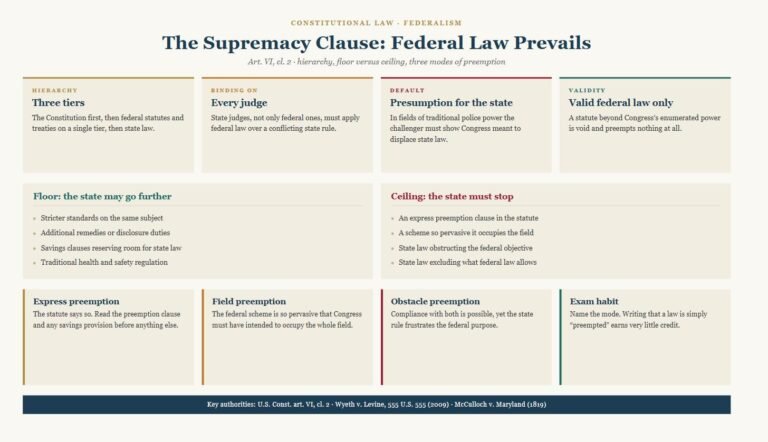 The Supremacy Clause: Floors, Ceilings and Preemption
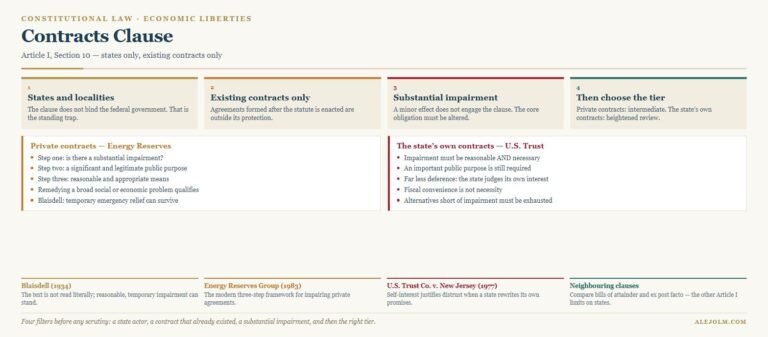 Contracts Clause: When States May Impair Agreements
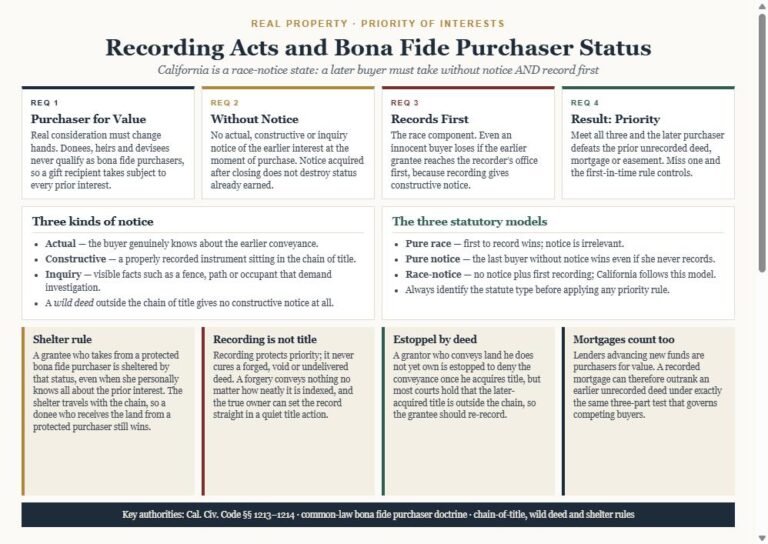 Recording Acts: Race, Notice and Race-Notice Explained
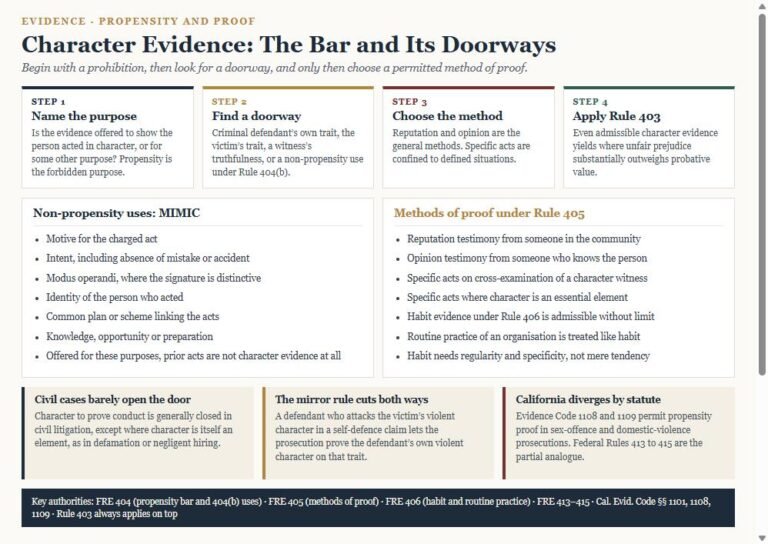 The Character Evidence Rules: Propensity Bar and Doorways
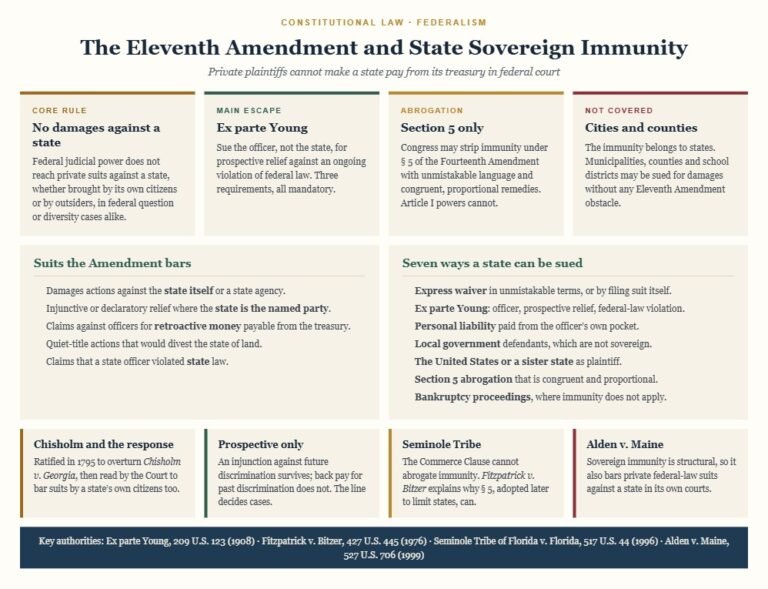 The Eleventh Amendment and State Sovereign Immunity
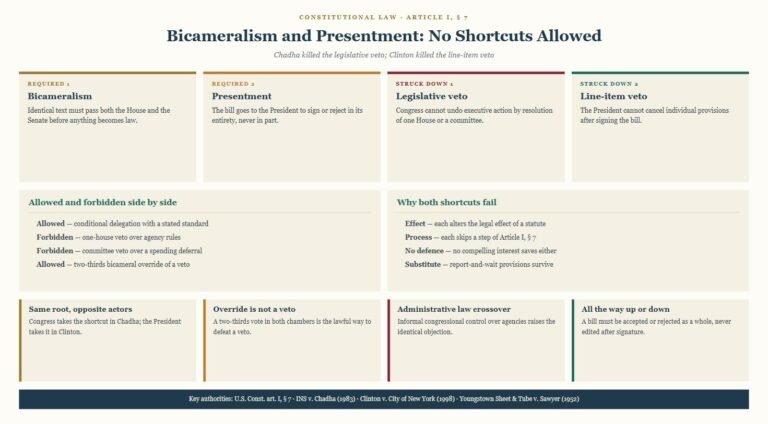 Bicameralism and Presentment: Two Vetoes Struck Down
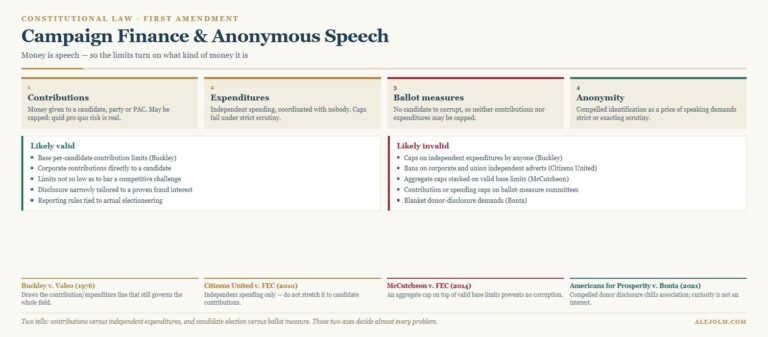 Campaign Finance and Anonymous Speech: The Core Rules
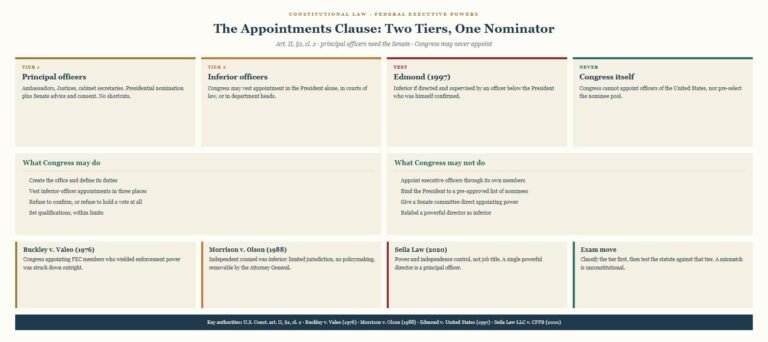 The Appointment Power: Principal and Inferior Officers
 Personal Jurisdiction: The 3-Step Bar Exam Framework
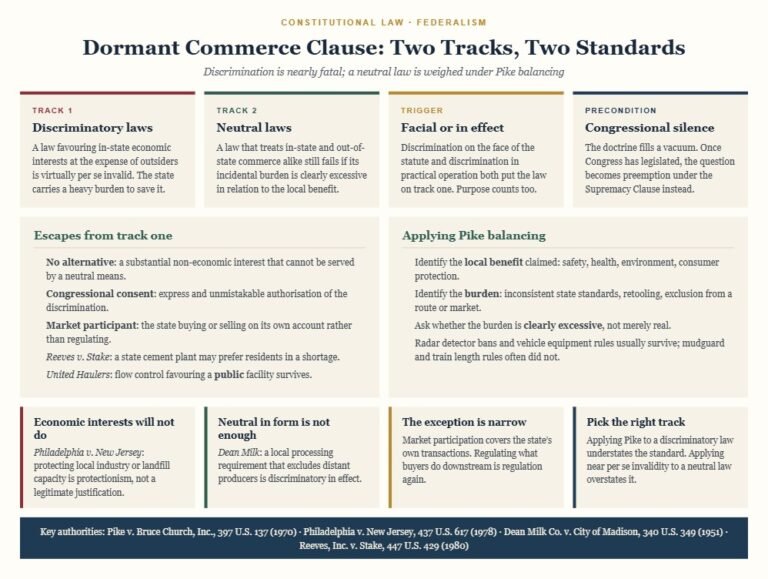 Dormant Commerce Clause: Discrimination vs Pike Balancing
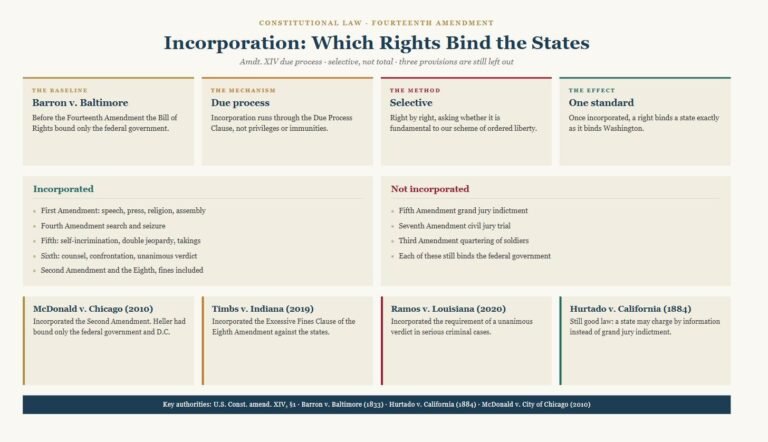 Incorporation Doctrine: Which Rights Bind the States
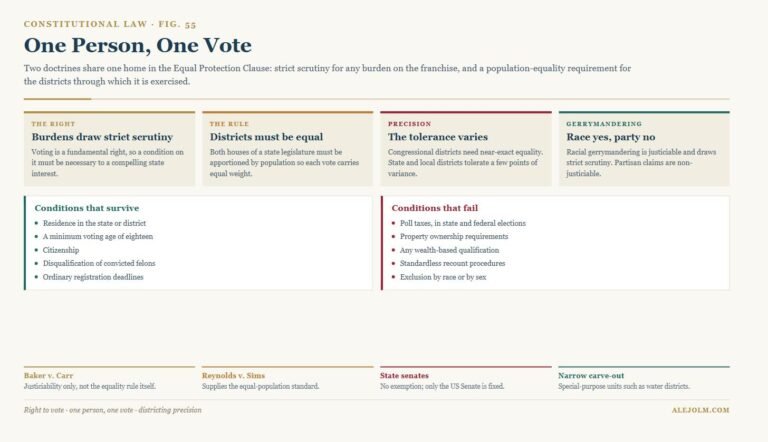 One Person, One Vote: Voting Rights Under Equal Protection