
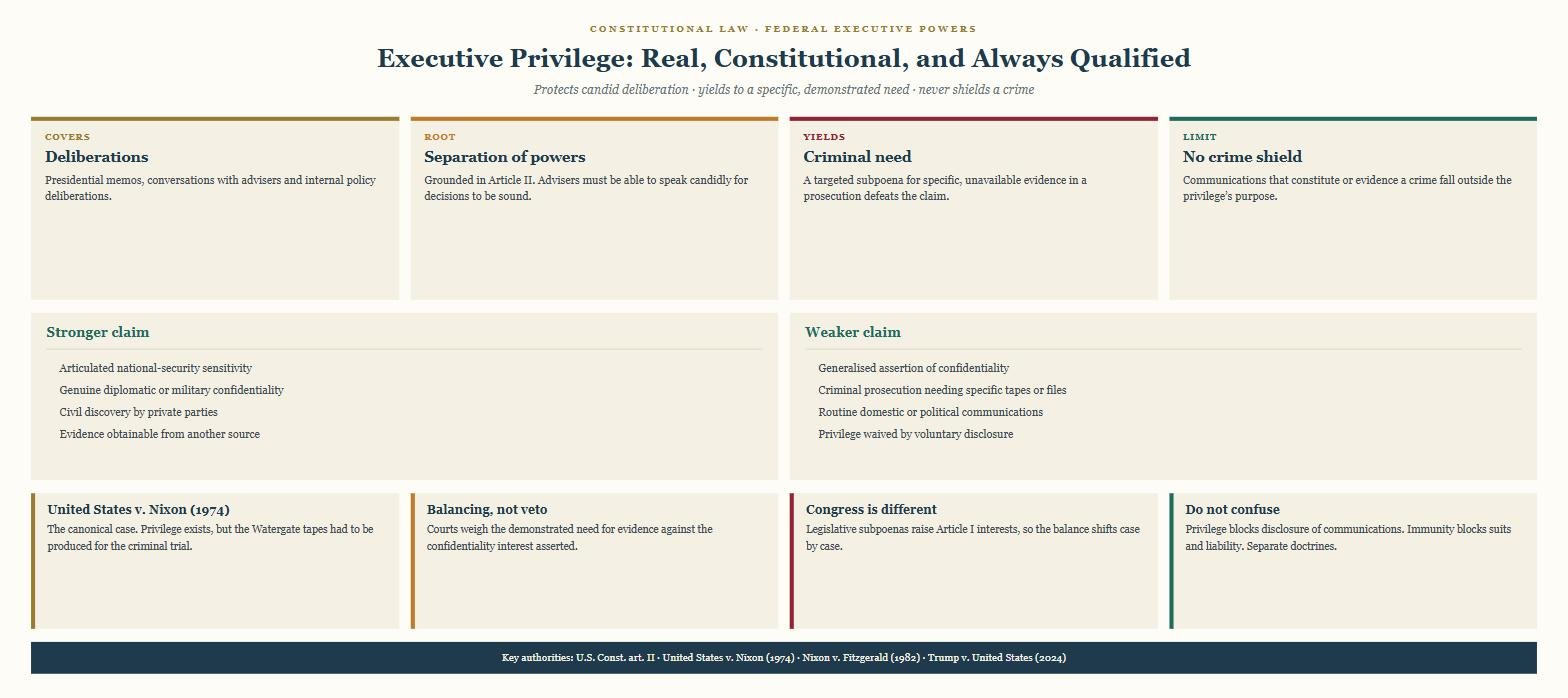
Executive privilege is the President’s constitutional right, rooted in separation of powers and Article II, to keep presidential communications confidential and free from compelled disclosure. Memos, conversations with advisers and internal deliberations all fall within it. What students most often get wrong is the adjective: the privilege is qualified, and it has never been absolute.
Because it is qualified, every question about it is a balancing question. On one side sits the executive’s interest in candid advice. On the other sits whoever needs the information, and how badly. The answer depends on how specific and how unavailable that information is.
Why the privilege exists
The justification is functional rather than textual. Presidents need frank counsel from subordinates in order to decide well. If every internal deliberation were routinely discoverable in litigation or before a committee, advisers would self-censor and the quality of decision-making would fall. The privilege exists to protect that candour, not the President’s comfort.
That rationale also explains the privilege’s shape. It is strongest where confidentiality is genuinely necessary — military, diplomatic and national-security matters — and weakest where the assertion is generic. A President who says only that presidential communications are confidential has said almost nothing a court can weigh.
United States v. Nixon and the balancing test
United States v. Nixon (1974) is the canonical authority and remains the framework. A special prosecutor subpoenaed specific tape recordings of specific conversations because they were essential to a pending criminal prosecution and unavailable from any other source. President Nixon asserted privilege. The Court recognised the privilege as constitutionally grounded, then held that it had to yield: a generalised interest in confidentiality could not overcome a demonstrated, particularised need for evidence in a criminal trial. The tapes were produced, and the presidency ended weeks later.
Two elements of that holding do the work on an exam. The claimant must articulate a specific sensitivity rather than a general one. And the party seeking disclosure must show a particularised need, ideally coupled with the absence of an alternative source. When both sides are specific, courts balance; when only one side is, that side wins.
Exam tip: specific need for specific evidence beats a generalised claim of presidential confidentiality. Reverse the specificity and the privilege usually holds.
Different forums, different weights
In a criminal prosecution the government’s interest is at its highest, which is why Nixon came out as it did. In civil litigation between private parties the balance shifts noticeably toward confidentiality, since a private plaintiff’s discovery interest rarely matches the public interest in enforcing the criminal law. Congressional inquiries occupy their own category, because Congress asserts its own Article I authority to investigate and legislate, so the privilege is balanced against a coordinate branch’s structural powers rather than a litigant’s needs.
Two further limits matter. The privilege does not protect illegality: communications that constitute or evidence a crime, a conspiracy or obstruction fall outside its purpose, and courts will not extend it to conceal criminal activity. And the privilege can be waived. Voluntary disclosure to third parties, or a failure to assert it in time, may forfeit protection over the material disclosed — including where former advisers later publish accounts of the same conversations.
| Scenario | Privilege claim | Likely outcome |
|---|---|---|
| Criminal subpoena, specific tapes, no alternative source | Generalised confidentiality | Privilege yields |
| Criminal subpoena, articulated national-security sensitivity | Specific | Court balances; deference given |
| Civil suit between private parties, tangential relevance | Specific | Privilege prevails |
| Congressional subpoena on domestic policy | Generalised | Contested; balance against Article I |
| Communications evidencing a conspiracy | Any | No protection |
| Material already disclosed publicly | Any | Waived |
Worked example
The President, suspecting foreign espionage inside the State Department, meets privately with the National Security Adviser to discuss a covert counterintelligence investigation. The Adviser’s notes remain in secure White House files. During civil litigation between two private parties, the plaintiff seeks discovery of those notes, arguing they may reveal government knowledge relevant to a national-security element of the claim. The district court orders production. The President appeals.
The confidentiality interest here is close to its maximum. The President has articulated a particularised sensitivity — an active counterintelligence investigation — rather than a generic claim, and courts give substantial deference in that domain. Against that, the plaintiff must show why these specific notes are necessary and why no other source will do. If testimony or agency reports would supply the same facts, the plaintiff’s need is weak. And the forum matters: a private civil dispute presents a materially lesser interest than the criminal prosecution that defeated the claim in Nixon. Conclusion: the appeal should succeed and the privilege should protect the notes.
Change one fact. Suppose a grand jury, rather than a private plaintiff, subpoenas the same notes as essential evidence that a senior official lied to investigators, with no alternative source available. Now the balance flips toward disclosure, because the specific criminal need meets the specific confidentiality claim head-on and Nixon’s logic applies.
Common mistakes that cost points
- Describing the privilege as absolute. It is qualified in every context, without exception.
- Confusing privilege with immunity. One shields communications from disclosure; the other shields the President from suit.
- Ignoring the national-security distinction, which is where courts defer most heavily.
- Assuming the privilege can conceal criminal conduct. It cannot.
- Overlooking waiver through voluntary disclosure or untimely assertion.
- Applying the criminal-prosecution balance to a private civil discovery dispute.
- Treating a congressional subpoena like a court subpoena. Congress asserts its own constitutional authority.
- Forgetting to ask whether the evidence is available from another source, which is often decisive.
Frequently asked questions
Is executive privilege written in the Constitution?
Not expressly. It is inferred from Article II and separation-of-powers principles, and United States v. Nixon recognised it as constitutionally grounded even while ordering disclosure.
Can a former President assert the privilege?
Former Presidents have asserted it over communications from their time in office, though the claim is weaker when the incumbent administration declines to support it, since the privilege protects the functioning of the office rather than the individual.
How is this tested on the bar exam?
Almost always through United States v. Nixon. Expect a subpoena, a privilege assertion, and a call to balance. State that the privilege exists, state that it is qualified, then weigh specificity on both sides.
Executive privilege and its California analogues, 2026
United States v. Nixon (1974) recognised a qualified presidential privilege for confidential communications that yielded to a demonstrated need for evidence in a criminal trial. California has no constitutional executive privilege of that kind, but it protects official deliberation through a combination of statutory privileges and records exemptions, and those are what a Los Angeles County practitioner actually encounters.
The California Public Records Act, now in the California Government Code, contains a deliberative process exemption developed in cases such as Times Mirror Co. v. Superior Court (1991), where the California Supreme Court allowed the Governor to withhold appointment calendars because disclosure would expose the deliberative process itself. Separately, section 1040 of the California Evidence Code creates a privilege for official information, balancing the public interest in confidentiality against the need for disclosure in litigation.
How confidentiality claims arise in county practice:
- Closed sessions are narrowly authorised. The Brown Act permits the Board of Supervisors to meet privately only for enumerated purposes such as litigation, real property negotiations and personnel matters.
- County Counsel advice is privileged. Communications with the Los Angeles County Counsel attract attorney-client protection, which is distinct from deliberative process.
- Law enforcement records have specific rules. Legislation since 2018 opened categories of peace officer records that were previously exempt, narrowing what may be withheld.
- The burden rests on the agency. Under the California Constitution‘s access provision, exemptions are construed narrowly and the county must justify withholding.
- Balancing is expressly required. Both the deliberative exemption and the official information privilege are qualified, not absolute.
- Criminal process outweighs confidentiality. As in Nixon, a specific evidentiary need in a criminal case generally defeats a generalised interest in secrecy.
For 2026, identify the precise privilege or exemption invoked rather than arguing about executive privilege generally. Read with presidential immunity, freedom of the press and legislative immunity.
Next steps
Pair this with presidential immunity, the doctrine most often confused with it, then read the Take Care Clause for the supervisory authority behind these deliberations, and the impeachment power for the process in which privilege fights most often arise.
For primary sources, read United States v. Nixon on Justia, review the text of Article II on Cornell Legal Information Institute, and confirm current subject coverage with the State Bar of California.
Related guides
 Abstention Doctrine: 4 Ways Federal Courts Step Aside
 Bicameralism and Presentment: Two Vetoes Struck Down
 The Complete Auto Test: Taxing Interstate Commerce
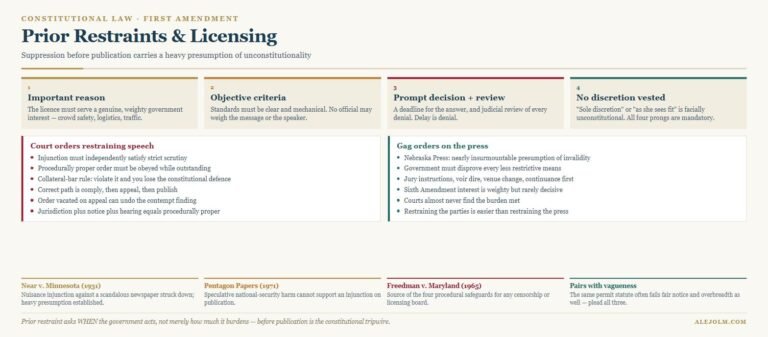 Prior Restraint and Licensing: The Freedman Safeguards
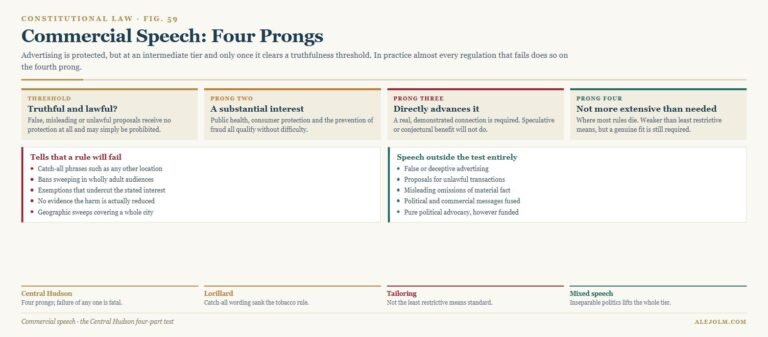 Commercial Speech and the Central Hudson Four-Part Test
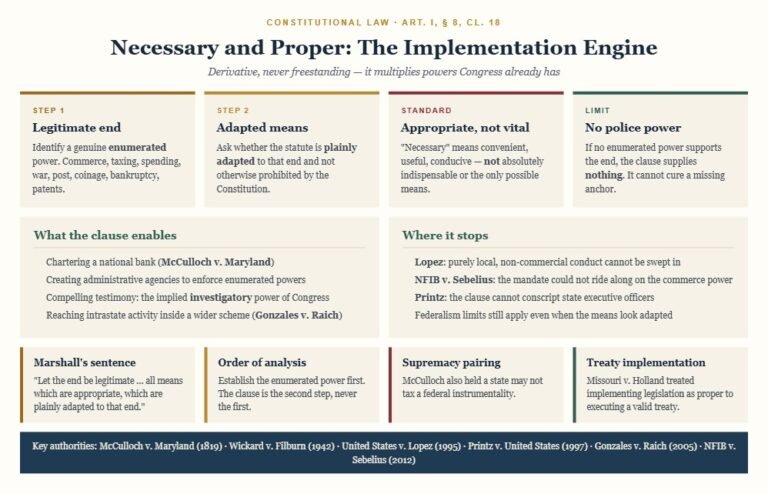 The Necessary and Proper Clause: Congress’s Multiplier
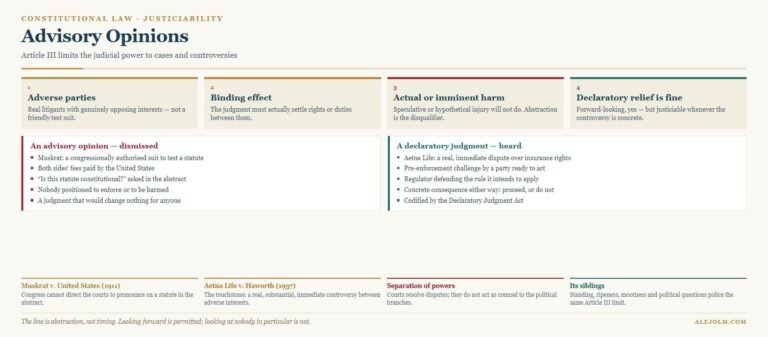 Advisory Opinions: Article III and Declaratory Relief
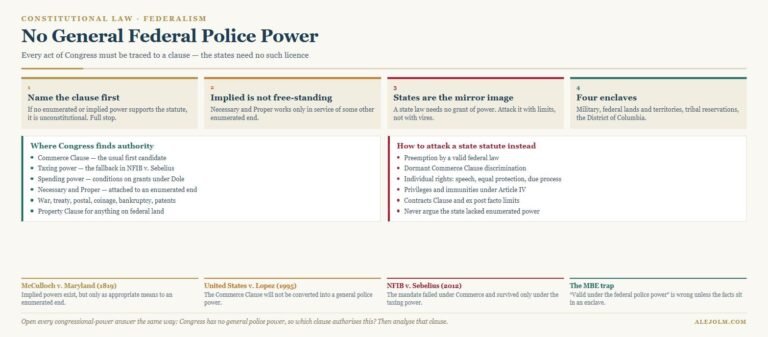 No Federal Police Power: Enumerated Powers and Enclaves
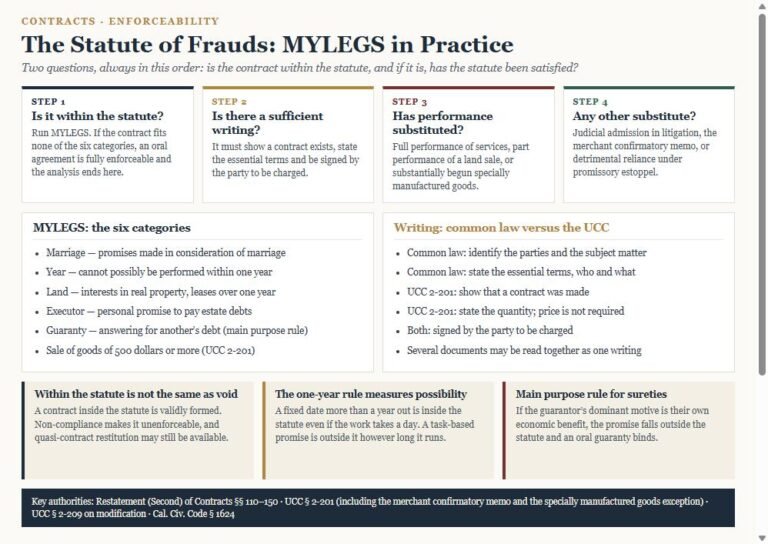 The Statute of Frauds: MYLEGS and How to Satisfy It
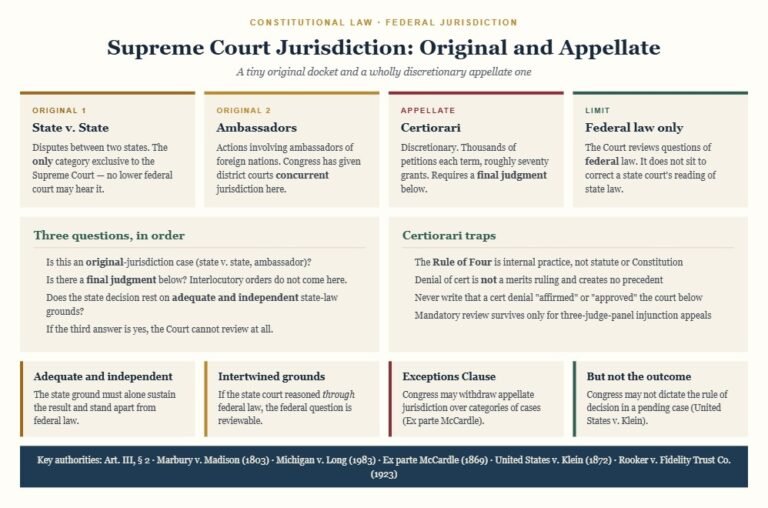 Supreme Court Jurisdiction: Original vs Appellate Power
 Personal Jurisdiction: The 3-Step Bar Exam Framework
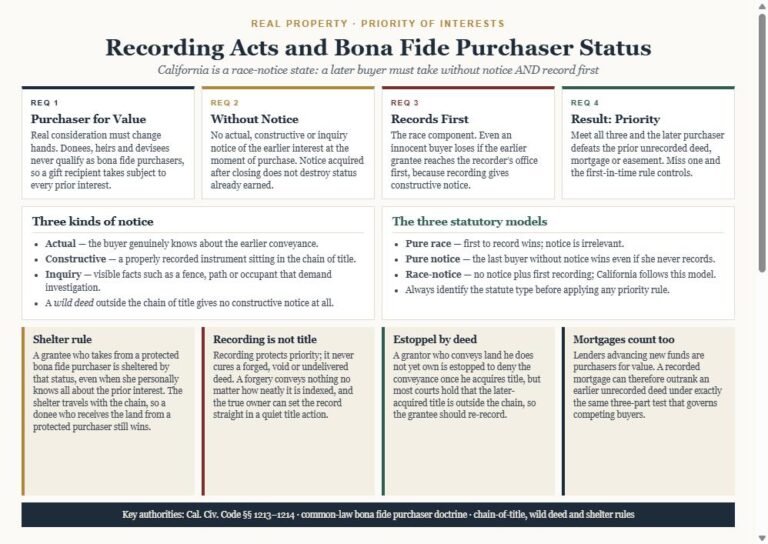 Recording Acts: Race, Notice and Race-Notice Explained