
The Rule Against Perpetuities voids a future interest if it might vest more than twenty-one years after the death of some life in being when the interest was created. Its purpose is straightforward: property should not be tied up indefinitely by remote contingencies.
It has a reputation as the hardest doctrine on the Real Property syllabus, and that reputation is mostly about method rather than difficulty. Candidates who classify interests carefully and then run a fixed four-step routine handle it reliably. Candidates who improvise do not.
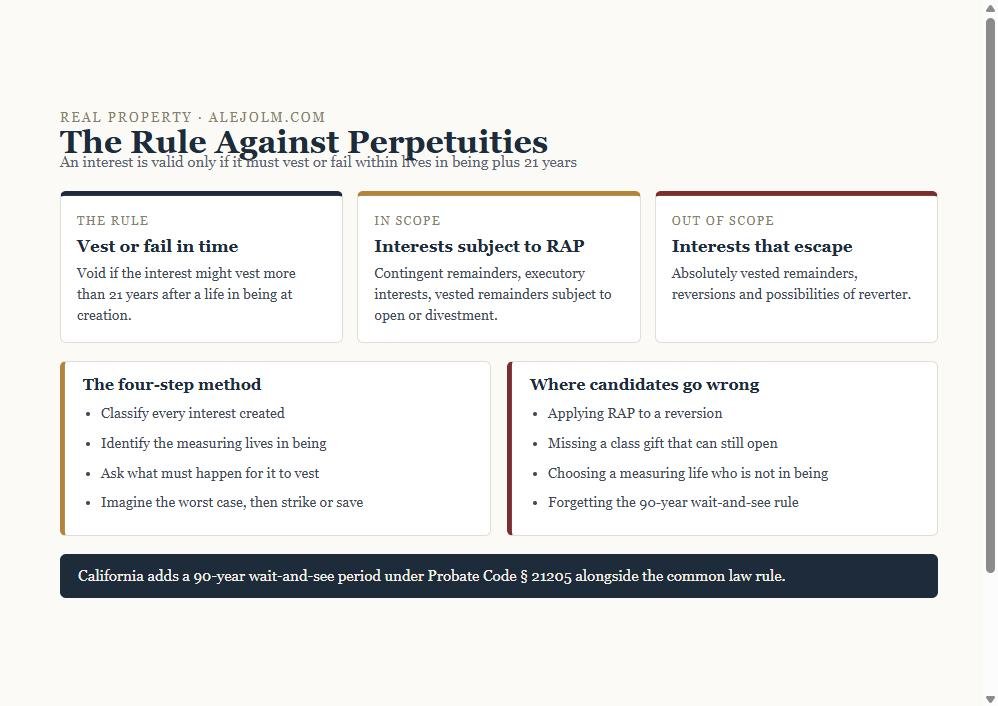
The rule stated precisely
An interest is valid only if it must vest, or fail to vest, within the lifetime of a person alive at creation plus twenty-one years. Two words do the work. Must means certainty, not likelihood. And vest means the interest becomes vested, not that it becomes possessory.
The rule descends from the Duke of Norfolk’s Case (1682), which first fixed the lives-in-being-plus-twenty-one-years period for contingent future interests.
Which interests are subject to RAP
This is the step that decides most questions, because an interest outside the rule cannot be struck no matter how remote it looks.
| Subject to RAP | Exempt from RAP |
|---|---|
| Contingent remainders | Absolutely vested remainders |
| Executory interests | Reversions |
| Vested remainders subject to open (class gifts) | Possibilities of reverter |
| Vested remainders subject to divestment | Rights of entry at common law |
The organising idea is that vesting ends the enquiry. If an interest will definitely vest in someone, even though it may later be divested, it escapes RAP scrutiny. That is why drafters work hard to characterise interests as vested.
Before you time anything, classify. Applying the rule to a reversion or a possibility of reverter is the single most common way to lose the point outright.
The four-step method
- Classify every interest the instrument creates. Name the present estate and each future interest, and identify class gifts explicitly.
- Identify the measuring lives. A measuring life must be alive at creation. Look for people named in the grant and for people whose deaths trigger the contingency.
- Ask what must happen for the interest to vest. Write the condition out as a sentence.
- Imagine the worst case. If you can construct any scenario, however unlikely, in which the interest vests later than the measuring life plus twenty-one years, the interest is void at common law.
Step four is deliberately pessimistic. The common law rule is a rule of logical possibility, not probability, which is why interests that would almost certainly vest quickly are still struck.
Worked illustration
Consider a grant “to the city, but if the land is ever used for a purpose other than a park, then to the heirs of A”. The interest in A’s heirs is an executory interest, so it is within the rule. The condition might be triggered centuries from now, and no life in being measures it. The executory interest is void, and what remains is a fee simple in the city with the grantor’s interest, if any, analysed separately.
Now change one word: “but if the land is ever used for a purpose other than a park, then to the grantor”. The grantor’s interest is a possibility of reverter, which is exempt, so nothing is struck. The same remote contingency produces opposite results purely because of classification.
Class gifts and the all-or-nothing rule
A gift to a class is a vested remainder subject to open while the class can still take new members, and it is therefore within the rule. At common law, if the interest of any potential class member could vest too late, the entire class gift fails. Partial validity is not available.
This is the mechanism behind the classic fertile-octogenarian and unborn-widow problems. Both work by assuming a future-born person who cannot be a measuring life because they were not alive at creation.
The modern reforms
Most states have softened the common law rule. California has adopted the Uniform Statutory Rule Against Perpetuities in Probate Code section 21205, which supplies a ninety-year wait-and-see alternative period running alongside the common law test.
Wait-and-see changes the question from what might happen to what actually happens. An interest that fails the common law test can still be saved if it in fact vests within ninety years. Some jurisdictions also apply cy pres reformation, allowing a court to rewrite the instrument to conform to the period.
On an exam, run the common law analysis first and then note the statutory alternative. Doing it in the other order tends to hide the classification work the grader is looking for.
Why RAP matters beyond the exam
In title practice the rule creates latent risk. A recorded deed may create a future interest valid at the outset, yet decades later, once the measuring life has died, it can be genuinely unclear whether the interest vested or failed. That uncertainty clouds marketable title and complicates long leases granted out of a life estate.
Common mistakes that cost points
- Applying the rule to a reversion or a possibility of reverter.
- Treating vesting as the same thing as becoming possessory.
- Choosing a measuring life who was not alive at creation.
- Overlooking that a class gift is still open.
- Arguing probability rather than logical possibility under the common law rule.
- Reaching for the ninety-year period before completing the common law analysis.
Frequently asked questions
Does RAP apply to interests held by the grantor?
Generally no. Reversions and possibilities of reverter are exempt, which is why redrafting a gift so the interest returns to the grantor often rescues an otherwise void provision.
What is the difference between vesting and possession?
An interest vests when the taker is ascertained and any condition precedent is satisfied. It becomes possessory later, when the prior estate ends. RAP is about the first event, not the second.
Is a ninety-nine-year lease a RAP problem?
The lease itself is a present estate, so the rule does not attack it directly. The problem arises where the lease is granted out of a life estate burdened by a remainder that is itself subject to RAP.
Perpetuities in California: why dynasty trusts go elsewhere, 2026
California has modernised this rule without abolishing it, and that choice has real consequences for estate planning in Los Angeles County. The California Probate Code adopts the uniform statutory approach: an interest is valid if it satisfies the traditional common law rule, or alternatively if it actually vests or terminates within ninety years of creation. That second limb is a wait-and-see provision, so an interest is not struck down at the outset merely because it might theoretically vest too late.
What California has not done is eliminate the rule entirely. Several states have repealed it or extended the permitted period to centuries, and perpetual dynasty trusts are commonly established in those jurisdictions instead. California practitioners advising families with substantial county real estate therefore face a choice between a California trust subject to the ninety-year limit and an out-of-state trust with a non-California trustee, which brings its own tax and administration questions.
The practical points:
- Reformation is available. The statute directs a court to reform a disposition to approximate the transferor’s intention within the permitted period rather than simply void it.
- Commercial interests are largely excluded. Options, rights of first refusal and similar non-donative arrangements are dealt with by separate rules, which matters for county development agreements.
- Charitable trusts are exempt. Perpetual charitable dispositions are permitted.
- Powers of appointment need care. The period runs from creation of the power for general presently exercisable powers, and from creation of the original instrument for others.
- Savings clauses remain standard drafting. A clause terminating interests within the permitted period avoids the issue entirely.
- Situs affects more than perpetuities. Choosing another state’s law also changes creditor protection and income tax exposure, and California may still tax on the basis of a resident beneficiary or trustee.
In 2026, confirm the intended trust duration and situs at the drafting stage. Read with trustee duties, will execution requirements and easements.
Next steps
RAP builds directly on estates and future interests, and it feeds into recording acts and marketable title. The same classify-then-analyse discipline appears in our guides to murder and manslaughter, the elements of negligence and consideration in contract law.
For background, Cornell’s Legal Information Institute entry on the rule is a concise reference.
Drill it with classification only. Take twenty grants and write nothing but the label for each interest. Once labelling is automatic, the timing analysis takes seconds.
Related guides
 Property Clause: Congress and Federal Lands Explained
 Ripeness and Mootness: Timing Rules in Federal Court
 Political Question Doctrine: What Courts Will Not Decide
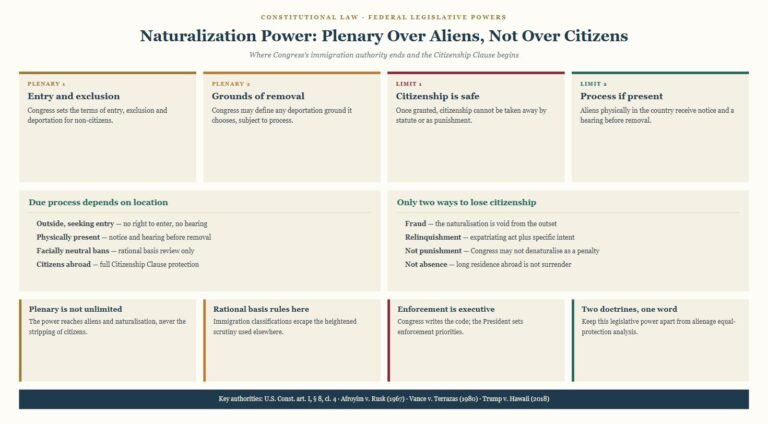 Congress’s Naturalization Power and Citizenship Limits
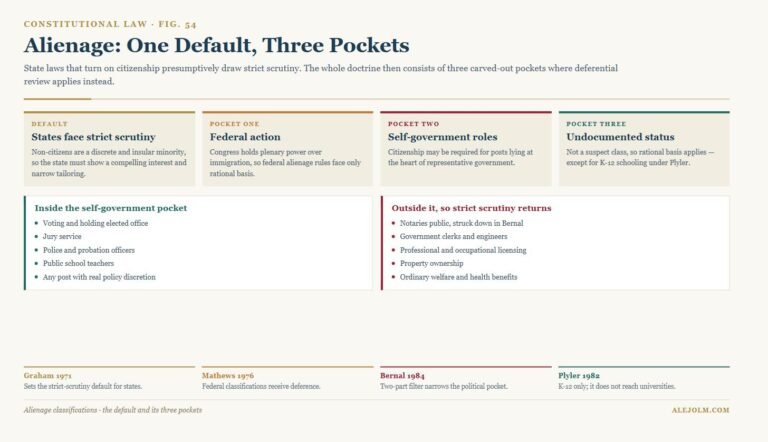 Alienage Classifications: Strict Scrutiny and Its Pockets
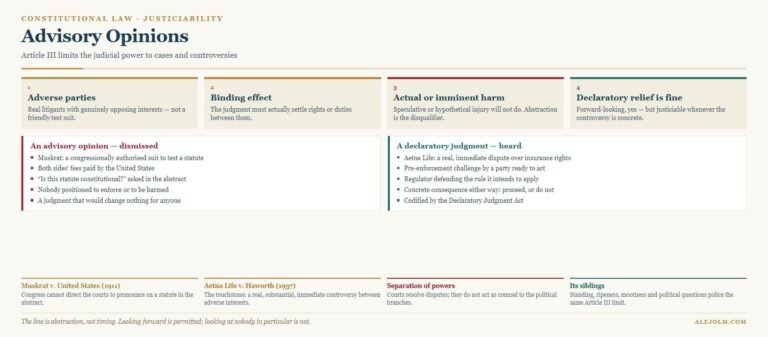 Advisory Opinions: Article III and Declaratory Relief
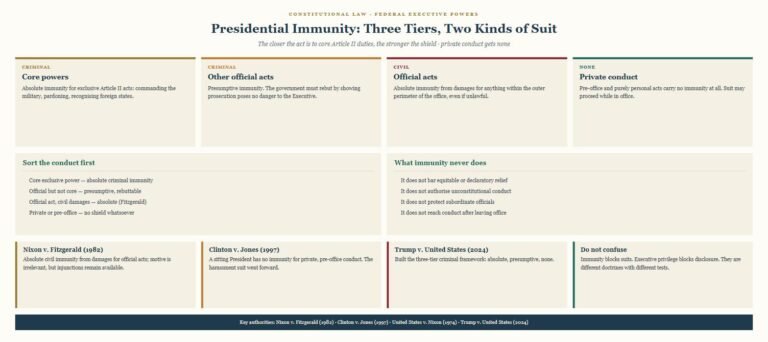 Presidential Immunity: Criminal, Civil and Private Acts
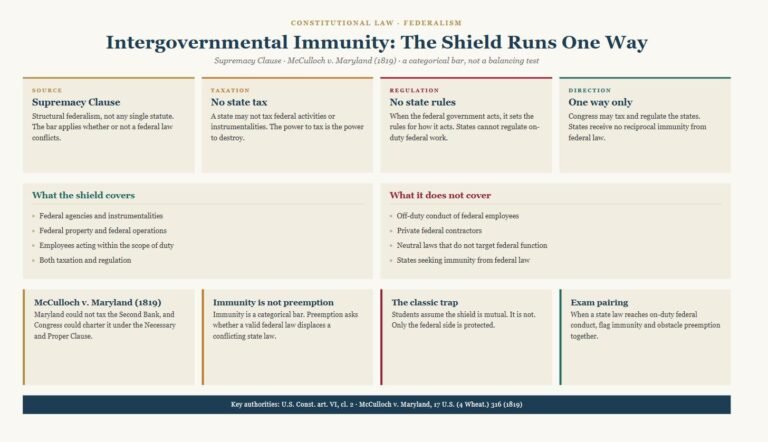 Intergovernmental Immunity: The Shield Runs One Way
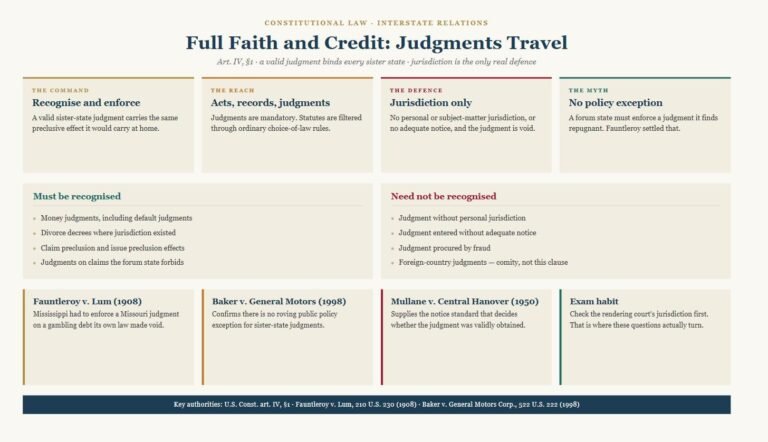 Full Faith and Credit: Recognising Sister-State Judgments
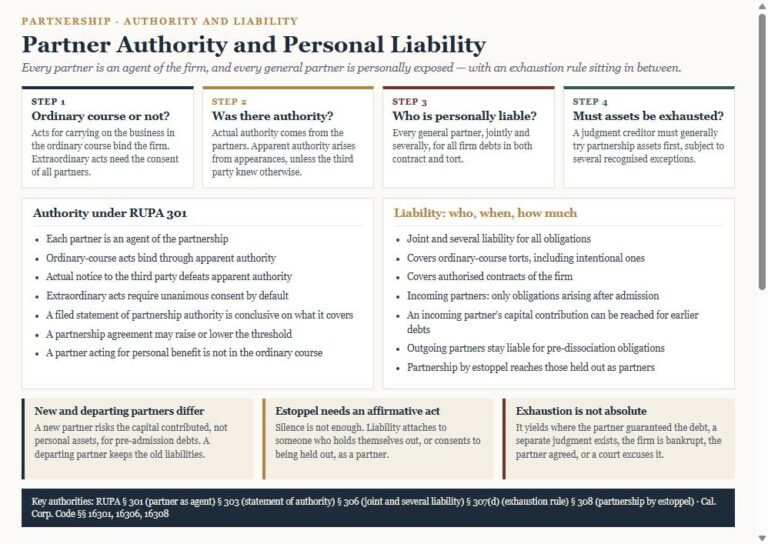 Partner Liability and Authority Under RUPA Explained
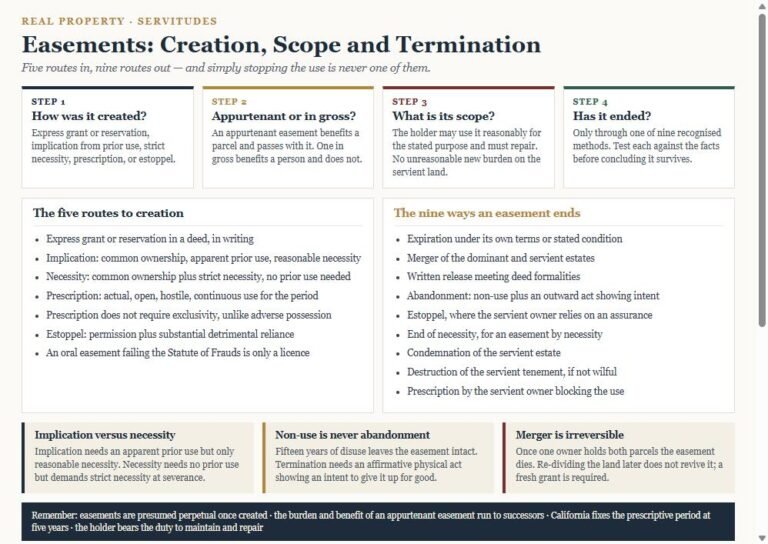 Easements Explained: Creation, Scope and Termination
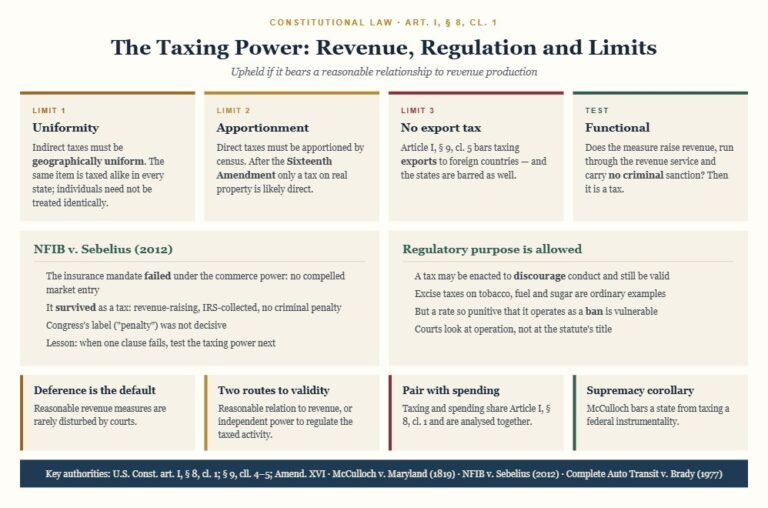 Congress’s Taxing Power: When a Penalty Is Really a Tax