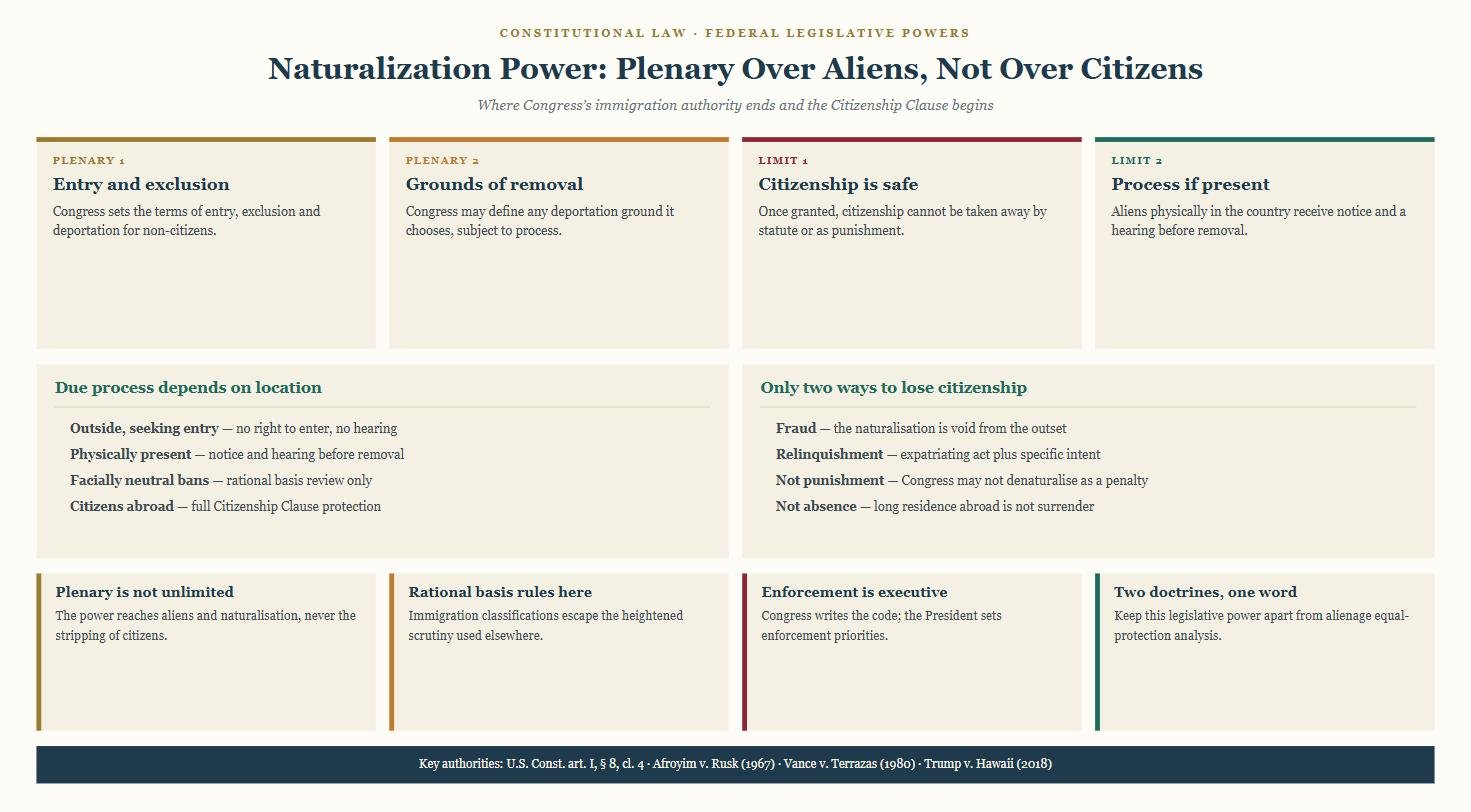
Congress holds a plenary naturalization power under Article I, section 8, clause 4, and the Supreme Court has read that clause together with national sovereignty to give Congress correspondingly broad…
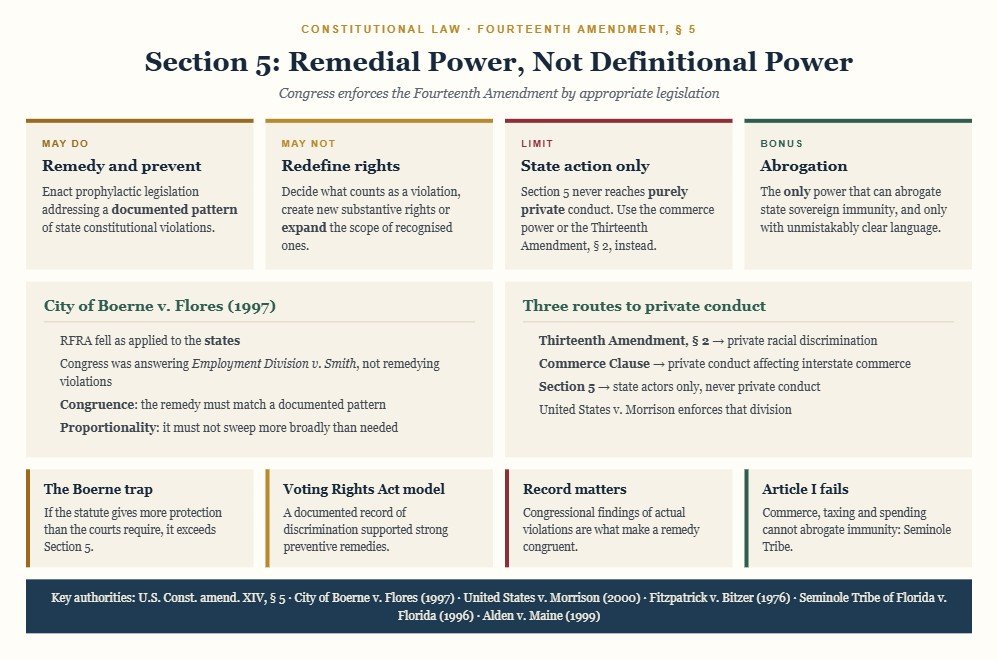
Section 5 Enforcement Power: Remedy, Do Not Redefine
Section 5 lets Congress remedy Fourteenth Amendment violations that courts have recognised, never redefine them. Learn the Boerne test, the state-action limit and the abrogation rule.
The Spending Power and the Five Dole Test Conditions
Congress may spend for any public purpose and attach strings, but the Dole conditions and the NFIB anti-coercion limit control how far the strings may reach.
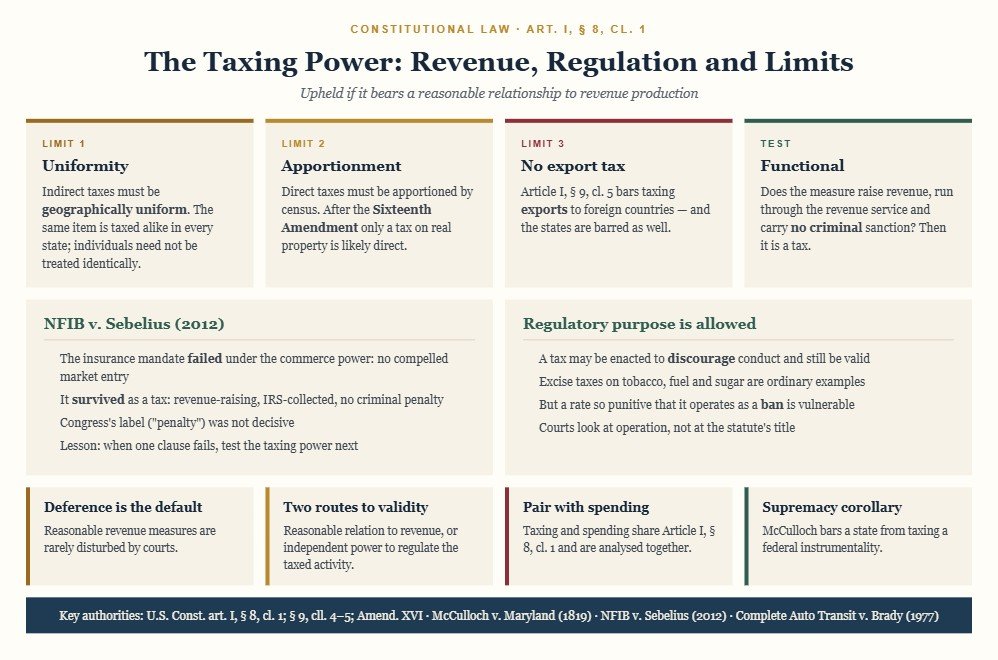
Congress’s Taxing Power: When a Penalty Is Really a Tax
The taxing power is broad and deferential, but three structural limits still bite. Learn the functional tax-versus-penalty test that decided NFIB v. Sebelius.
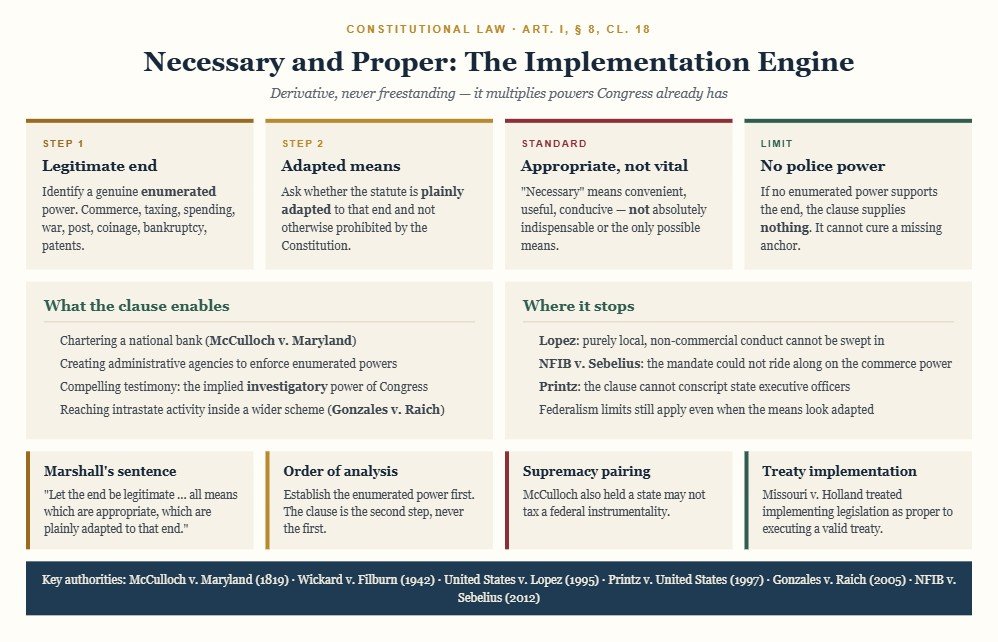
The Necessary and Proper Clause: Congress’s Multiplier
The necessary and proper clause never grants power on its own. Learn the two-part McCulloch test, why necessary means appropriate rather than indispensable, and where the clause runs out.
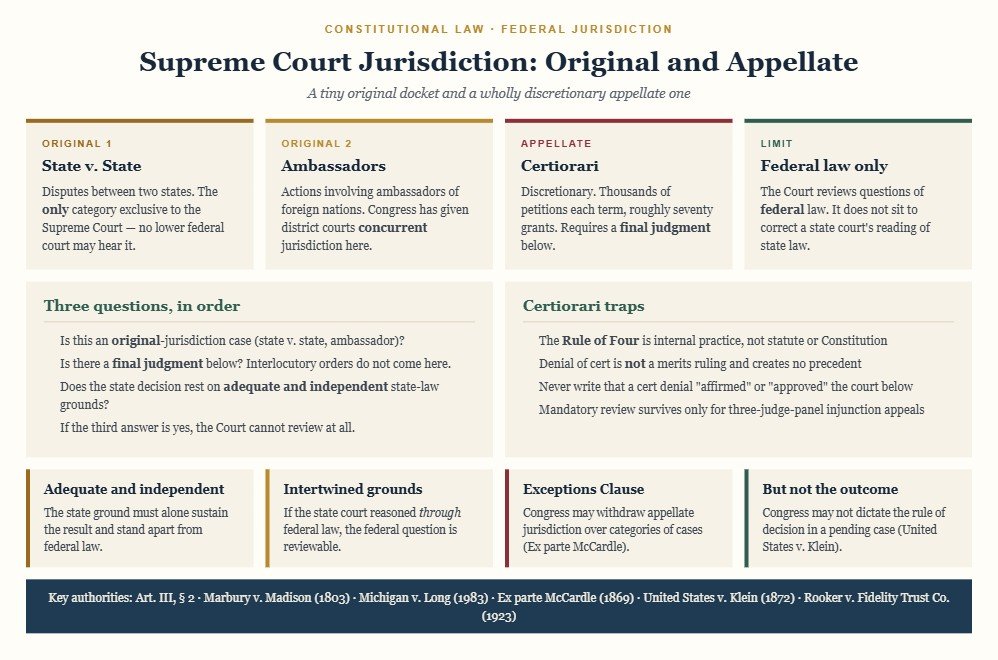
Supreme Court Jurisdiction: Original vs Appellate Power
Original jurisdiction is tiny, appellate jurisdiction is discretionary, and a cert denial decides nothing. Learn the three questions that resolve any Supreme Court jurisdiction problem.
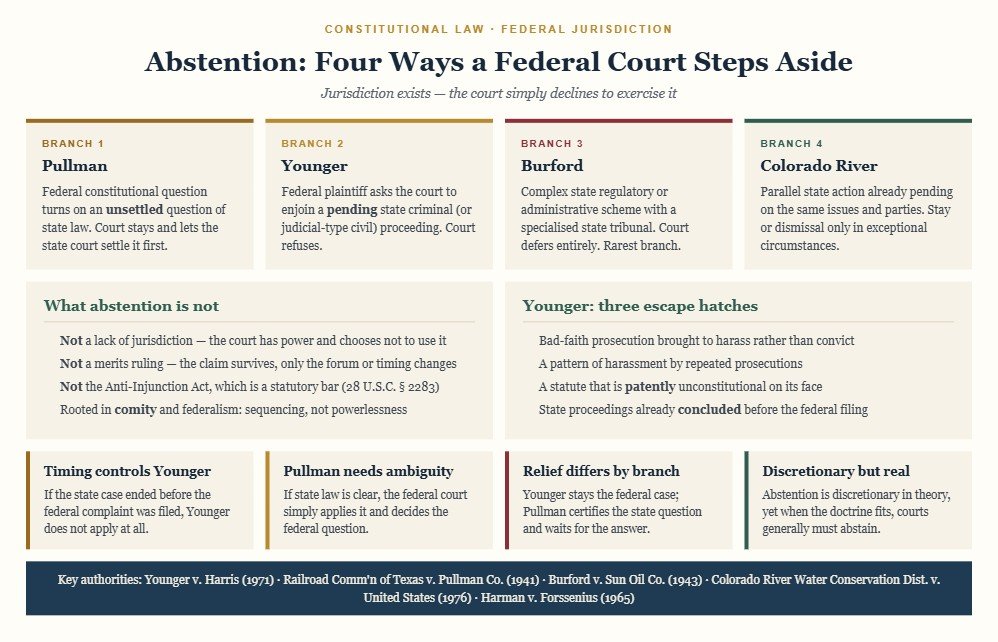
Abstention Doctrine: 4 Ways Federal Courts Step Aside
Abstention lets a federal court that has jurisdiction decline to exercise it out of respect for state courts. Learn the four branches, the triggers and the exam traps.
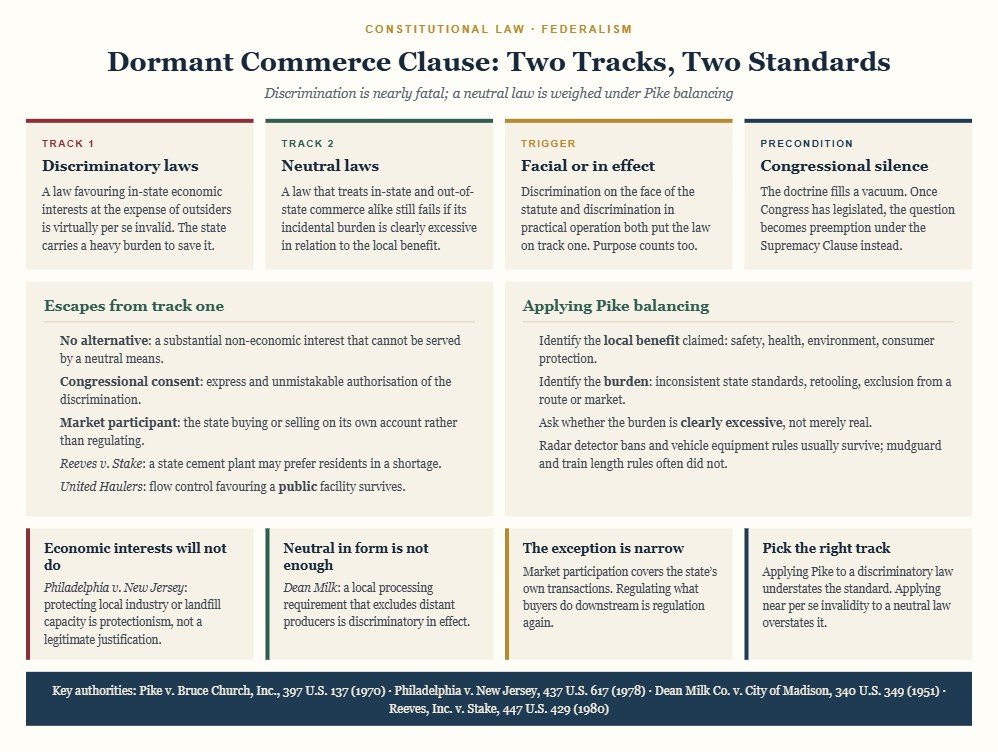
Dormant Commerce Clause: Discrimination vs Pike Balancing
The dormant Commerce Clause explained: discriminatory laws that are nearly per se invalid, Pike balancing for neutral laws, and the market participant exception.
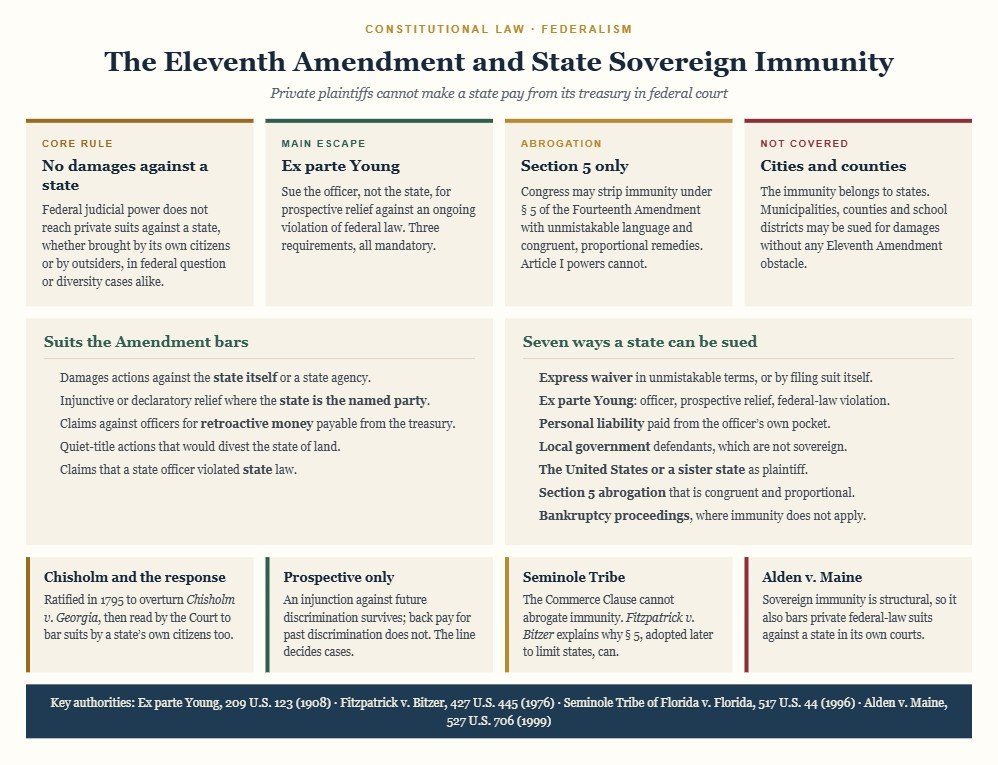
The Eleventh Amendment and State Sovereign Immunity
The Eleventh Amendment explained: what state sovereign immunity bars, the three requirements of Ex parte Young, and why only Section 5 can abrogate.
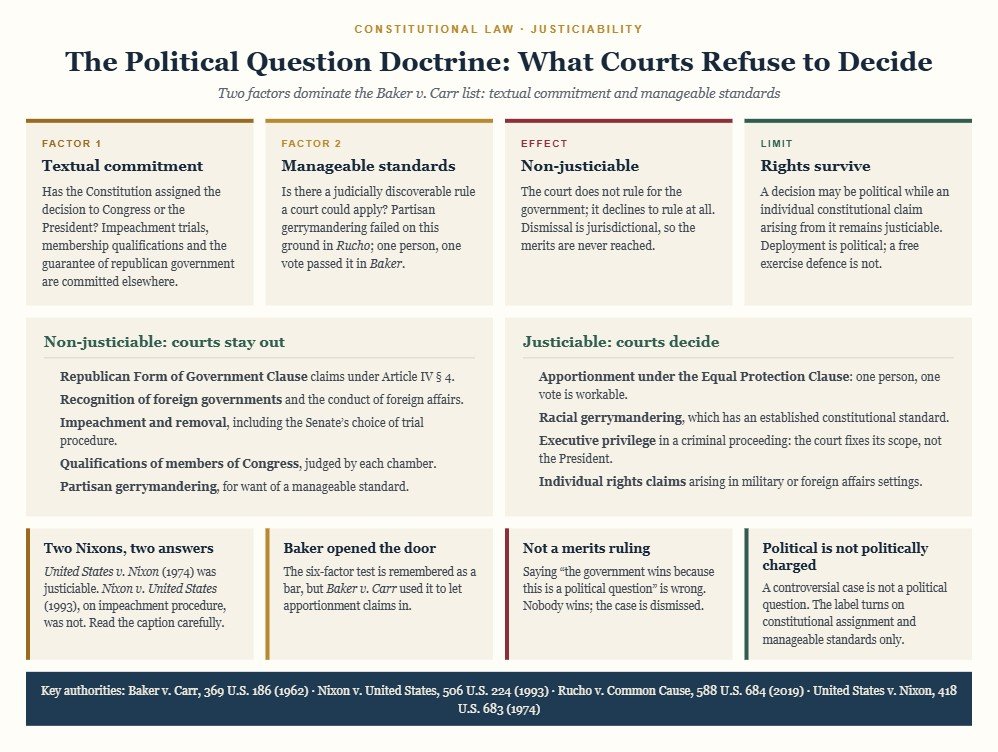
Political Question Doctrine: What Courts Will Not Decide
The political question doctrine explained: textual commitment, manageable standards, the categories on each side of the line and the two Nixon cases.