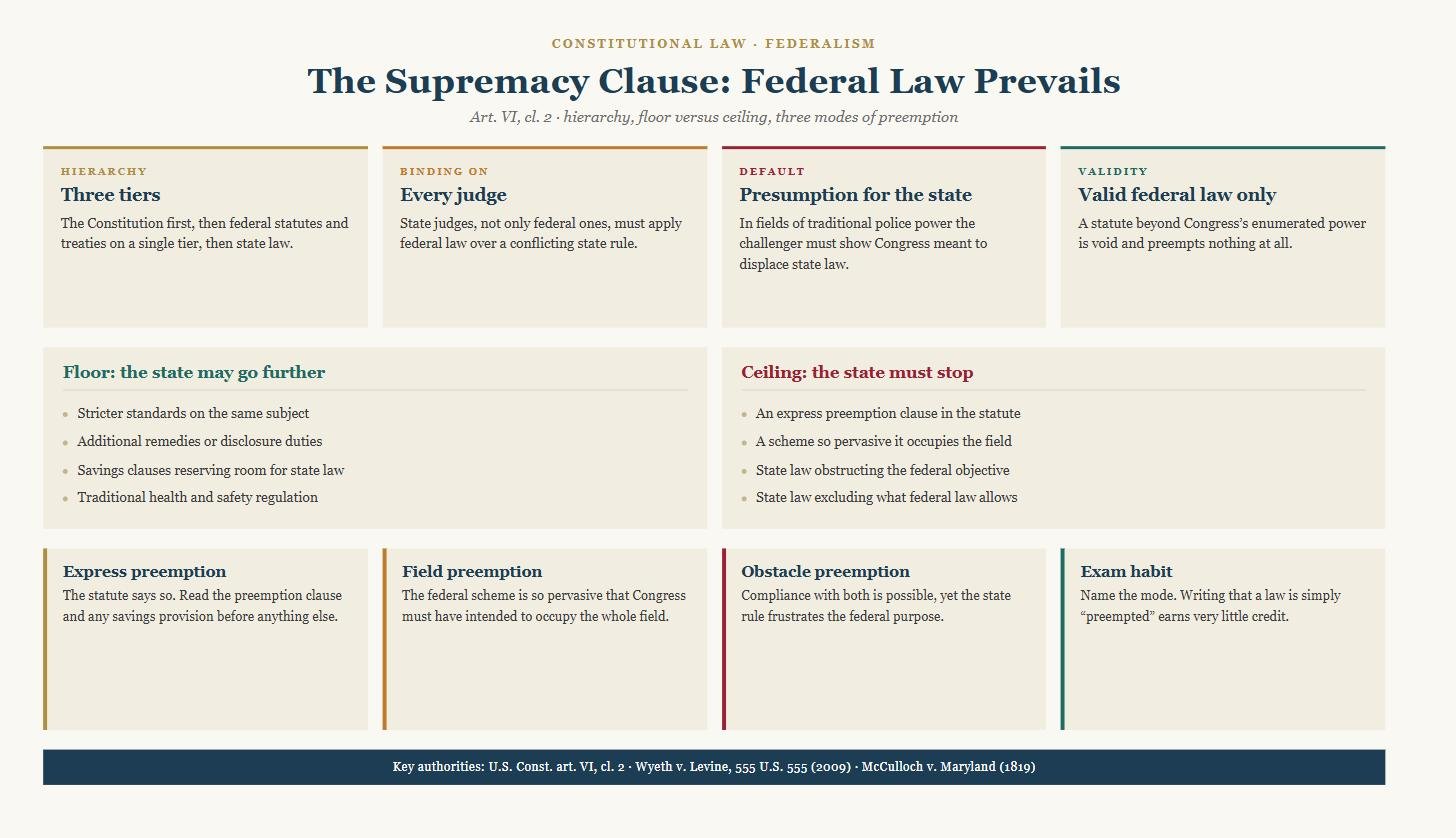
Two rules govern the same conduct. One comes from Congress, the other from a state legislature, and they do not sit comfortably together. Almost every federalism question eventually reduces to…
The Supremacy Clause: Floors, Ceilings and Preemption

Lawyer — real estate law, transactions and doctoral research.
Two rules govern the same conduct. One comes from Congress, the other from a state legislature, and they do not sit comfortably together. Almost every federalism question eventually reduces to…
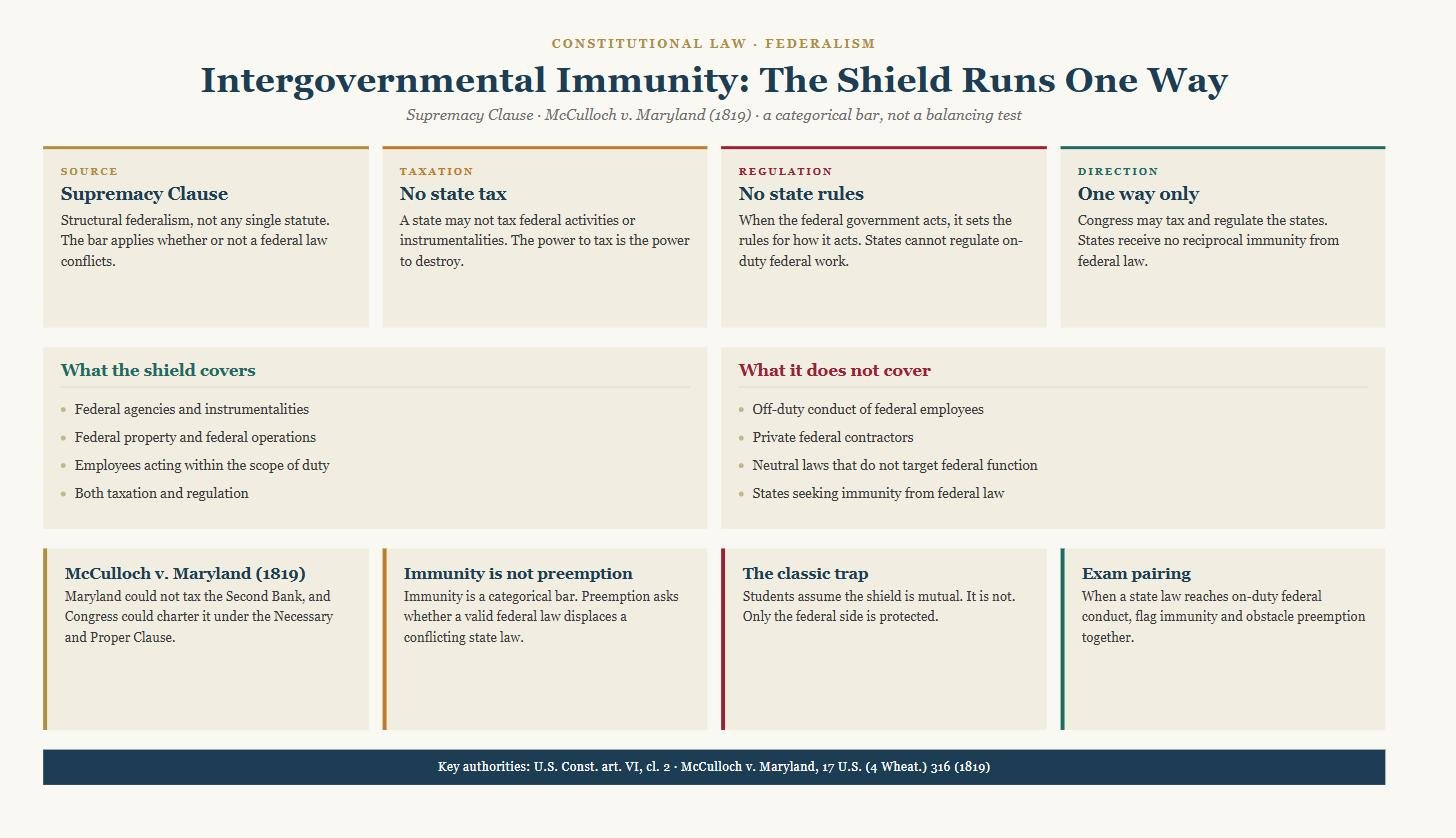
A state legislature decides to tax the local branch of a federal agency, or to require federal inspectors to hold a state licence before they may do their jobs. Nothing…
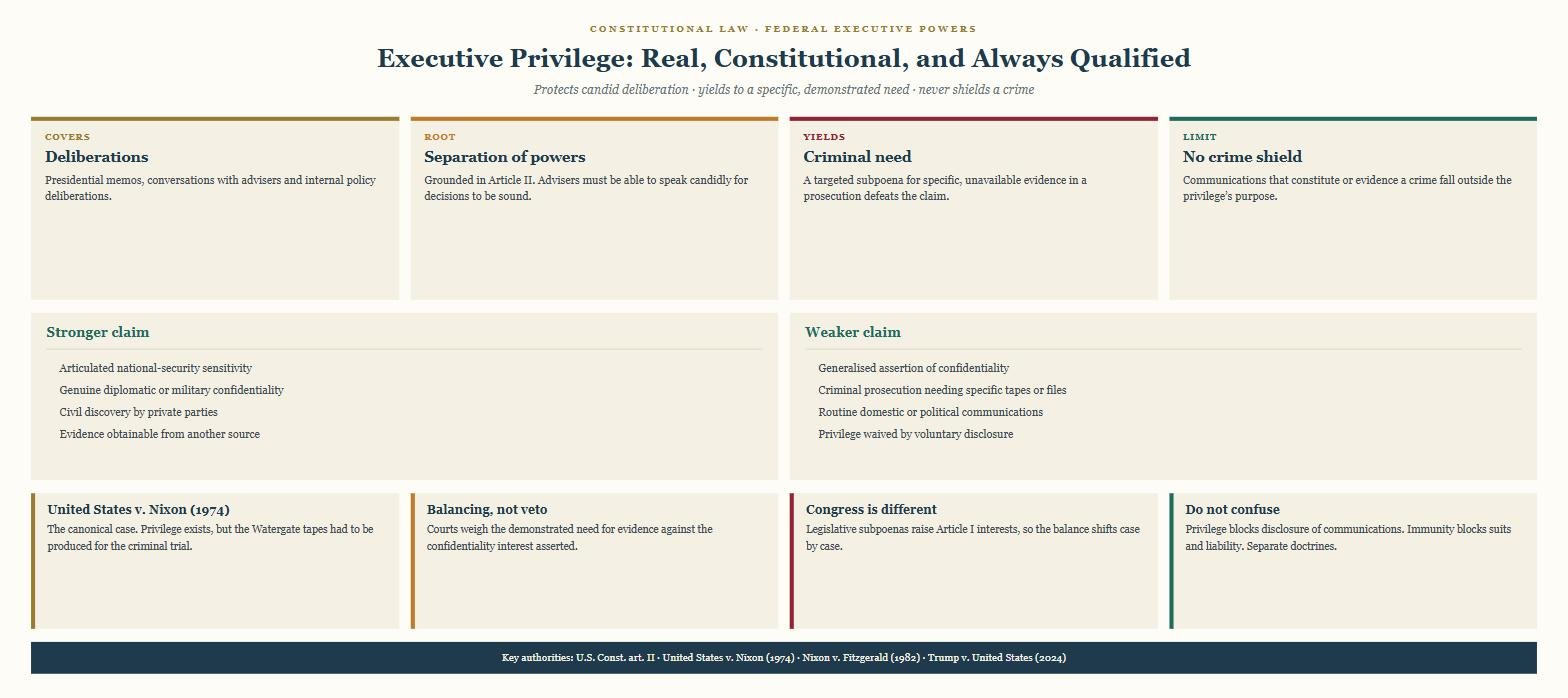
Executive privilege is the President’s constitutional right, rooted in separation of powers and Article II, to keep presidential communications confidential and free from compelled disclosure. Memos, conversations with advisers and…
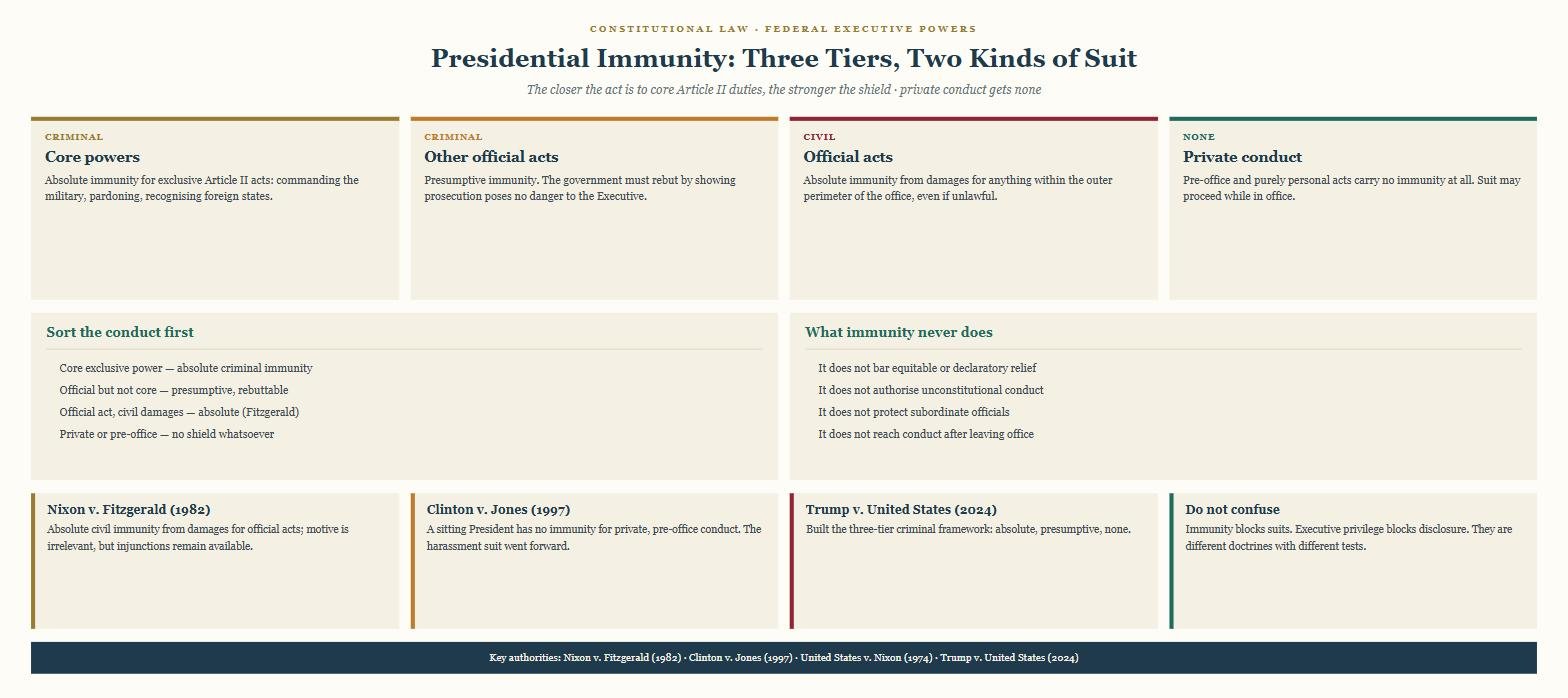
There is no single rule of presidential immunity. There are two doctrines — criminal and civil — and within them a graduated set of protections. The organising principle is simple:…
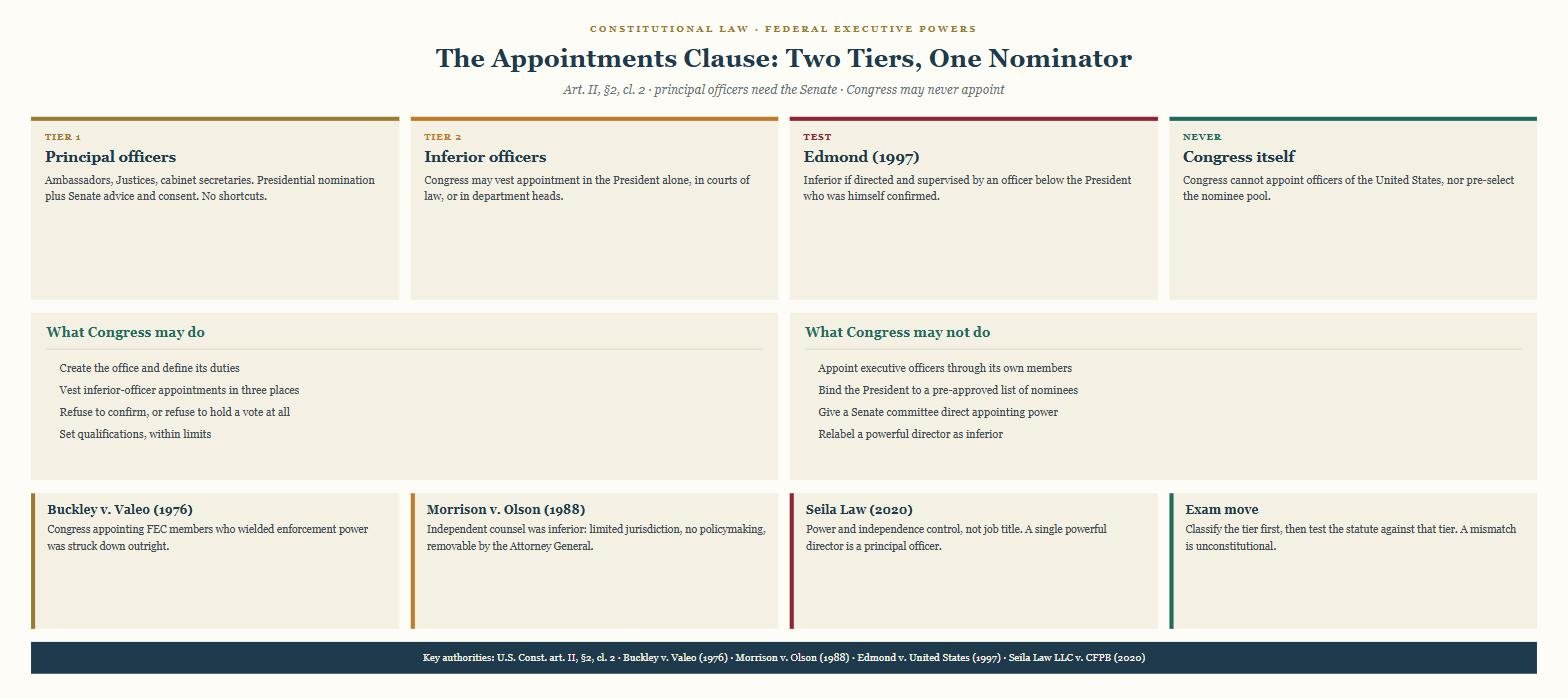
Article II, Section 2, Clause 2 lets the President appoint ambassadors, other public ministers and consuls, judges of the Supreme Court, and all other officers of the United States, with…
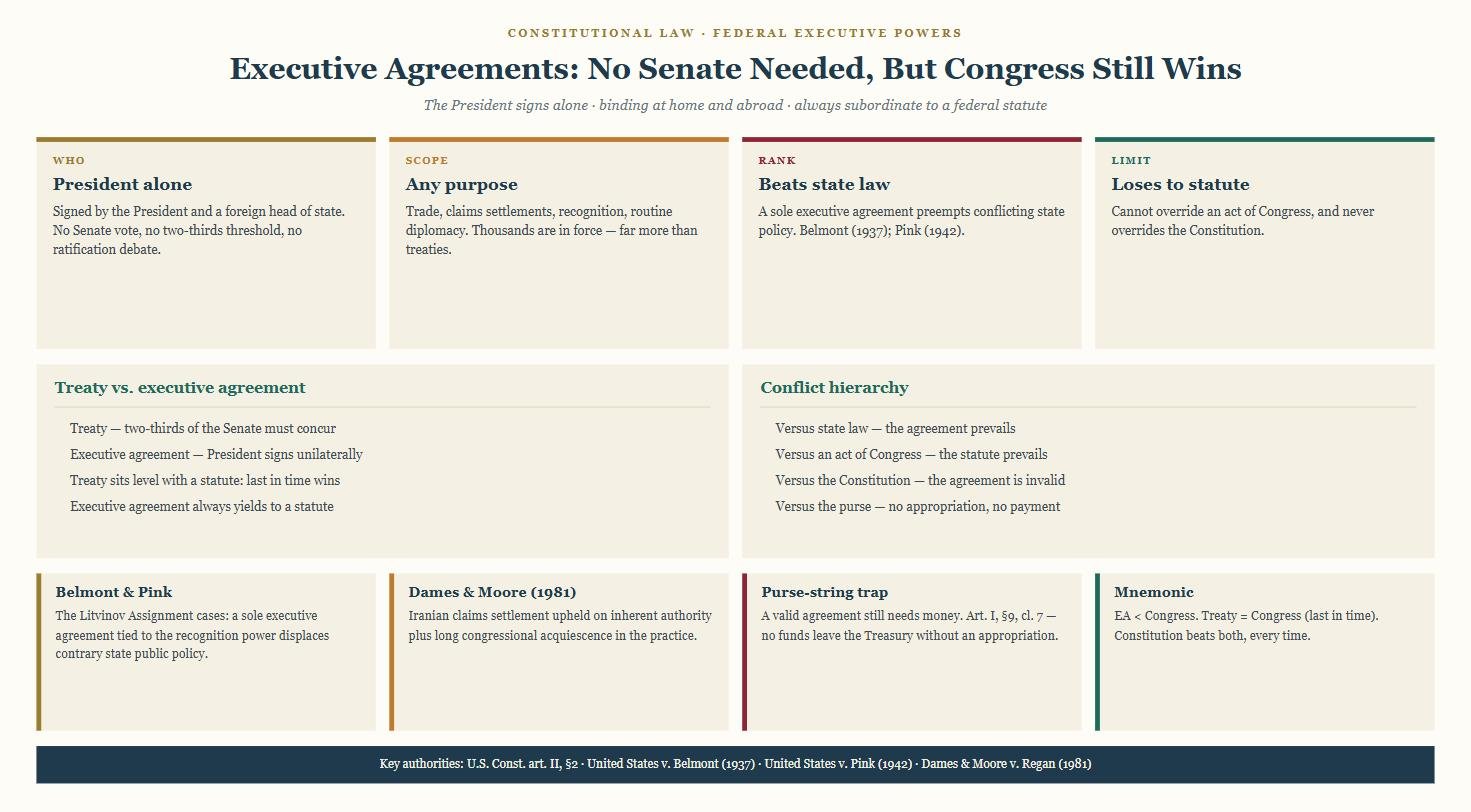
Most students learn early that the United States makes binding international commitments through treaties approved by two-thirds of the Senate. Then they meet a fact pattern where the President signs…
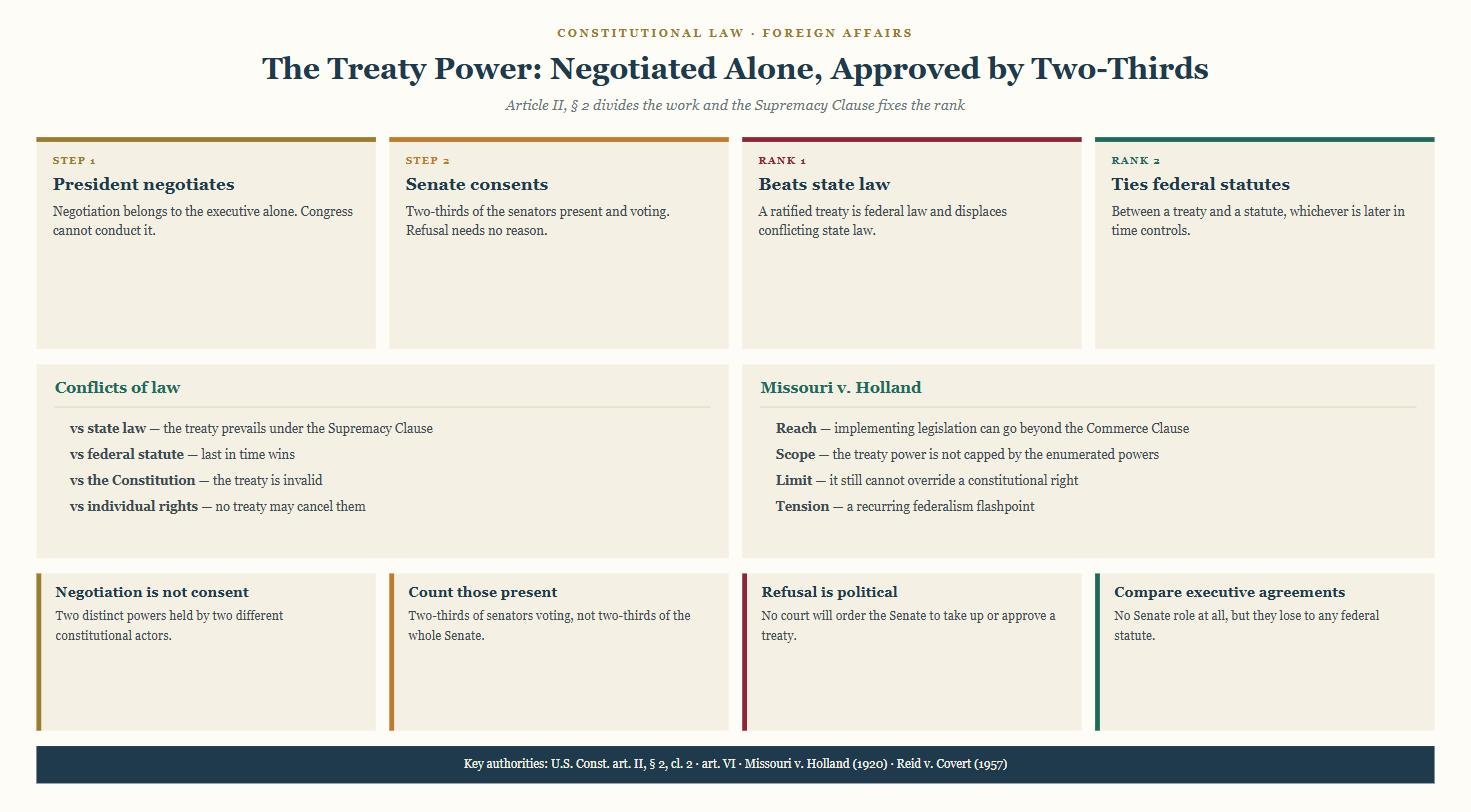
The treaty power is divided between two actors. Under Article II, section 2, clause 2 the President negotiates, and the Senate must give its advice and consent by a vote…
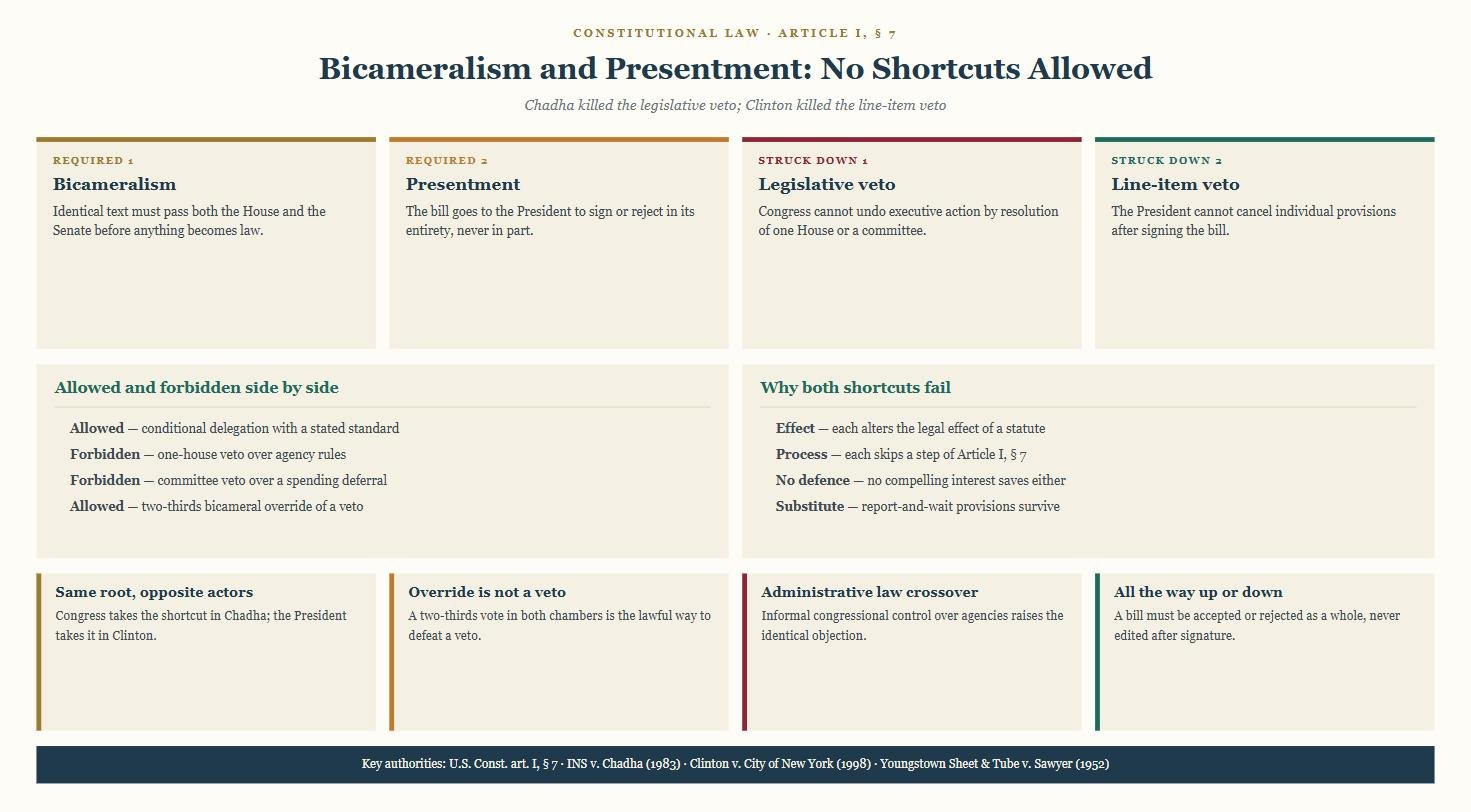
For an act of Congress to have the force of law it must satisfy two requirements, and bicameralism and presentment is the name given to both together. Identical text must…
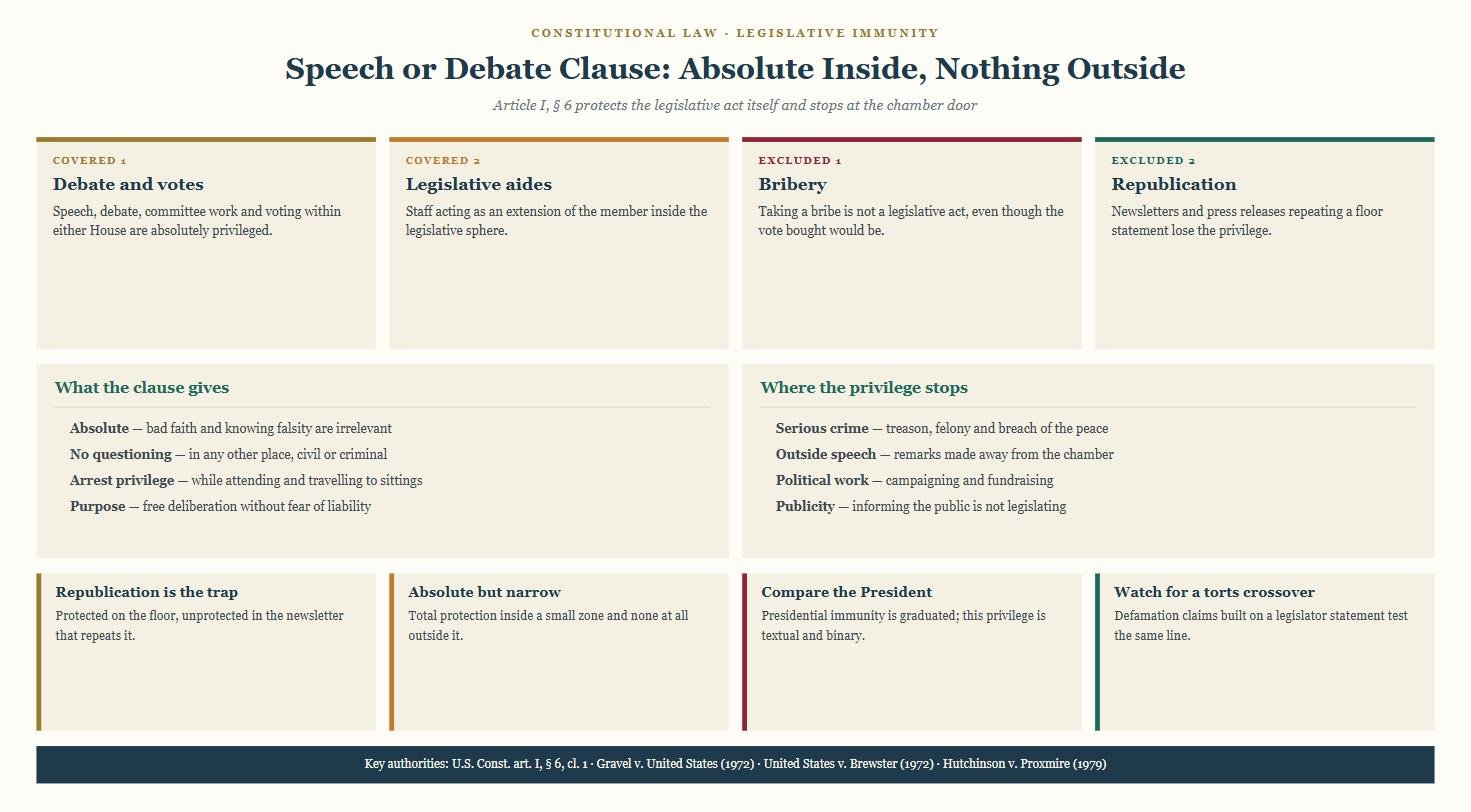
The Speech or Debate Clause of Article I, section 6 provides that for any speech or debate in either House, members of Congress shall not be questioned in any other…
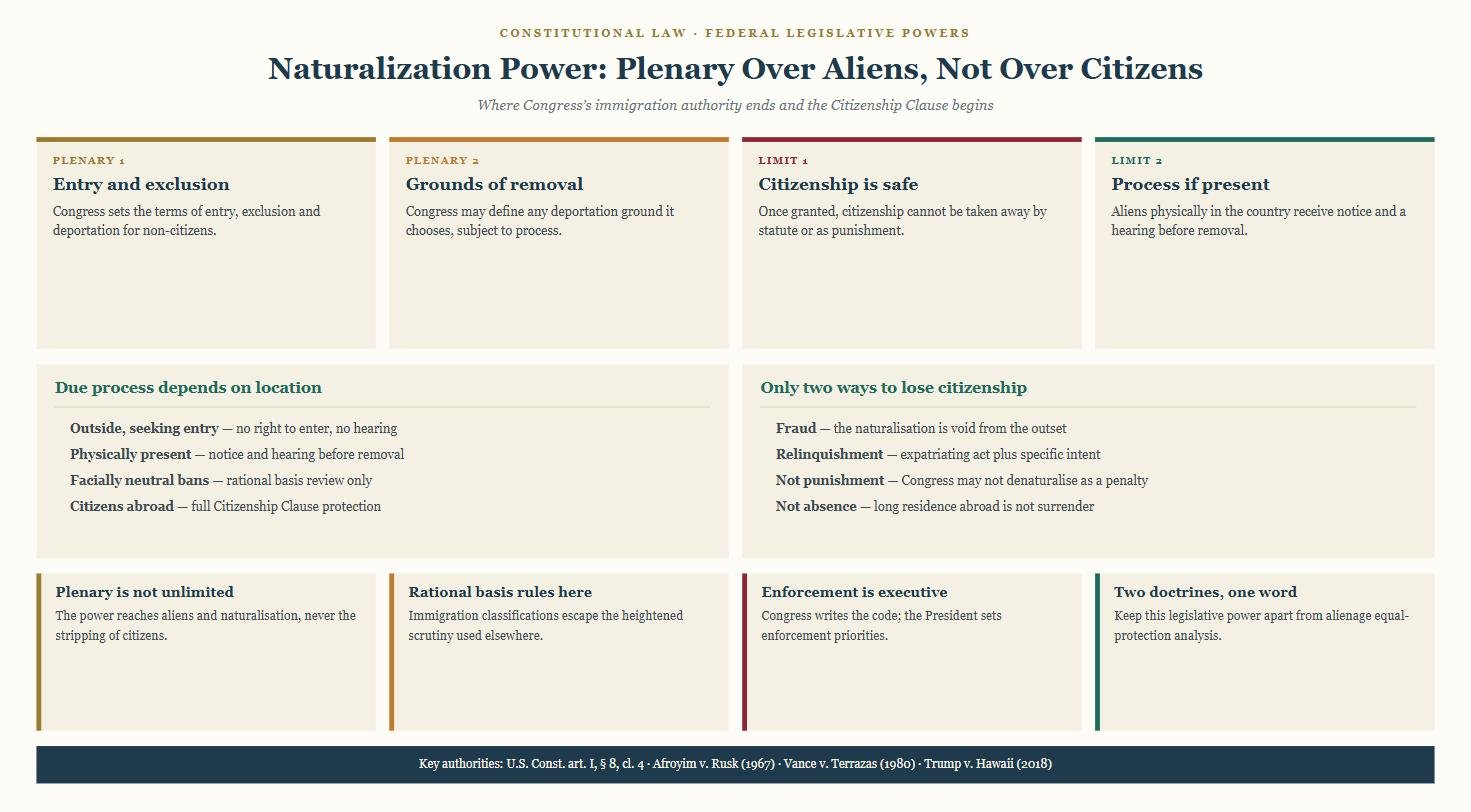
Congress holds a plenary naturalization power under Article I, section 8, clause 4, and the Supreme Court has read that clause together with national sovereignty to give Congress correspondingly broad…