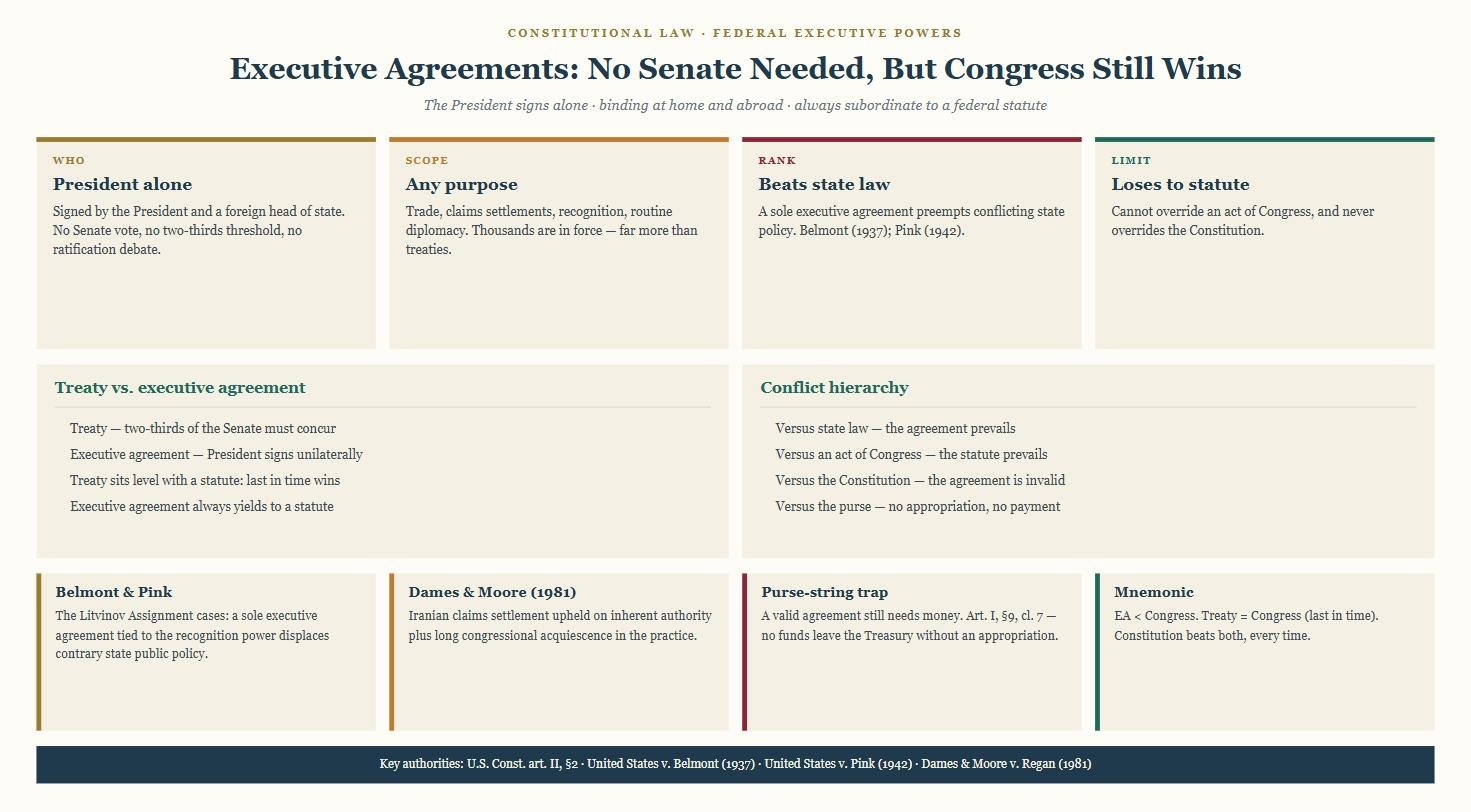
Most students learn early that the United States makes binding international commitments through treaties approved by two-thirds of the Senate. Then they meet a fact pattern where the President signs…
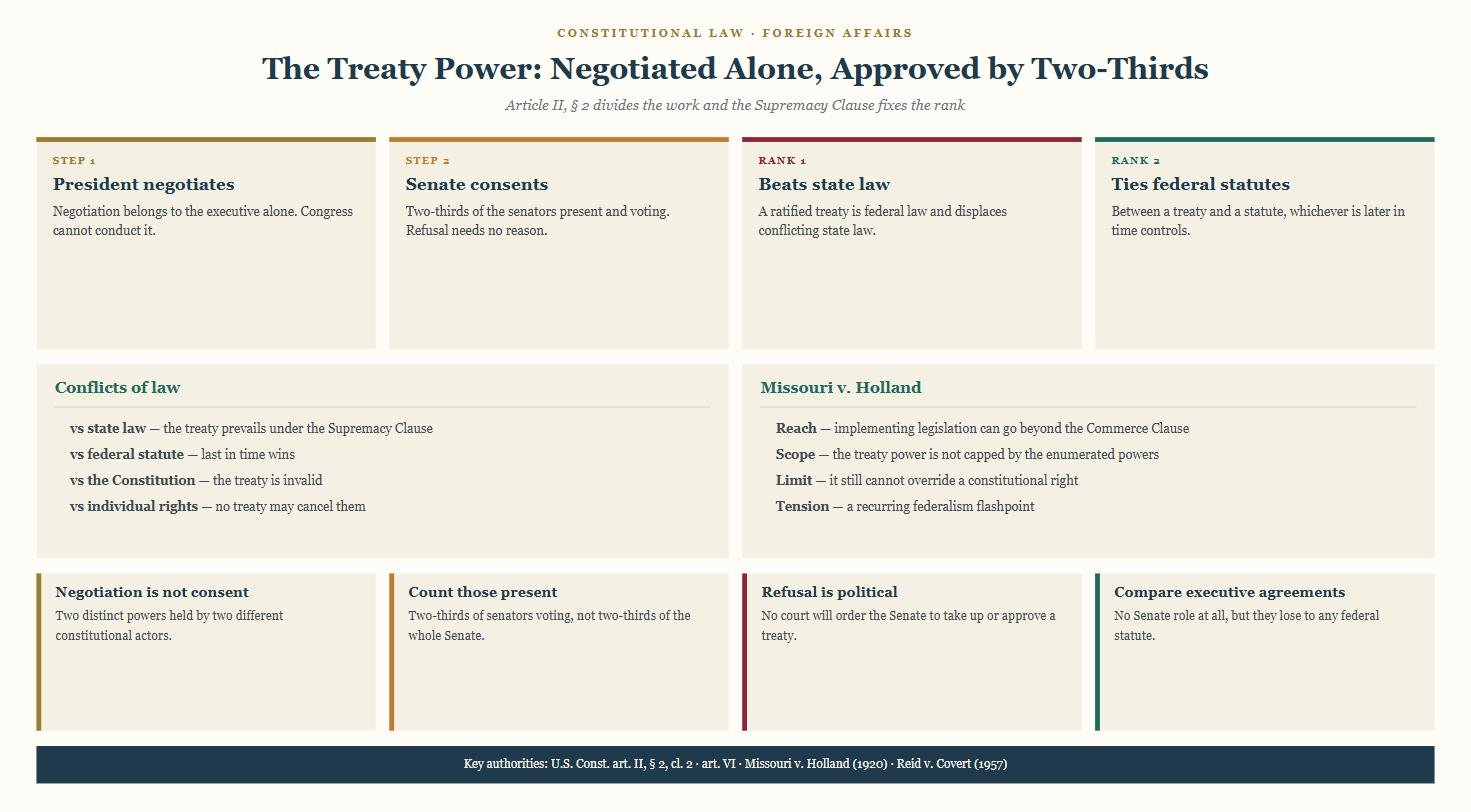
The Treaty Power: Senate Advice and Consent Explained
The treaty power is divided between two actors. Under Article II, section 2, clause 2 the President negotiates, and the Senate must give its advice and consent by a vote…
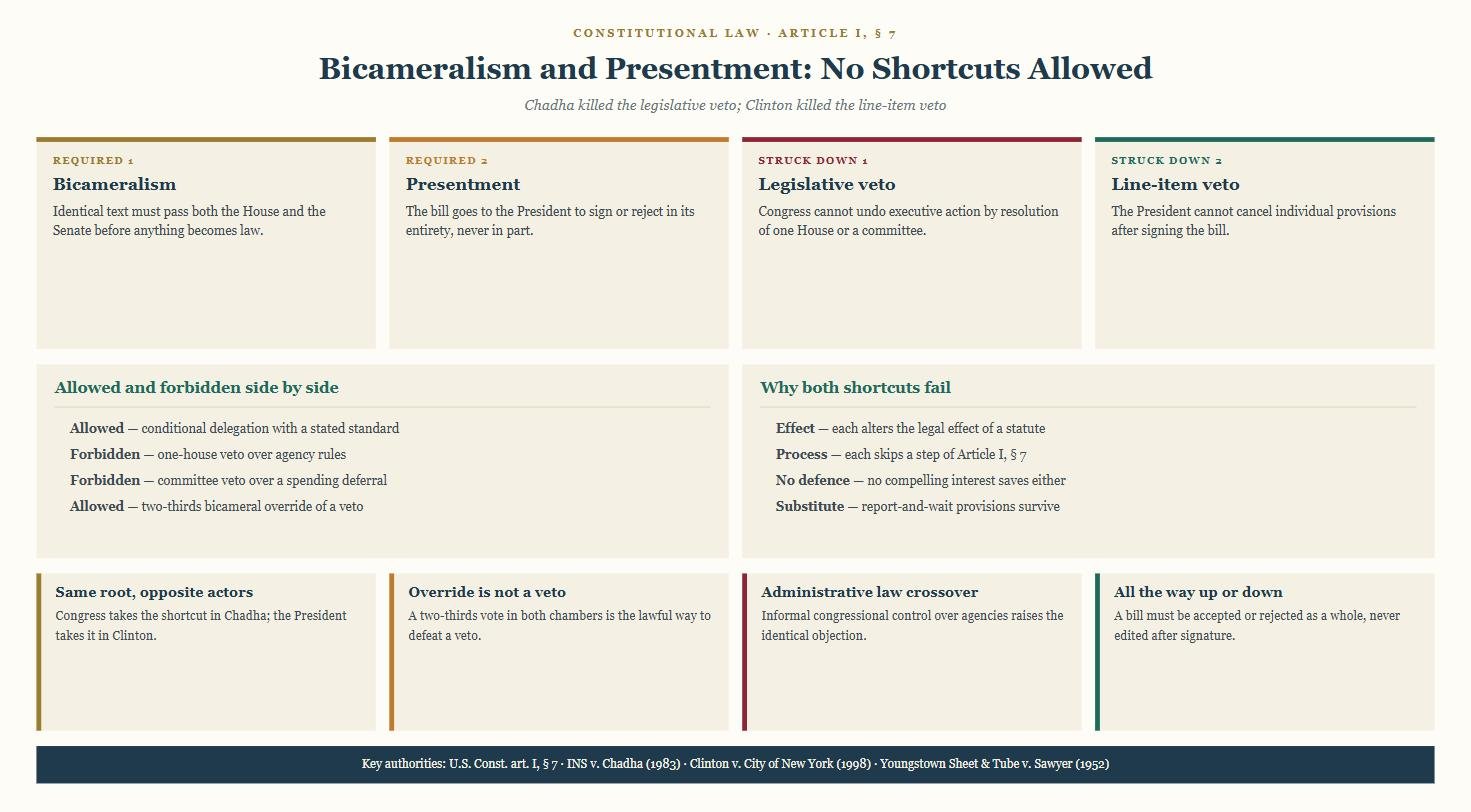
Bicameralism and Presentment: Two Vetoes Struck Down
For an act of Congress to have the force of law it must satisfy two requirements, and bicameralism and presentment is the name given to both together. Identical text must…
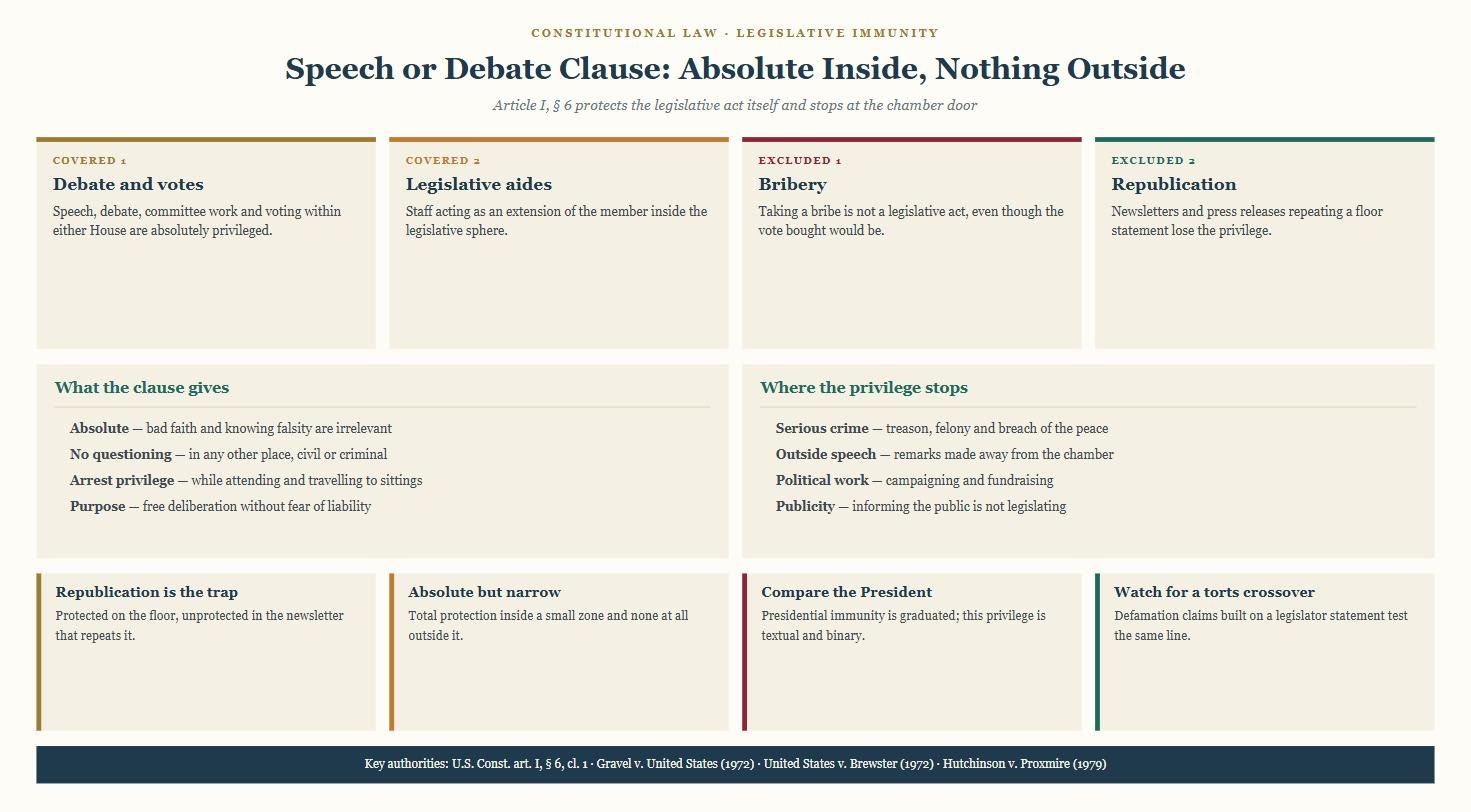
Speech or Debate Clause: Absolute but Narrow Immunity
The Speech or Debate Clause of Article I, section 6 provides that for any speech or debate in either House, members of Congress shall not be questioned in any other…
Congress’s Naturalization Power and Citizenship Limits
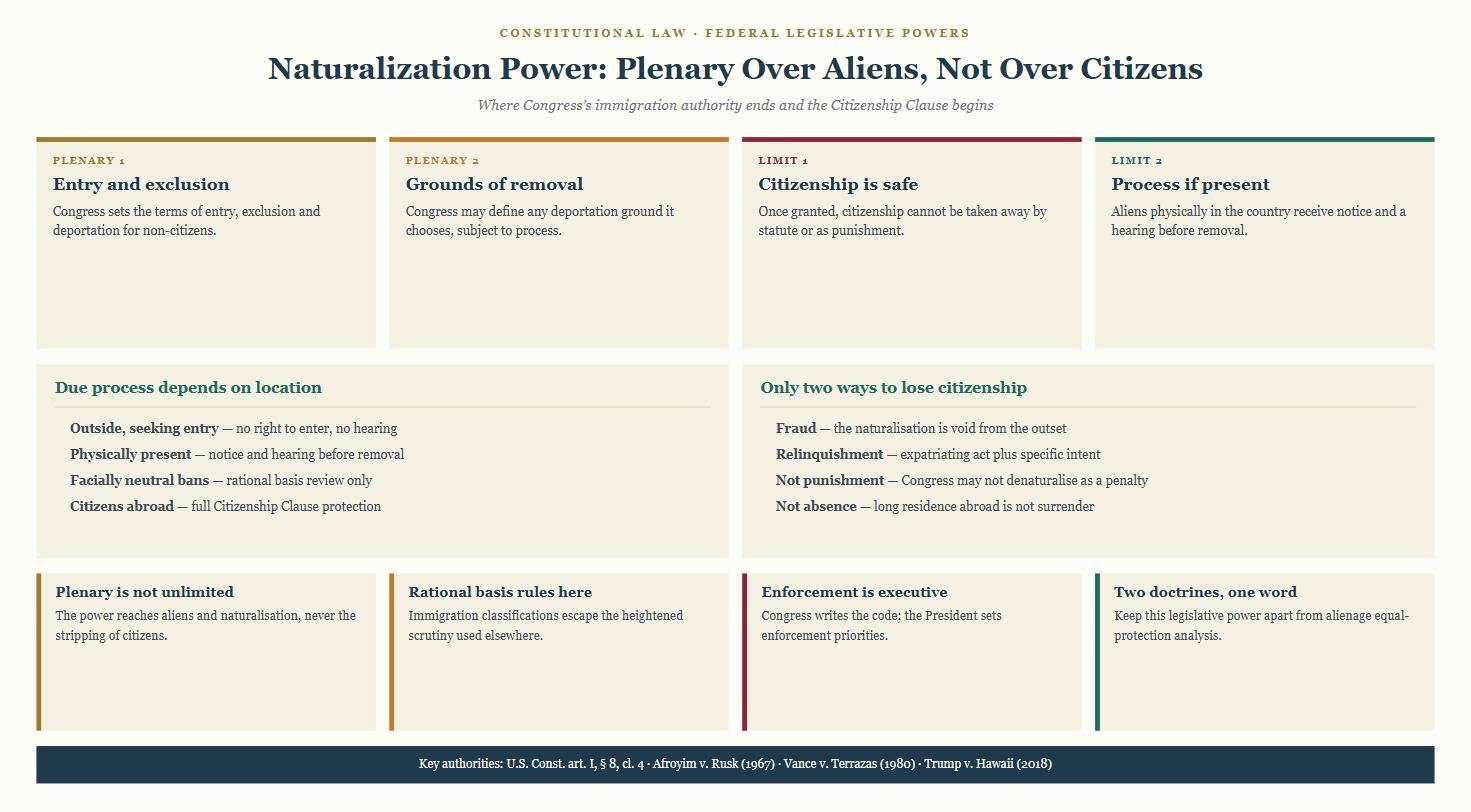
Congress holds a plenary naturalization power under Article I, section 8, clause 4, and the Supreme Court has read that clause together with national sovereignty to give Congress correspondingly broad…
Section 5 Enforcement Power: Remedy, Do Not Redefine
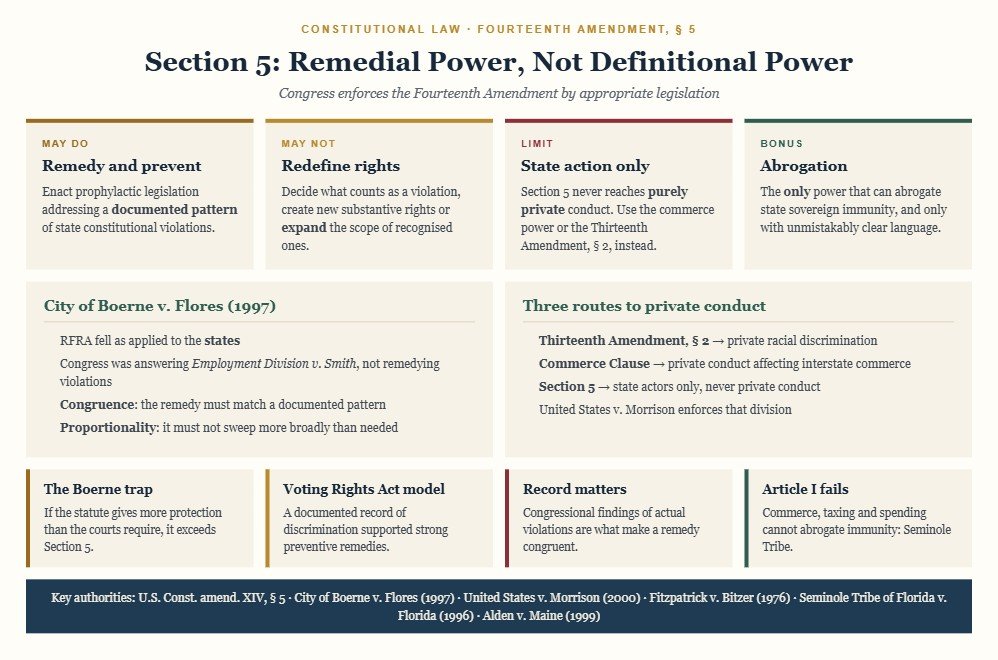
Section 5 lets Congress remedy Fourteenth Amendment violations that courts have recognised, never redefine them. Learn the Boerne test, the state-action limit and the abrogation rule.
The Spending Power and the Five Dole Test Conditions
Congress may spend for any public purpose and attach strings, but the Dole conditions and the NFIB anti-coercion limit control how far the strings may reach.
Congress’s Taxing Power: When a Penalty Is Really a Tax
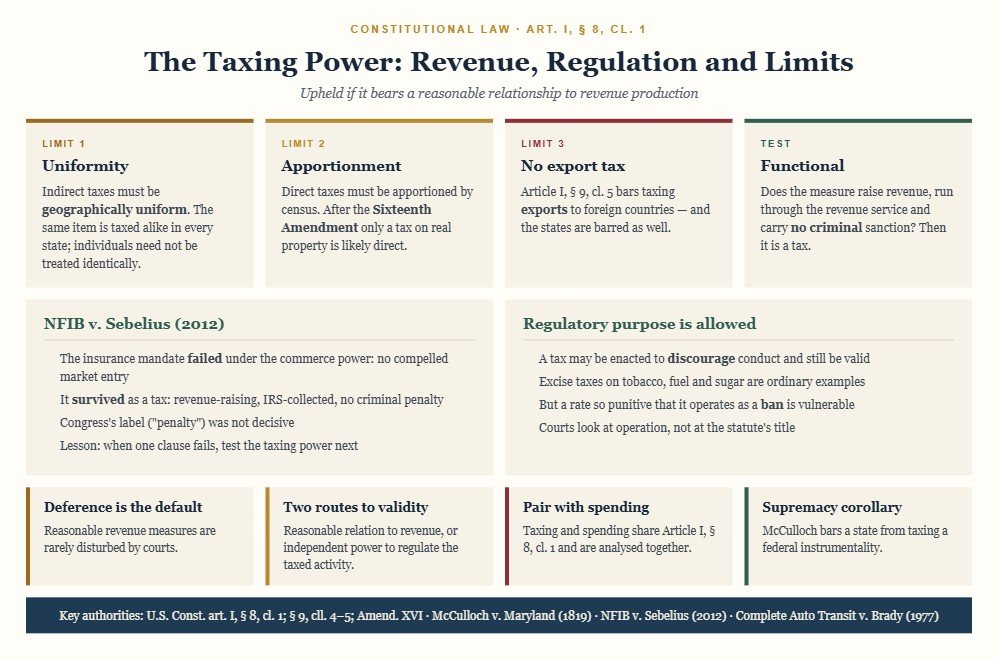
The taxing power is broad and deferential, but three structural limits still bite. Learn the functional tax-versus-penalty test that decided NFIB v. Sebelius.
The Necessary and Proper Clause: Congress’s Multiplier
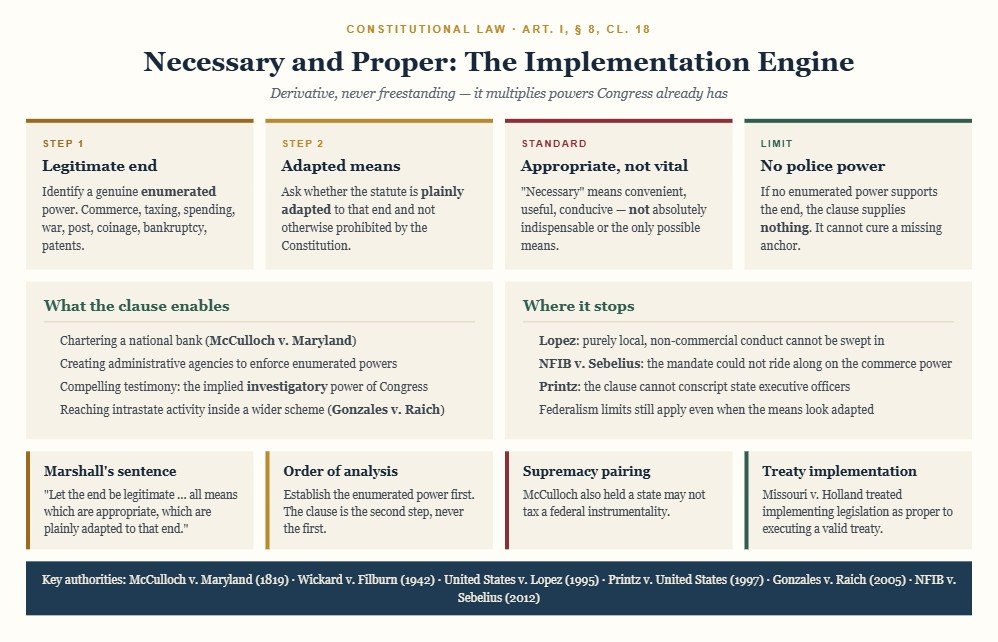
The necessary and proper clause never grants power on its own. Learn the two-part McCulloch test, why necessary means appropriate rather than indispensable, and where the clause runs out.
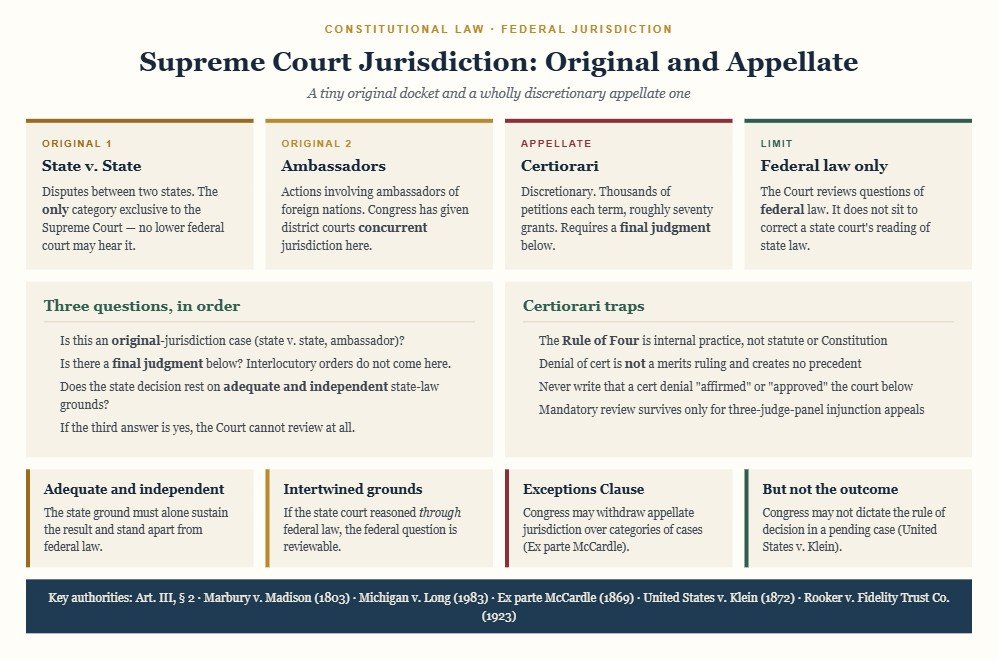
Supreme Court Jurisdiction: Original vs Appellate Power
Original jurisdiction is tiny, appellate jurisdiction is discretionary, and a cert denial decides nothing. Learn the three questions that resolve any Supreme Court jurisdiction problem.