
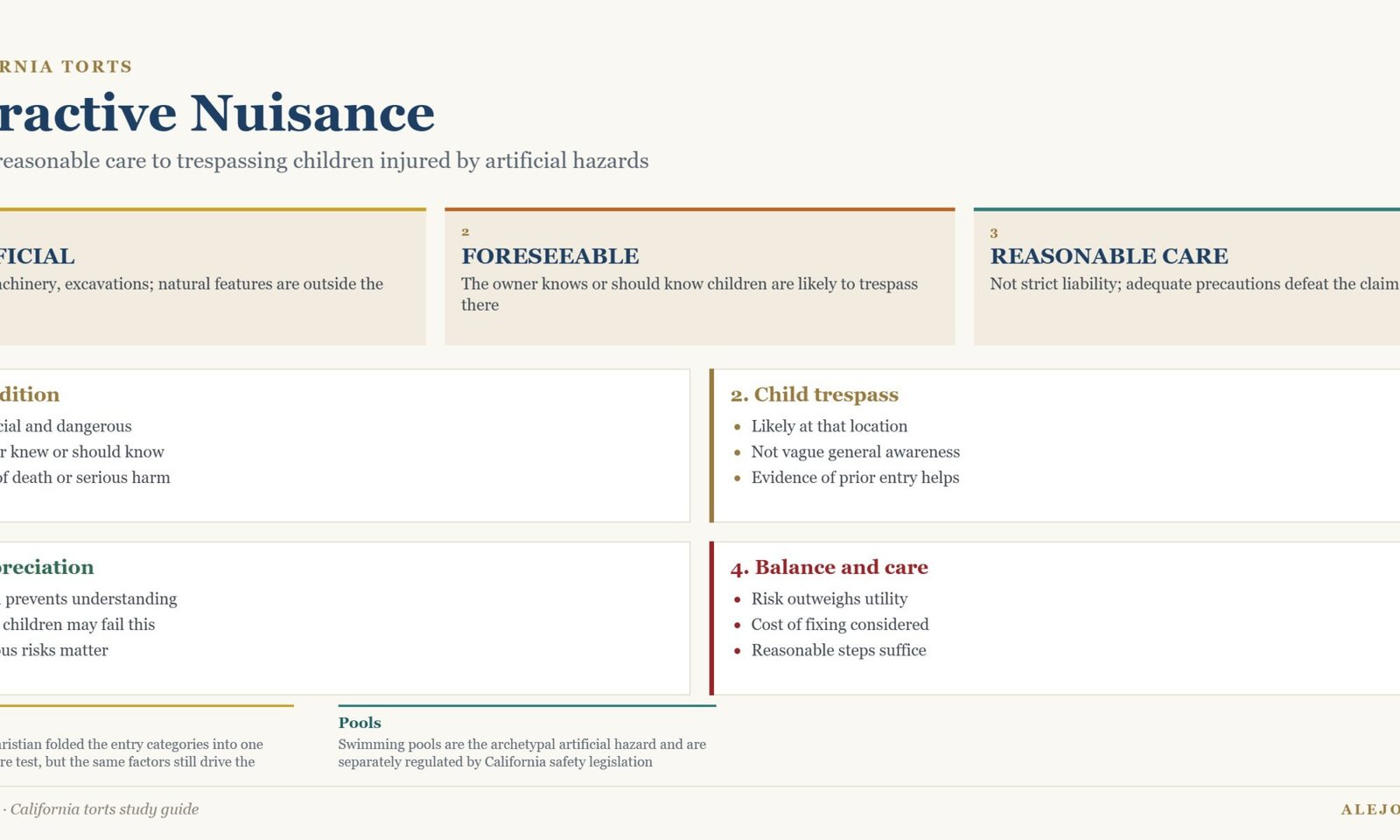
Attractive nuisance is the doctrine that gives trespassing children a protection the law denies to adult trespassers. Where a dangerous artificial condition sits on land that children are likely to enter, the occupier owes a duty of reasonable care even though the children had no right to be there at all.
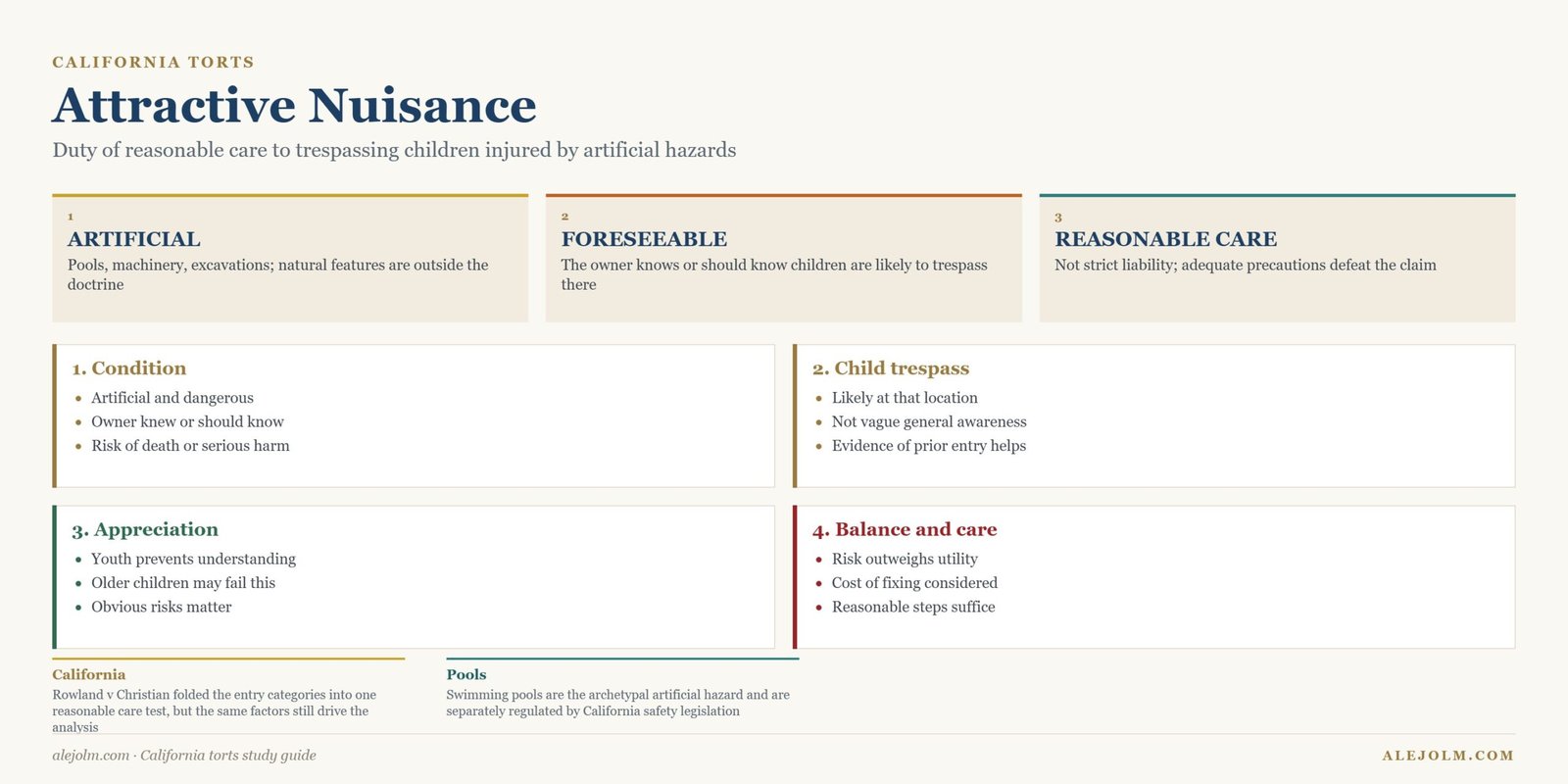
California reached the same destination by a different route, since Rowland v Christian dissolved the old entrant categories into a single reasonable care enquiry. The traditional six elements did not disappear; they became the factors that decide whether reasonable care was owed and given. This guide sets out those elements, explains the artificial condition limit, and applies the analysis to a Los Angeles County example.
Why children are treated differently
The ordinary rule is that an occupier owes an undiscovered trespasser almost nothing. That rule assumes an adult who has weighed the risk and chosen to take it. Children do not make that calculation. A hazard that would warn an adult away may be precisely what draws a child in, and the law responds by imposing a duty where none would otherwise exist.
The doctrine is nevertheless narrow. It is not a general rule that occupiers insure children against harm. It applies to artificial hazards, it requires foreseeable child trespass at the location in question, and it is satisfied by reasonable precautions rather than by perfect ones.
The six elements
- A dangerous artificial condition the occupier is or should be aware of.
- Knowledge of likely child trespass at that place, actual or constructive.
- Risk of death or serious bodily harm rather than minor injury.
- Children cannot appreciate the danger because of their youth.
- The risk substantially outweighs the utility of the condition and the burden of removing it.
- Failure to exercise reasonable care to eliminate the danger or protect the children.
Each element is independently required. In practice the one most often missing is the second, because a condition can be obviously dangerous while the evidence shows nothing to suggest that children ever came near it.
Artificial conditions only
The doctrine is reserved for features people put on the land. Swimming pools, trampolines, machinery, excavations, electrical equipment and abandoned wells all qualify. Natural features such as ponds, streams, cliffs and trees generally do not, however serious the danger, unless the child independently occupies some status other than trespasser.
The distinction can look arbitrary at the margins, and it is defended on the ground that occupiers create artificial hazards by choice and can usually remove or guard them, whereas natural topography is simply there.
The balancing element
Utility against risk
The fifth element asks whether the risk to children substantially outweighs both the usefulness of maintaining the condition and the cost of eliminating it. That is the same cost and benefit reasoning that underlies ordinary breach analysis. A working reservoir or an active construction excavation carries real utility and a high removal cost, so the balance is harder to strike than for an uncovered abandoned well.
Reasonable care, not insurance
The sixth element makes the doctrine fault based. An occupier who knows of the hazard and of the risk of child entry, and who responds with an adequate fence, a locked cover or an enforced barrier, has exercised reasonable care. Liability does not follow merely because a child was injured despite those steps.
| Feature | Attractive nuisance | Ordinary trespasser rule |
|---|---|---|
| Who is protected | Children unable to appreciate the risk | Adults and older children |
| Condition covered | Artificial hazards only | All conditions |
| Duty owed | Reasonable care | Refrain from wilful or wanton harm |
| Defence available | Adequate precautions taken | Status of the entrant |
A worked example
A vacant property in East Los Angeles contains an unfenced in ground pool, still holding water. Neighbours have repeatedly seen children climbing through a gap in the boundary wall, and the owner has been told about it. A seven year old enters and drowns. The condition is artificial and lethal, entry was plainly foreseeable at that location, a child of that age cannot appreciate the danger, the utility of leaving an unused pool open is minimal and fencing is inexpensive. Liability follows.
Change the precautions. Suppose the owner had installed a compliant fence with a self latching gate and a rigid safety cover, and the child gained entry by dragging a wheelie bin to climb over. Reasonable care was exercised, the sixth element fails and the claim does not succeed even though the tragedy is identical.
Attractive nuisance in California and Los Angeles County in 2026
California abolished the rigid entrant categories in Rowland v Christian and replaced them with a general duty of ordinary care grounded in Civil Code section 1714. Later legislation restored a limited immunity for certain injuries to trespassers engaged in specified felonies, but the general framework for a child trespasser remains a totality of the circumstances enquiry into foreseeability and reasonableness.
California also regulates residential swimming pools through safety legislation requiring specified drowning prevention features on construction and remodelling, which supplies a concrete standard that often shapes the reasonable care analysis in Los Angeles County cases.
- Unified duty — Civil Code section 1714 imposes ordinary care, without the old entrant categories.
- Foreseeability first — courts ask whether harm to a child was reasonably foreseeable at the location.
- Pool safety rules — statutory drowning prevention requirements often define reasonable precautions.
- Local ordinances — municipal fencing and securing requirements can supply a standard of care.
- Statutory immunities — limited protections exist for certain trespasser injuries.
- Comparative fault — the conduct of an older child and of supervising adults can reduce recovery.
For 2026, confirm the current California authority on landowner duty to child trespassers, pool safety requirements and statutory immunities directly with current authority, since these continue to develop.
Common mistakes to avoid
- Applying it to natural features — ponds, hills and trees are outside the doctrine absent some other basis.
- Relying on general awareness — the occupier must have reason to know children are likely to enter that specific area.
- Skipping the balance — a dangerous condition plus a child trespasser is not automatically liability.
- Treating it as strict liability — reasonable precautions defeat the claim even where injury occurs.
- Requiring invitee status — a trespassing child need not fit any of the traditional categories.
- Ignoring the age of the child — an older child who understood the risk falls outside the protection.
Frequently asked questions
Does attractive nuisance apply to swimming pools in California?
Yes, pools are the classic artificial hazard. California also regulates residential pools through safety legislation, and compliance or non compliance with those requirements frequently drives the reasonable care analysis in a drowning claim.
Is the doctrine still separate after Rowland v Christian?
Not as a formal exception. California folded the entrant categories into a single duty of ordinary care, so the six elements now function as factors within a totality of the circumstances enquiry rather than as a standalone doctrine.
What about a natural pond on private land?
Generally outside the doctrine, because it is not an artificial condition. A claim would have to rest on some independent basis, such as the child having permission to be there or the occupier having created an additional hazard.
Does the child age matter?
Considerably. The doctrine protects children who because of their youth cannot appreciate the danger. An older child who understood the risk and chose to take it will usually fall outside the protection, and comparative fault may reduce any recovery.
Is fencing always required?
There is no universal rule, but fencing is often the cheapest effective precaution and is required by statute for many residential pools. Whether it was necessary depends on the hazard, the likelihood of child entry and the cost of the alternatives.
Related guides
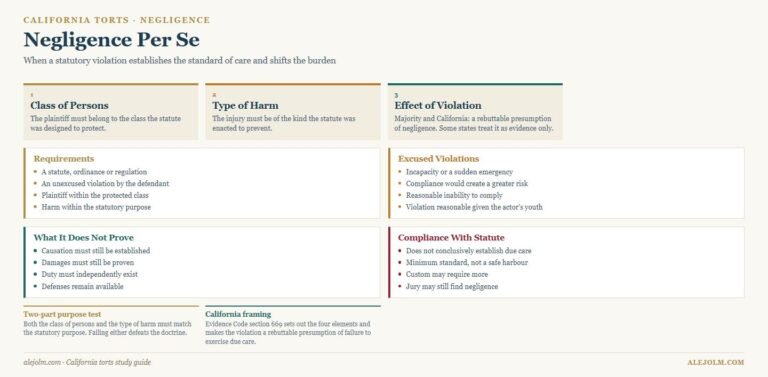 Negligence Per Se
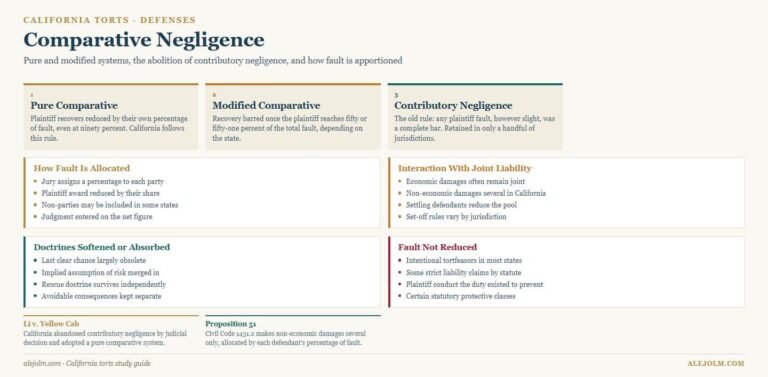 Comparative Negligence
 Nuisance
- Special Standards of Care
- Duty of Care
- Trespass to Land
- Elements of Negligence
- Premises Liability
Next steps
Read this with premises liability for the wider occupier duty in California, and then duty of care for the foreseeability analysis that now carries the whole enquiry.
For primary sources, read California Civil Code section 1714 and the civil jury instructions published by the Judicial Council of California.