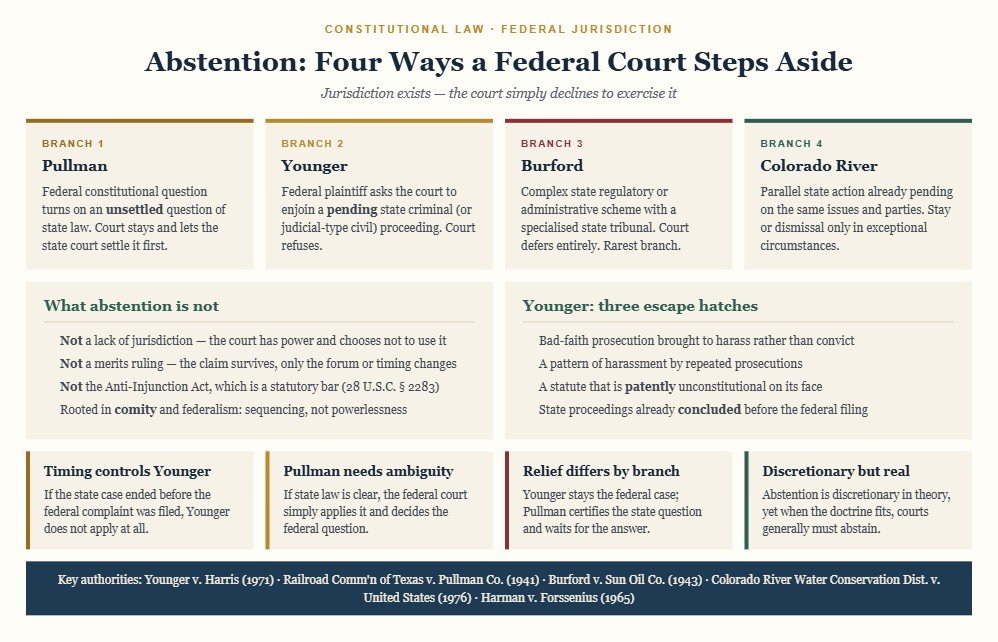
Abstention lets a federal court that has jurisdiction decline to exercise it out of respect for state courts. Learn the four branches, the triggers and the exam traps.
Abstention Doctrine: 4 Ways Federal Courts Step Aside

Lawyer — real estate law, transactions and doctoral research.
Abstention lets a federal court that has jurisdiction decline to exercise it out of respect for state courts. Learn the four branches, the triggers and the exam traps.
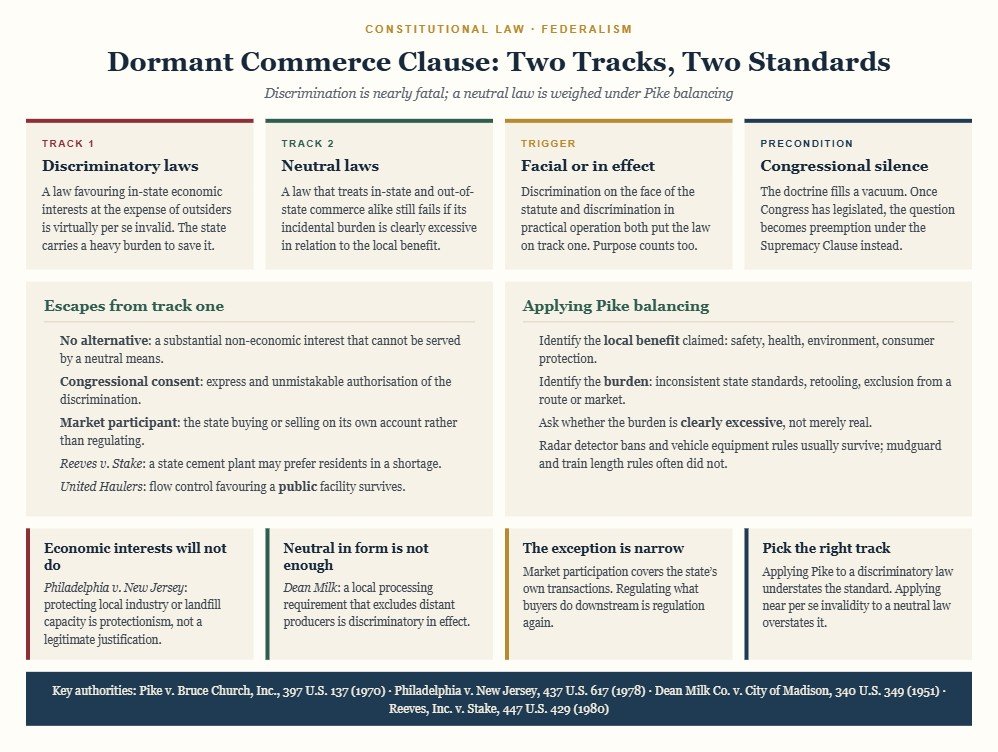
The dormant Commerce Clause explained: discriminatory laws that are nearly per se invalid, Pike balancing for neutral laws, and the market participant exception.
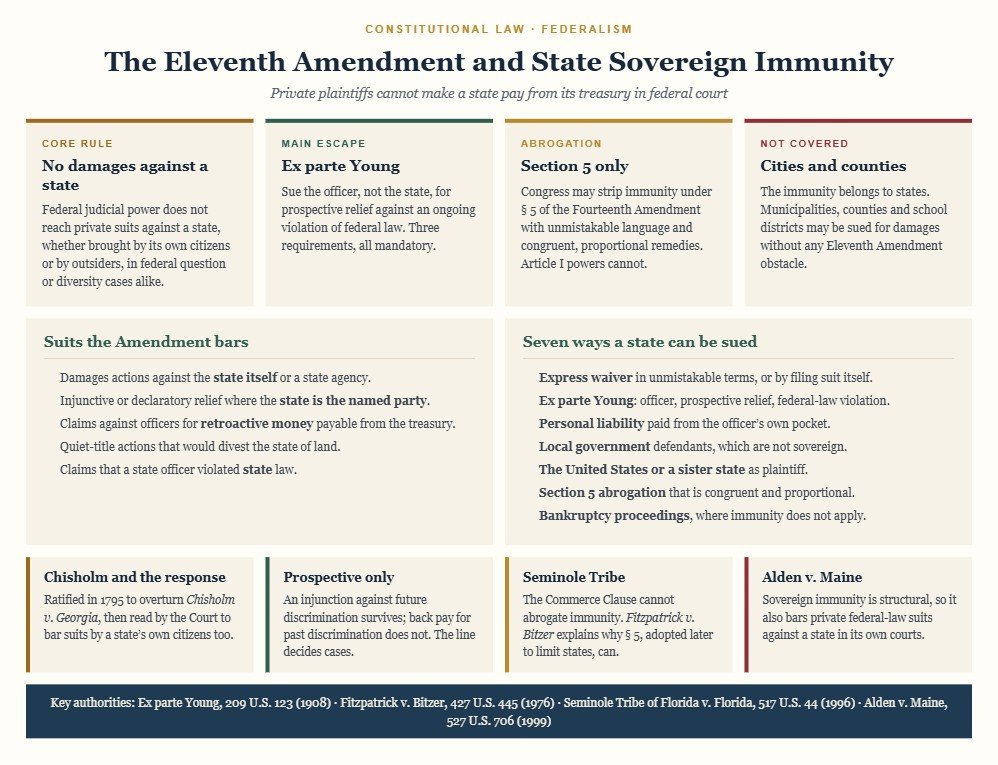
The Eleventh Amendment explained: what state sovereign immunity bars, the three requirements of Ex parte Young, and why only Section 5 can abrogate.
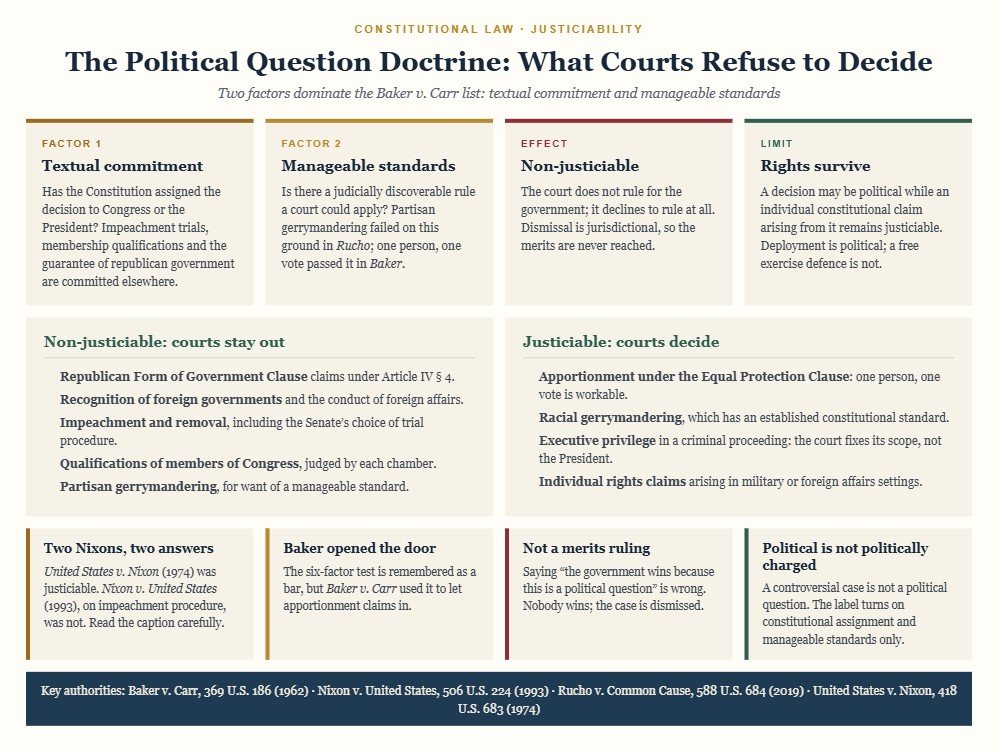
The political question doctrine explained: textual commitment, manageable standards, the categories on each side of the line and the two Nixon cases.
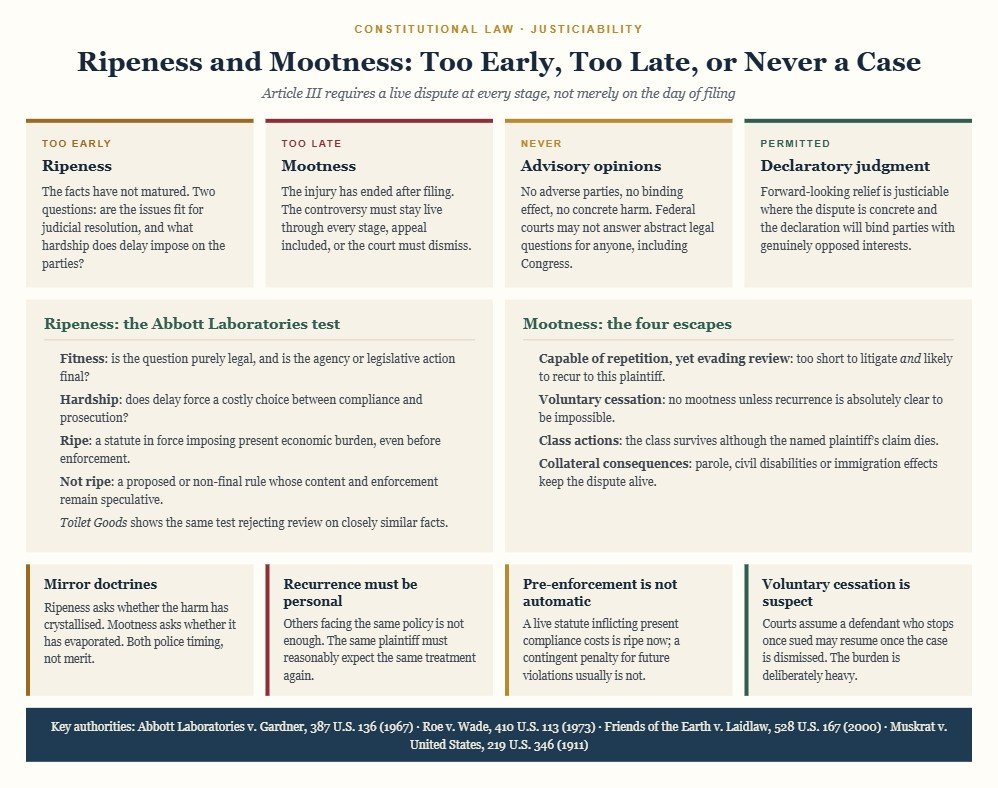
Ripeness and mootness explained: the fitness and hardship test, the four exceptions to mootness, and the line between advisory opinions and declaratory judgments.
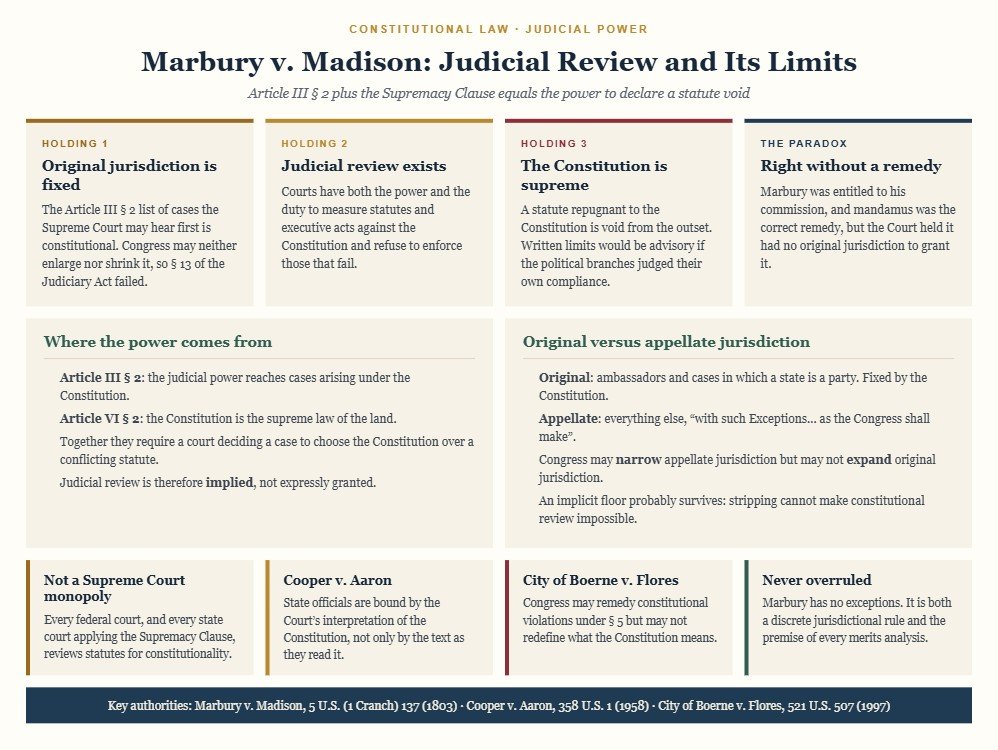
Marbury v. Madison explained: the three holdings, the textual basis for judicial review, and why Congress may limit appellate but not original jurisdiction.
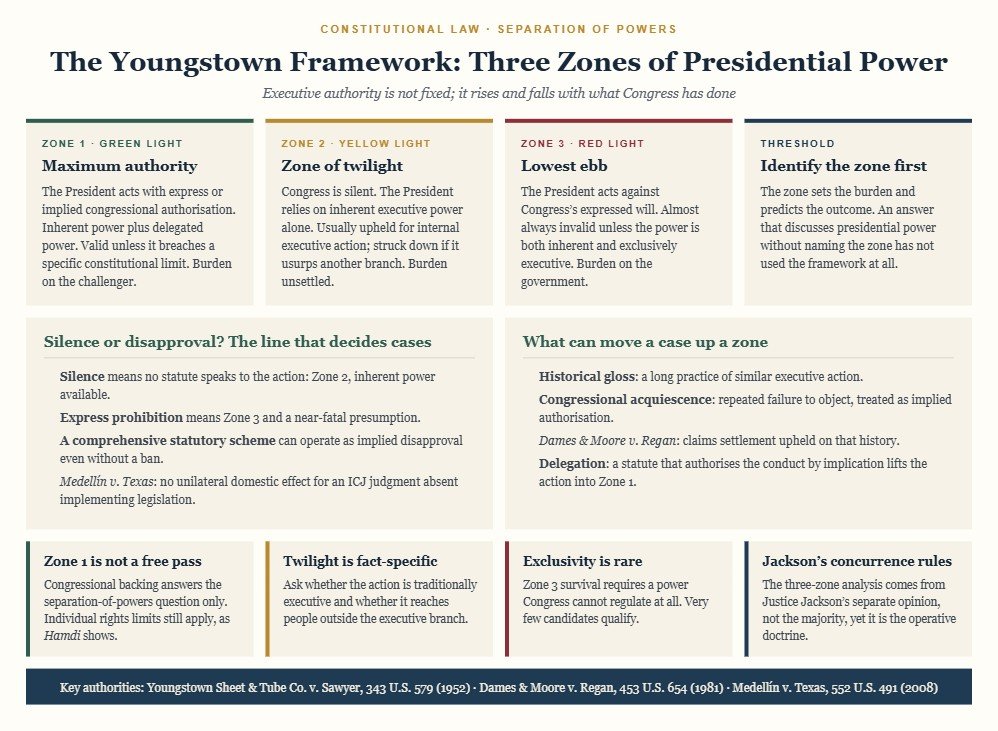
The Youngstown framework explained: the three zones of presidential power, who bears the burden in each, and how to tell silence from disapproval.
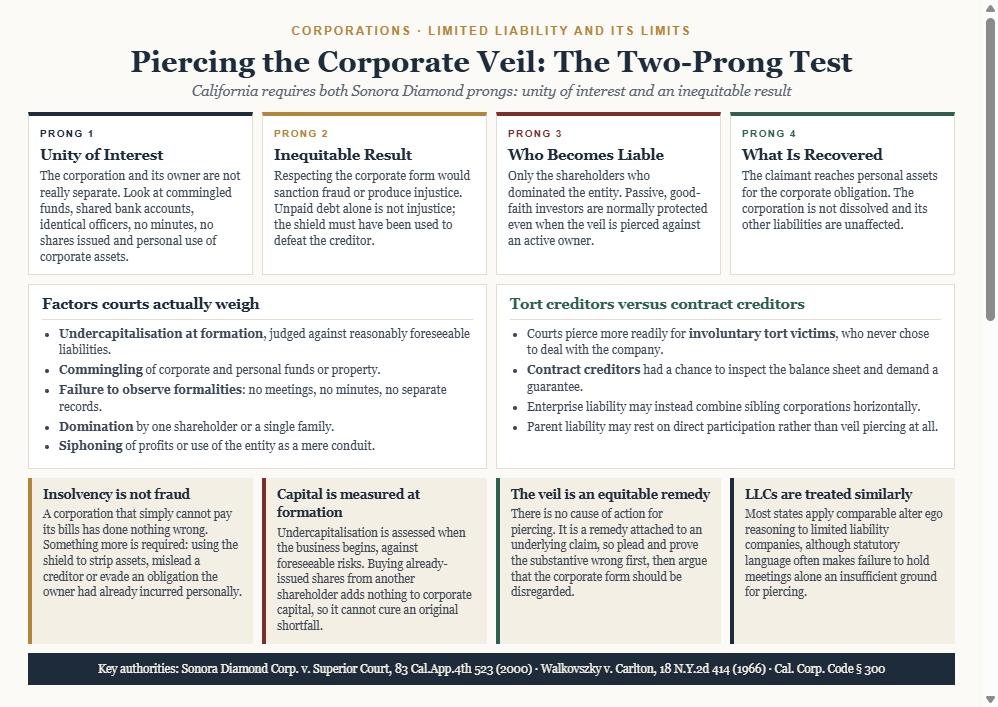
Piercing the corporate veil explained: the alter ego and inequitable result prongs, undercapitalisation, and tort versus contract creditors.
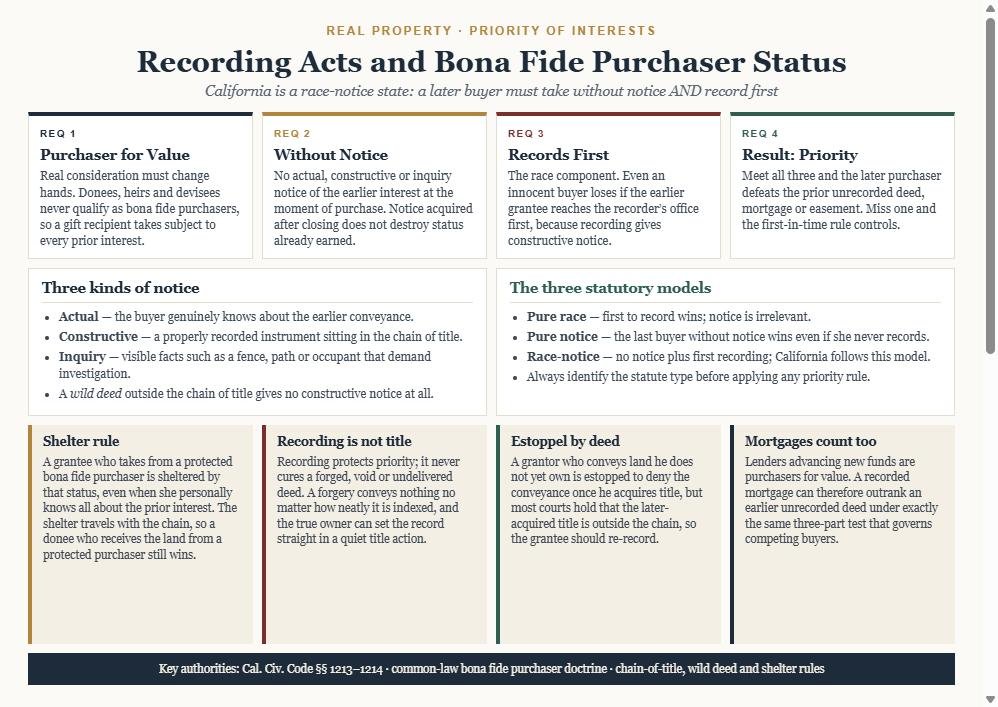
Recording acts decide who wins when two deeds conflict. Learn bona fide purchaser status, the three statutory models, notice types and the shelter rule.
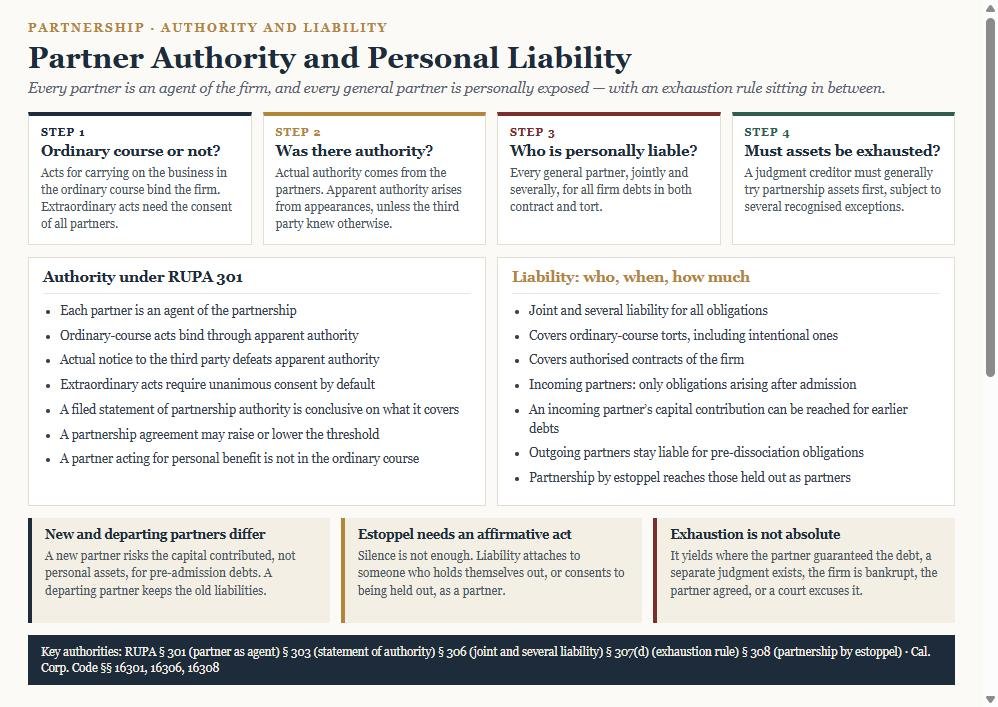
Partner liability explained: the ordinary course test, apparent authority, joint and several liability, the exhaustion rule and partnership by estoppel.