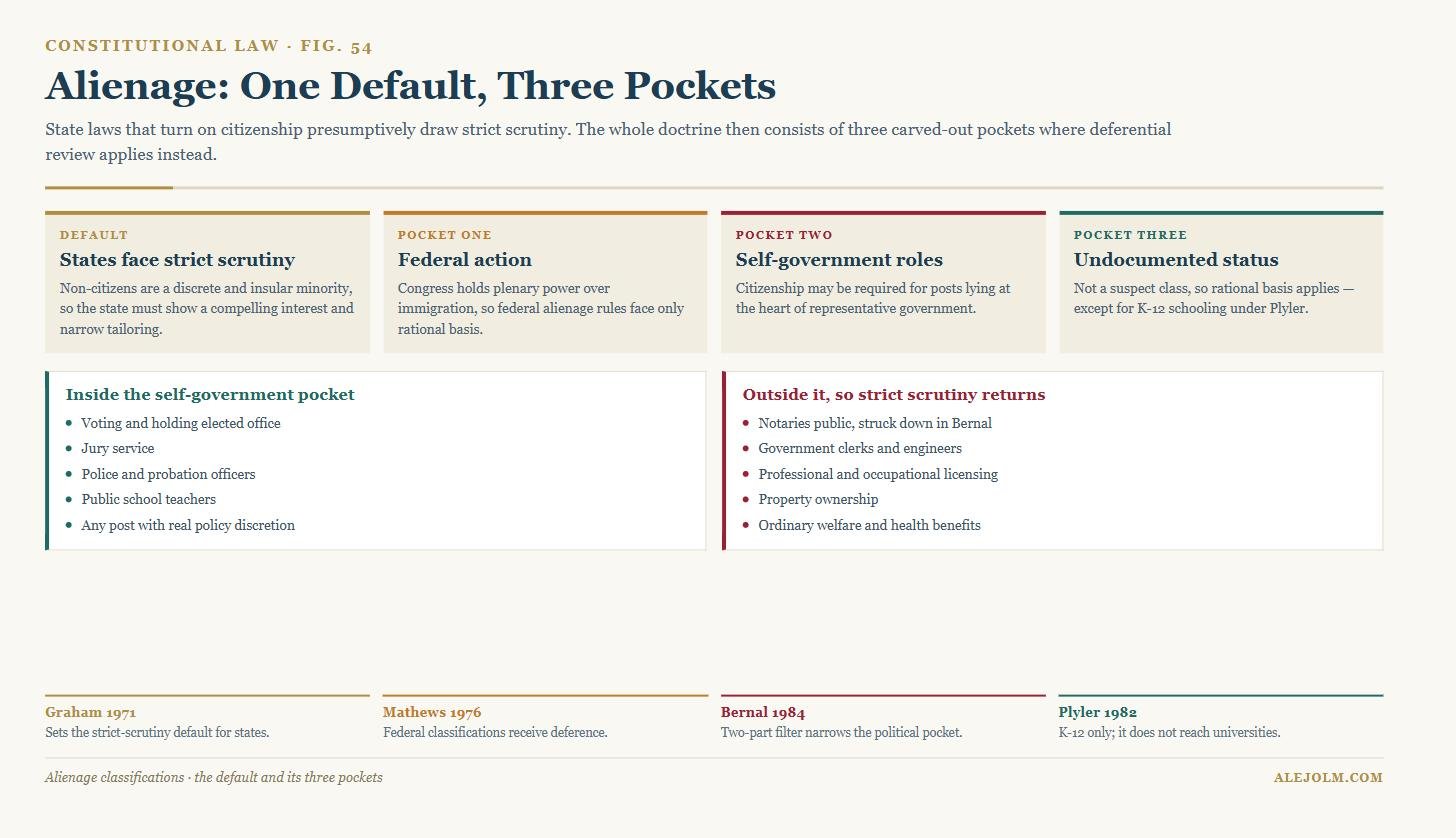
Alienage is one of the few areas of equal protection where the tier does not follow from the classification alone. It follows from who is doing the classifying and what…
Alienage Classifications: Strict Scrutiny and Its Pockets

Lawyer — real estate law, transactions and doctoral research.
Alienage is one of the few areas of equal protection where the tier does not follow from the classification alone. It follows from who is doing the classifying and what…
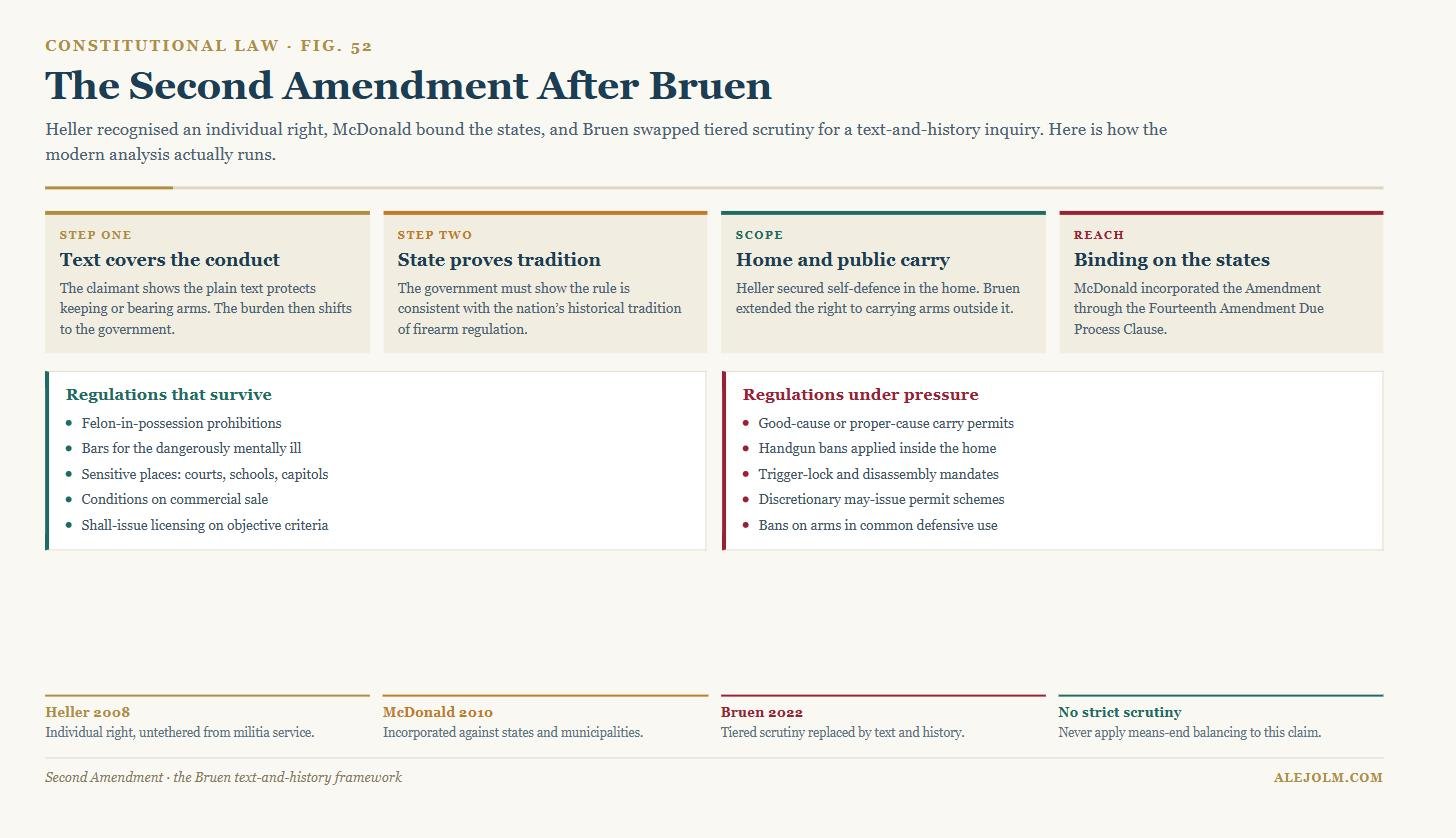
For nearly two centuries the Second Amendment was treated as a provision about militias. Courts read the prefatory clause as a limit on the operative clause, and a challenge to…
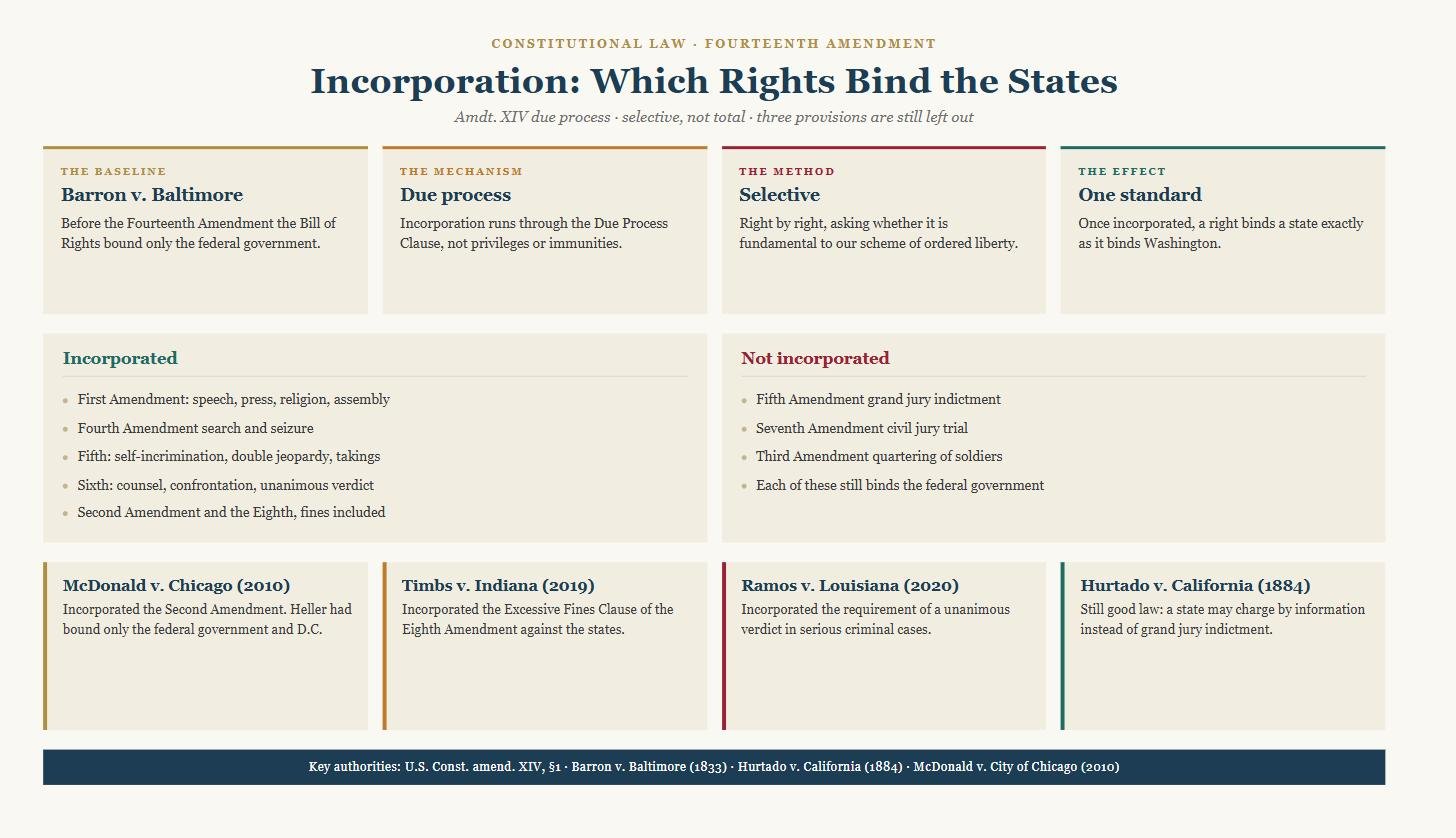
The Bill of Rights was written against the federal government. Read in 1791, it said nothing at all about what a state legislature or a county sheriff could do, and…
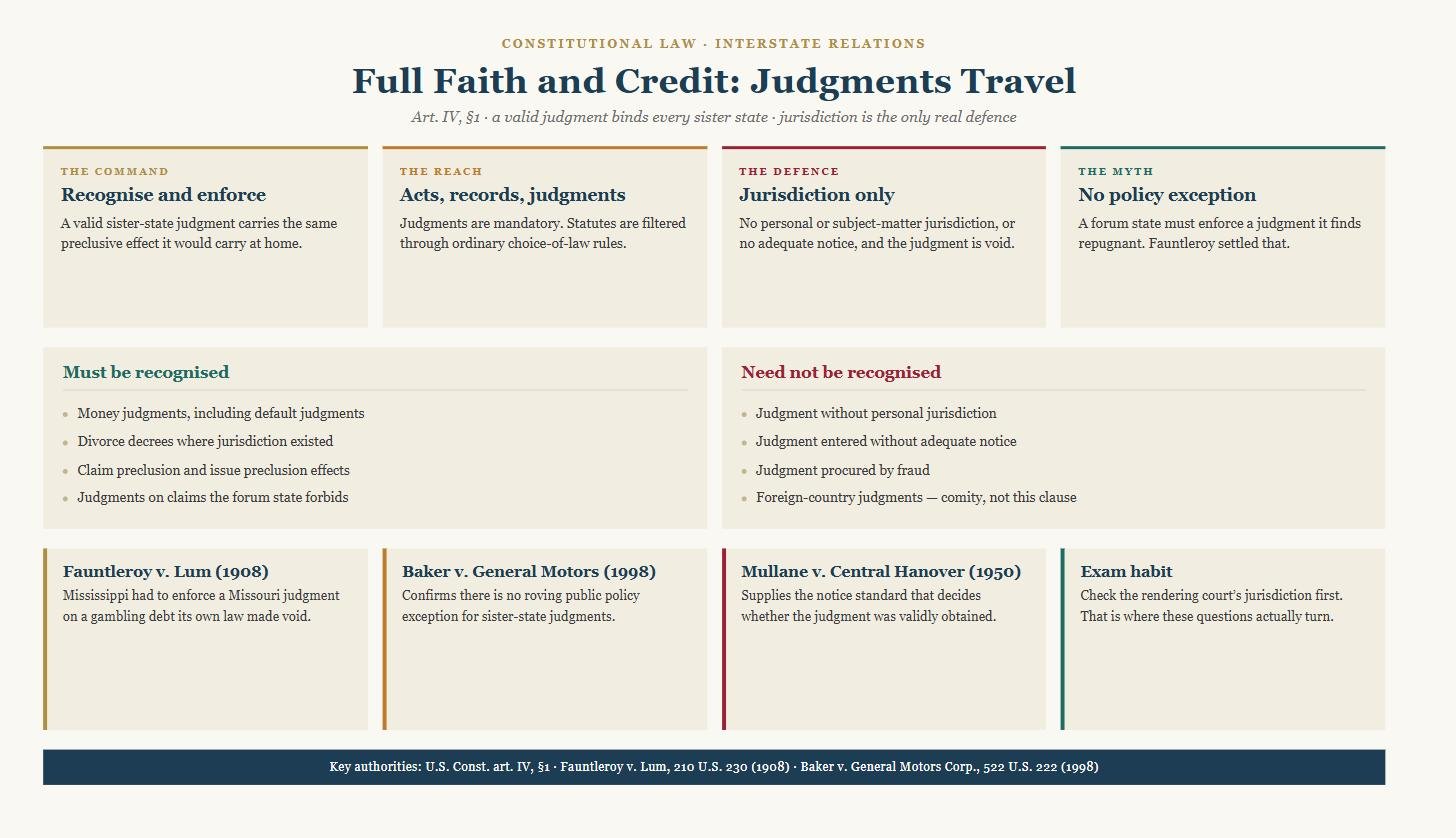
A creditor wins fifty thousand dollars in one state and the debtor moves to another. Does the second state have to collect it? The answer is yes, and it is…
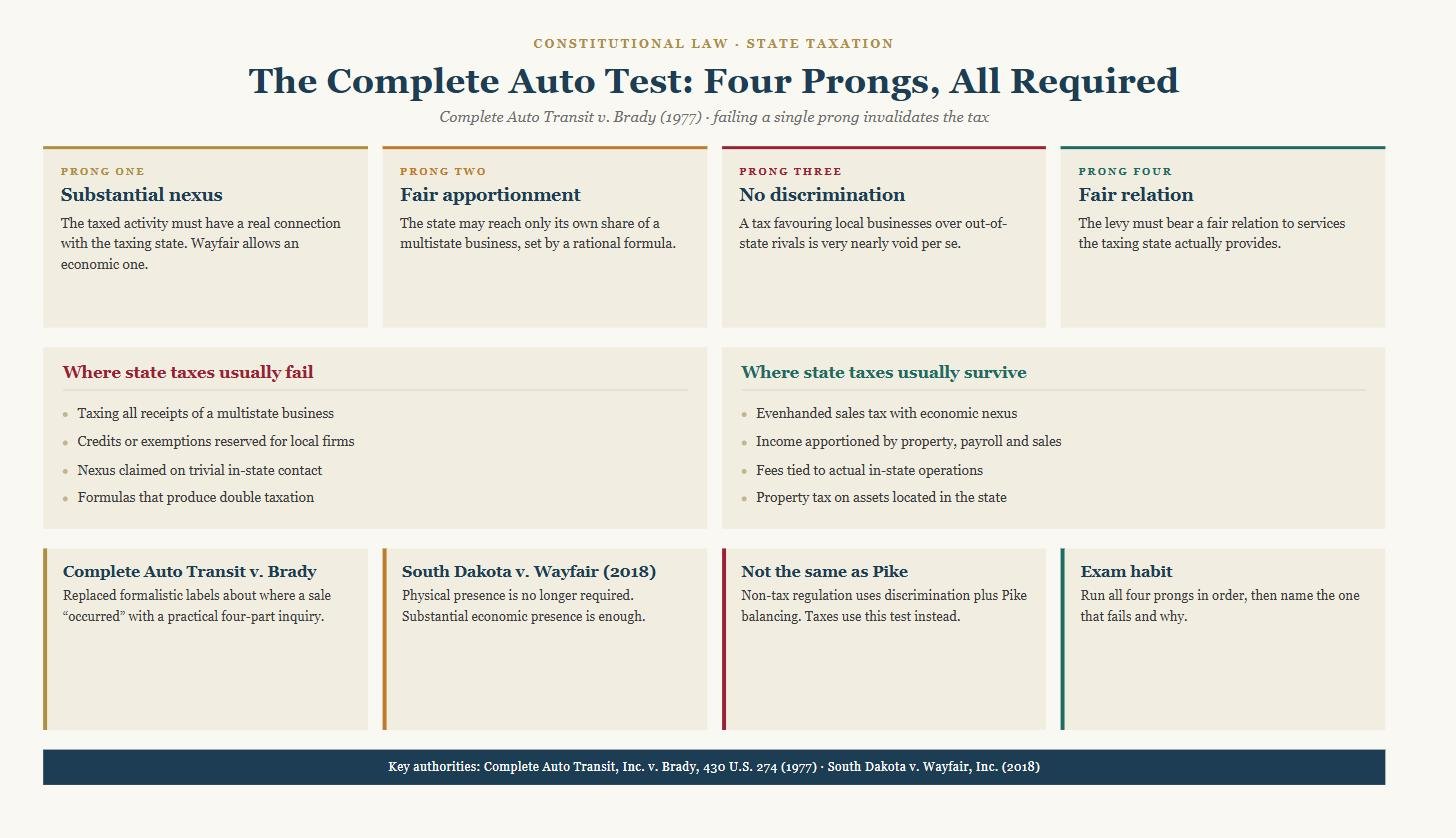
States need revenue, and interstate businesses are attractive targets. The Commerce Clause does not stop a state from taxing commerce that crosses its borders, but it does insist the tax…
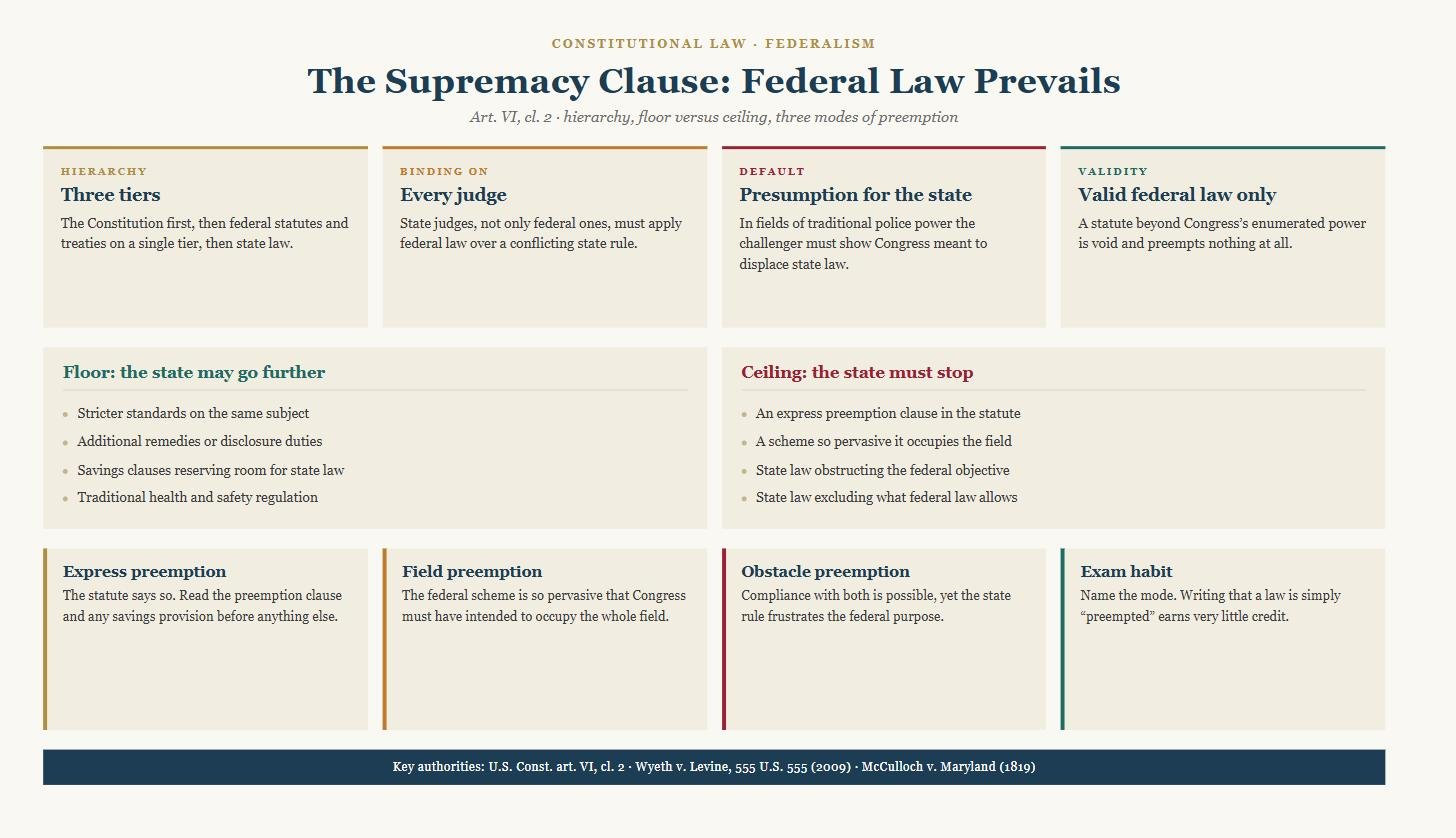
Two rules govern the same conduct. One comes from Congress, the other from a state legislature, and they do not sit comfortably together. Almost every federalism question eventually reduces to…
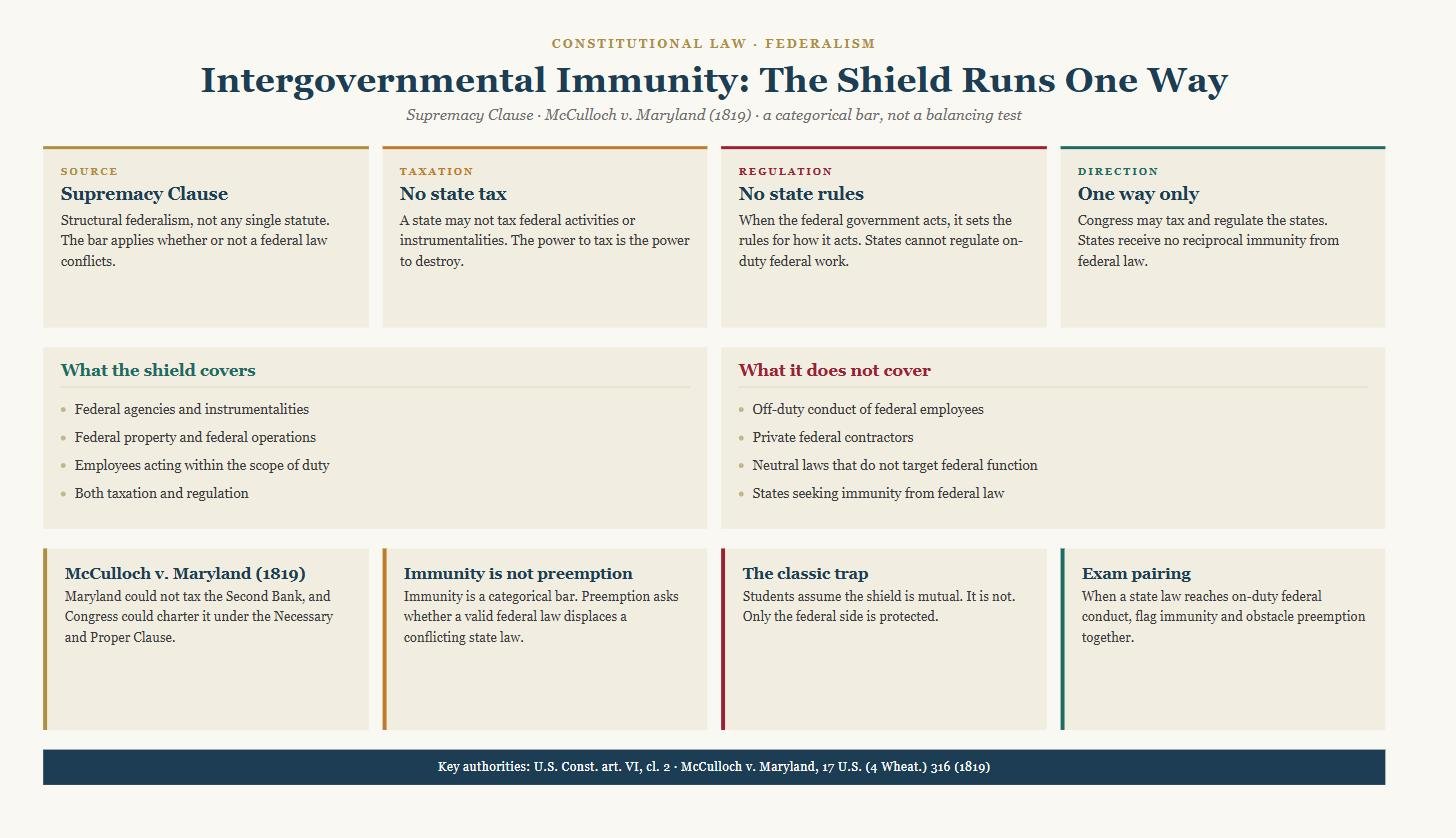
A state legislature decides to tax the local branch of a federal agency, or to require federal inspectors to hold a state licence before they may do their jobs. Nothing…
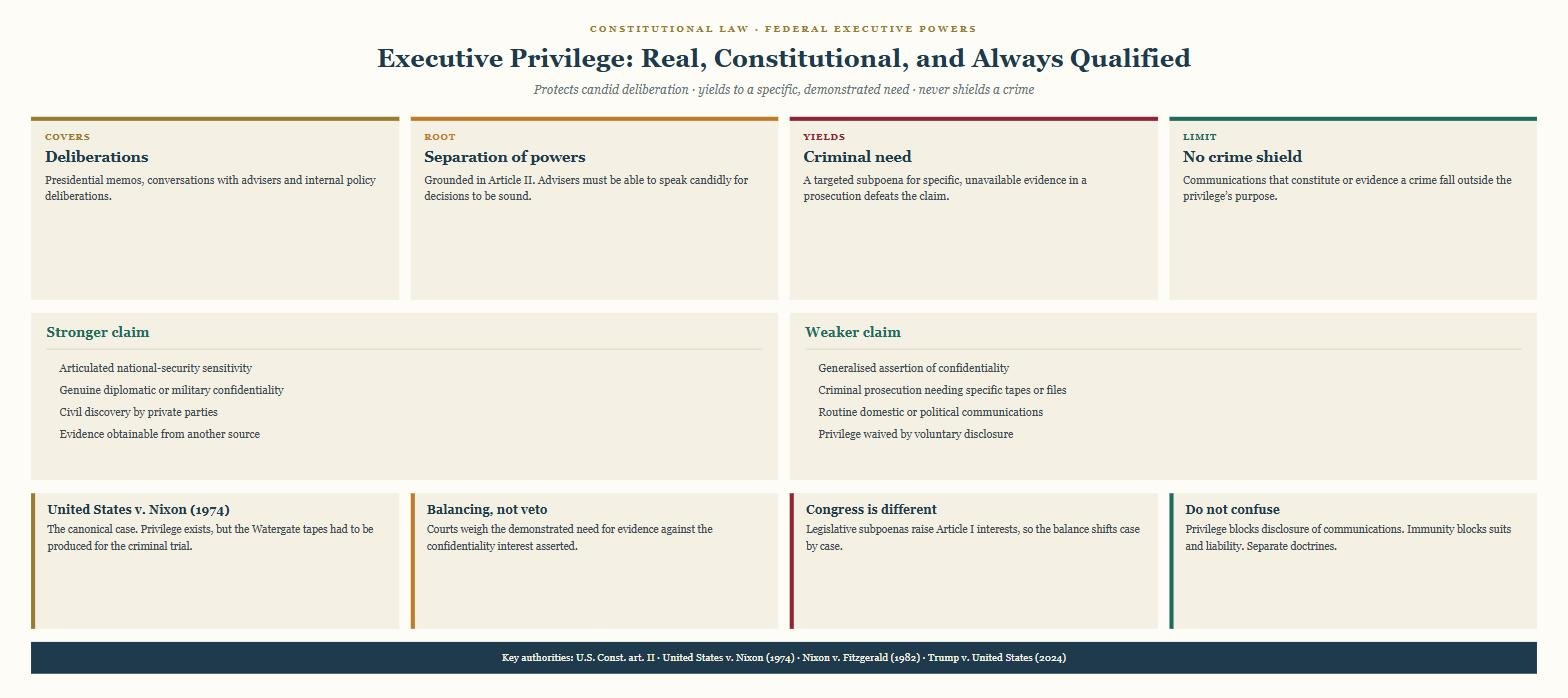
Executive privilege is the President’s constitutional right, rooted in separation of powers and Article II, to keep presidential communications confidential and free from compelled disclosure. Memos, conversations with advisers and…
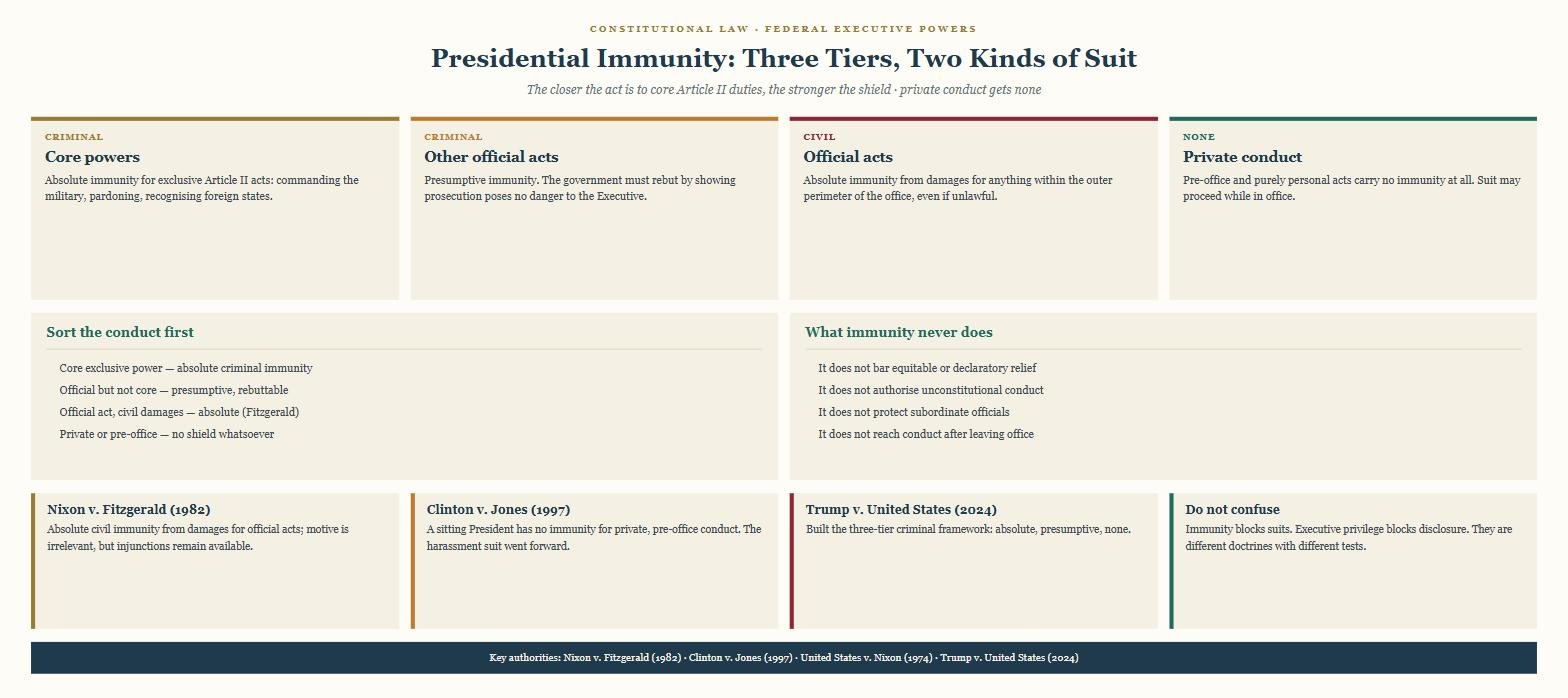
There is no single rule of presidential immunity. There are two doctrines — criminal and civil — and within them a graduated set of protections. The organising principle is simple:…
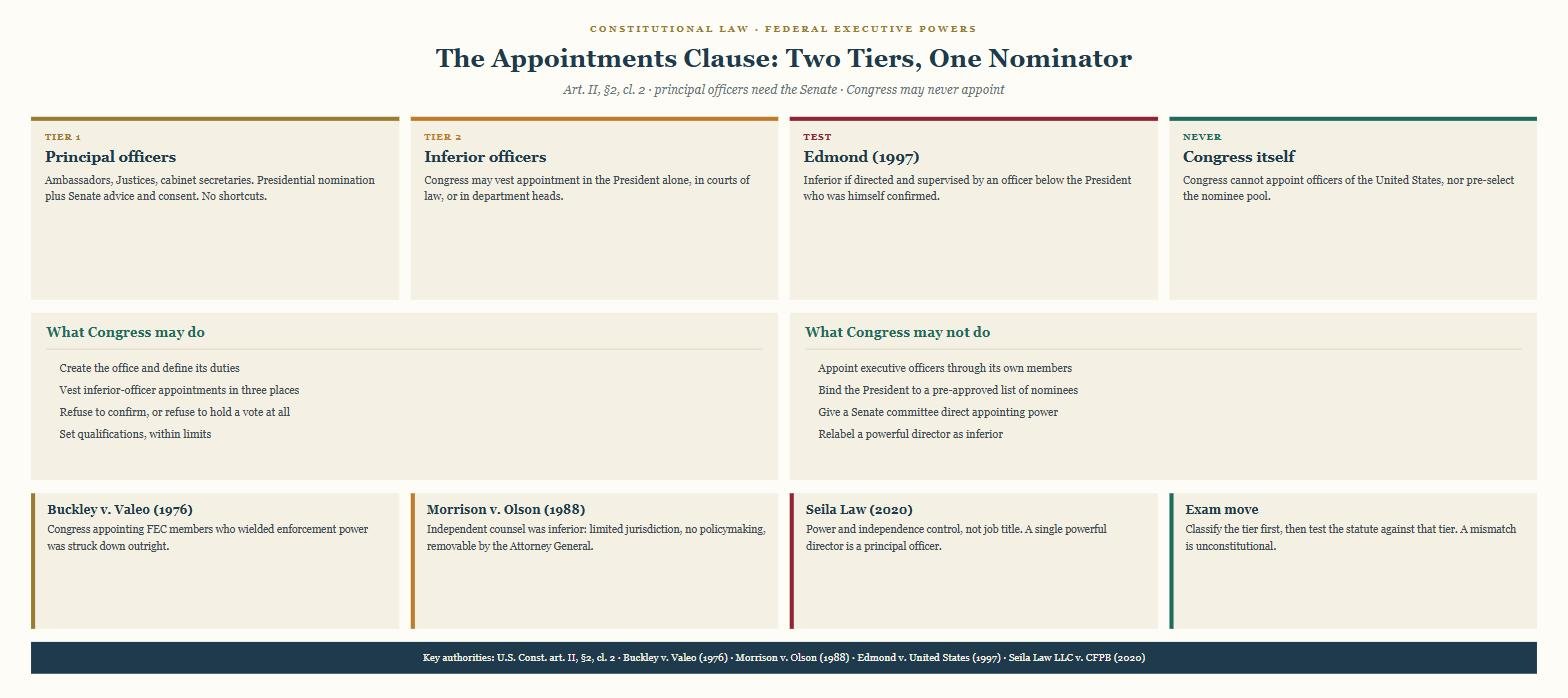
Article II, Section 2, Clause 2 lets the President appoint ambassadors, other public ministers and consuls, judges of the Supreme Court, and all other officers of the United States, with…