
A SLAPP is a strategic lawsuit against public participation — litigation filed not to win but to impose cost and silence a critic. California’s answer is Code of Civil Procedure section 425.16, and the anti-SLAPP motion it creates is among the most powerful defence tools in American civil practice: it stays discovery, tests the claim on the evidence within weeks, awards mandatory fees to a prevailing defendant and, if denied, is immediately appealable.
This guide sets out the two-prong test, the categories of protected activity, the statutory exemptions in section 425.17, how mixed causes of action are handled after Baral v. Schnitt, the procedure and deadlines, and the practical realities of bringing or defending one in Los Angeles.
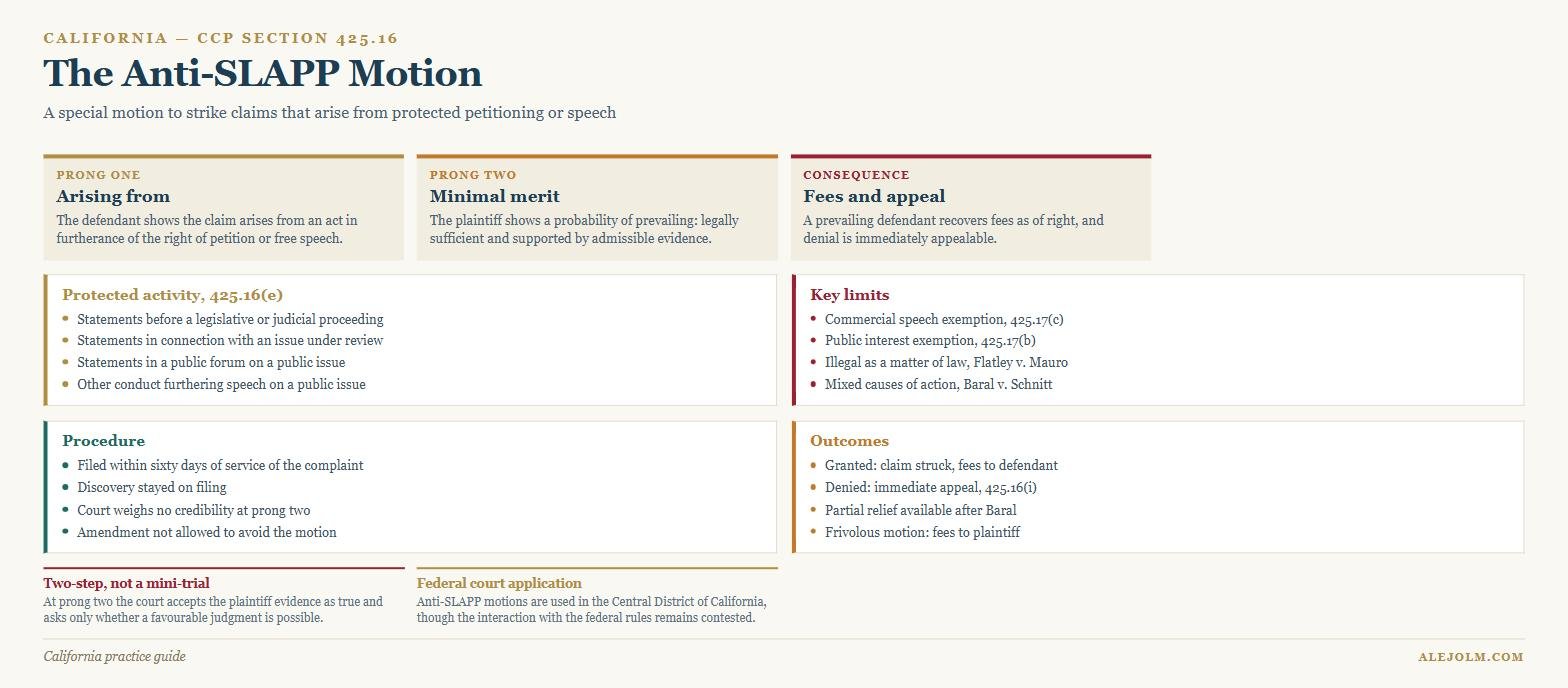
Prong one: arising from protected activity
The moving defendant must show that the challenged claim arises from an act in furtherance of the right of petition or free speech in connection with a public issue. Section 425.16(e) lists four categories: statements made before a legislative, executive or judicial proceeding; statements made in connection with an issue under consideration by such a body; statements made in a public forum in connection with an issue of public interest; and any other conduct in furtherance of the exercise of those rights in connection with a public issue.
The critical word is from. A claim does not arise from protected activity merely because protected activity preceded it or provided evidence of it. The question is whether the protected activity itself supplies the elements of the claim — the point the California Supreme Court emphasised in Park v. Board of Trustees (2017).
Prong two: probability of prevailing
If prong one is satisfied, the burden shifts to the plaintiff to show a probability of prevailing. This is often described as a minimal merit standard: the claim must be legally sufficient and supported by a prima facie showing of facts that, if credited, would sustain a favourable judgment. The court accepts the plaintiff’s evidence as true, considers the defendant’s evidence only to determine whether it defeats the claim as a matter of law, and does not weigh credibility.
Baral v. Schnitt (2016) resolved how mixed causes of action are handled. The motion operates on individual claims for relief rather than on whole causes of action, so allegations of protected activity may be struck while the remainder of the count survives.
Exemptions and limits
- Commercial speech, section 425.17(c). Representations of fact about a business’s own goods or services, made to promote them, are generally outside the statute.
- Public interest actions, section 425.17(b). Actions brought solely in the public interest or on behalf of the general public, seeking no greater relief for the plaintiff than for the public, are exempt.
- Illegality as a matter of law. Flatley v. Mauro (2006) holds that conduct conceded or conclusively shown to be criminal is not protected activity.
- Certain claims are carved back in. Section 425.17(d) restores the statute for some media and free speech defendants otherwise caught by the exemptions.
- SLAPPback. Section 425.18 governs malicious prosecution actions brought after a successful anti-SLAPP motion.
Procedure and consequences
| Feature | Rule |
|---|---|
| Deadline | 60 days from service of the complaint |
| Discovery | Stayed on filing, § 425.16(g) |
| Fees, defendant wins | Mandatory, § 425.16(c) |
| Fees, motion frivolous | Discretionary |
| Denial | Immediately appealable, § 425.16(i) |
| Amendment | Not permitted to defeat the motion |
A worked example
A restaurant group sues a former employee for defamation after she posts on a neighbourhood forum alleging wage theft and unsafe kitchen conditions, and also sues her for breach of a confidentiality clause in her separation agreement.
Prong one is satisfied for the defamation claim: a neighbourhood forum is a public forum and workplace safety is an issue of public interest. The burden shifts, and if the employee produces pay records and photographs supporting her statements, the claim is struck and she recovers her fees. The contract claim is different — if the breach consists of disclosing confidential information rather than of the protected speech itself, it may survive prong one, and after Baral the court can strike part of the pleading while leaving the rest.
Anti-SLAPP practice in California and Los Angeles County in 2026
Section 425.16 was enacted in 1992 and amended in 1997 to direct that it be construed broadly, and Los Angeles County generates more anti-SLAPP litigation than anywhere else in the state — unsurprisingly, given the concentration of media, entertainment, political and public-figure disputes. Many of the leading decisions come from the Second Appellate District, and Los Angeles judges see these motions constantly.
Two features shape local practice. The first is the mandatory fee award, which converts a defence motion into an affirmative recovery and makes the decision to file a public-facing complaint a genuinely expensive one. The second is the immediate right of appeal under section 425.16(i), which typically stays the case for a year or more; plaintiffs frequently settle rather than wait, and defendants sometimes file marginal motions for that reason alone, which is why courts scrutinise the prong one showing carefully.
Practical points for a 2026 Los Angeles matter:
- Calendar sixty days from service. A late motion needs the court’s permission and Los Angeles judges do not grant it as a matter of routine.
- Plead around protected activity where you can. A plaintiff who bases a claim on conduct rather than on statements often avoids prong one entirely.
- Bring the evidence to the hearing. Prong two is decided on declarations and exhibits, so a plaintiff who treats the motion like a demurrer will lose.
- Seek discovery by noticed motion if you need it. Section 425.16(g) allows the stay to be lifted for specified discovery on a showing of good cause.
- Analyse the exemptions first. Section 425.17 removes a large share of commercial and public interest cases from the statute, and arguing the merits without checking it wastes the opposition.
- Remember federal court. Anti-SLAPP motions are filed in the Central District of California, but their availability and interaction with the Federal Rules remain contested; confirm the current position in the Ninth Circuit before relying on one.
For 2026, treat the anti-SLAPP analysis as part of pre-filing diligence rather than post-filing defence. In Los Angeles the fee exposure is real and it attaches to the plaintiff who filed the claim. Continue with defamation, the actual malice standard and the First Amendment.
Common mistakes to avoid
- Confusing evidence with elements. A claim does not arise from protected activity just because protected activity will be proved at trial.
- Treating prong two as a trial. The court does not weigh credibility; it asks whether a favourable judgment is possible on the plaintiff’s showing.
- Ignoring section 425.17. The commercial speech and public interest exemptions defeat many motions before the two-prong test is reached.
- Filing late. Sixty days runs from service of the complaint, not from the answer or from the plaintiff’s first discovery request.
- Assuming an all-or-nothing outcome. After Baral courts routinely strike some allegations and leave others standing.
Frequently asked questions
What does SLAPP stand for?
Strategic lawsuit against public participation: litigation brought to burden or deter someone from exercising rights of petition or free speech rather than to obtain a genuine remedy.
What is the deadline to file an anti-SLAPP motion?
Sixty days after service of the complaint, or later in the court discretion under Code of Civil Procedure section 425.16(f).
Are attorney fees automatic?
A prevailing defendant recovers fees and costs as of right. A plaintiff recovers fees only where the motion was frivolous or filed solely to cause unnecessary delay.
Can the plaintiff take discovery after the motion is filed?
Discovery is stayed automatically, but the court may allow specified discovery on noticed motion for good cause shown.
Is an order denying the motion appealable?
Yes. Section 425.16(i) makes an order granting or denying the motion immediately appealable, which usually suspends trial court proceedings while the appeal is pending.
Related guides
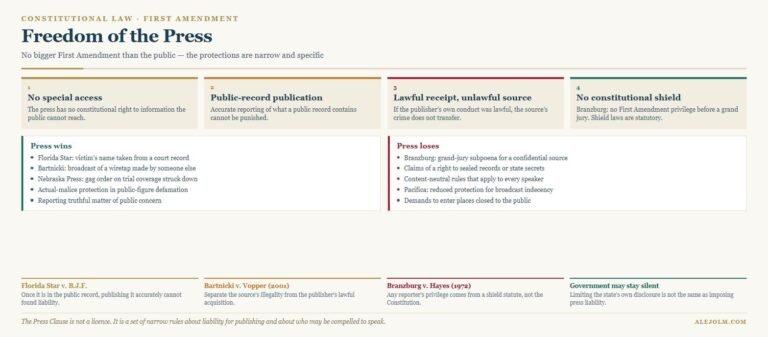 Freedom of the Press: Publication Liability and Limits
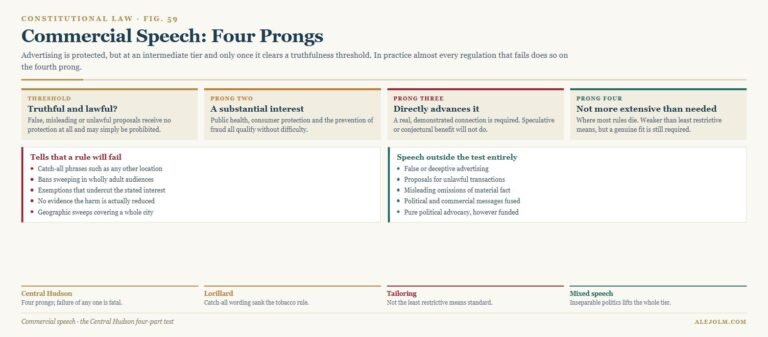 Commercial Speech and the Central Hudson Four-Part Test
- Actual Malice and the Three Tracks of Defamation Law
- Federal Pleading Standards After Twombly and Iqbal
- Public Forum Doctrine and the Time, Place, Manner Test
- Limited vs Unlimited Civil Cases in California Courts
- Summary Judgment Under Rule 56: Standard and Proof
- Defamation Elements, Fault Standards and Privileges
- First Amendment: The Three-Question Speech Framework
- The IRAC Method: How to Structure a Bar Exam Answer
- Access to the Courts: When Filing Fees Are Unconstitutional
Next steps
The anti-SLAPP motion sits at the intersection of civil procedure and free speech doctrine. Read defamation and the actual malice standard for the substantive law it usually tests, and limited and unlimited civil cases for the California procedural framework it sits inside.